
RASC News Agency: Afghanistan is grappling with one of the world’s most complex humanitarian and development crises. In a country where millions depend on humanitarian assistance for survival, dwindling donor funding and the limited effectiveness of some development initiatives have compounded the hardships facing the most vulnerable segments of society. This reality unfolds against the backdrop of Taliban-imposed restrictions particularly on education, women’s employment, and engagement with the international community which have deepened Afghanistan’s isolation and further weakened its already fragile economic and social structures.
In an article published by Al Jazeera, a journalist recounts a reporting trip to Daykundi Province, offering a troubling glimpse into the outcomes of certain projects implemented by non-governmental organizations. Although these initiatives were designed to improve rural livelihoods, in several cases they have failed to address the actual needs of local communities.
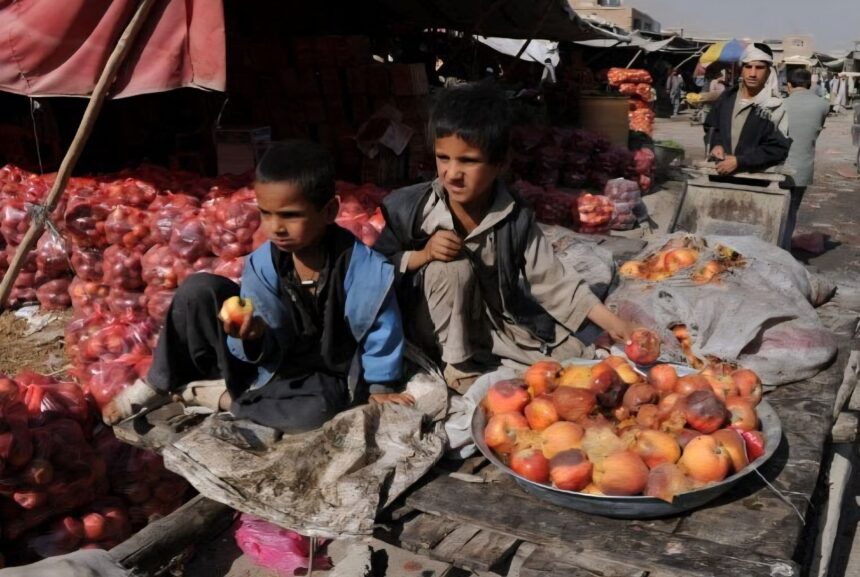
One such project involved the distribution of energy-free agricultural storage facilities intended to reduce post-harvest losses among farming households. On paper, the initiative appeared promising, providing a means to preserve fruits and vegetables without relying on electricity. Yet local farmers reported that the storage units were capable of serving only two or three families in each village, leaving substantial quantities of produce including apples vulnerable to spoilage and waste.
In another village, farmers voiced dissatisfaction with an agricultural program under which imported seeds had been distributed. Despite the considerable resources invested in training sessions, technical supervision, and project implementation, participants stated that the resulting harvests fell short in both quality and yield, generating only marginal economic returns for their households.
These accounts emerge at a time when Afghanistan has experienced a dramatic reduction in international assistance following the Taliban’s return to power in 2021. Simultaneously, the Taliban’s extensive restrictions on women and girls, the exclusion of a significant portion of the country’s skilled workforce from public life, and the persistence of political isolation have further undermined Afghanistan’s ability to navigate its overlapping crises.
According to international organizations, Afghanistan continues to face one of the largest humanitarian emergencies in the world. Millions remain in urgent need of assistance, while the country’s education and healthcare systems operate under immense strain. Critics argue that Taliban policies particularly those denying women and girls access to education and employment not only violate fundamental human rights but also severely diminish Afghanistan’s long-term development prospects.
The Al Jazeera article emphasizes that shortcomings in the implementation of development projects are not unique to Afghanistan. However, in a country already burdened by decades of war, entrenched corruption, widespread poverty, and the political and social restrictions imposed under Taliban rule, the consequences of such inefficiencies are considerably more severe and potentially devastating.
The author calls for a greater role for local expertise in the design and management of aid and development programs, the reduction of complex layers of subcontracting, and the strengthening of accountability mechanisms that allow communities to provide meaningful feedback on projects affecting their lives. According to the article, only through a nuanced understanding of local realities and the effective use of limited resources can the repetition of past mistakes be avoided.
Ultimately, Afghanistan’s experience demonstrates that humanitarian assistance and development initiatives are unlikely to produce sustainable change in the absence of transparency, accountability, and an environment in which all citizens including women and girls are able to participate in the country’s reconstruction and recovery. As long as structural restrictions continue to affect large segments of Afghanistani society, and the crises of legitimacy and international isolation remain unresolved, the prospects for Afghanistan’s development and long-term stability will continue to be overshadowed by profound uncertainty and formidable challenges.