

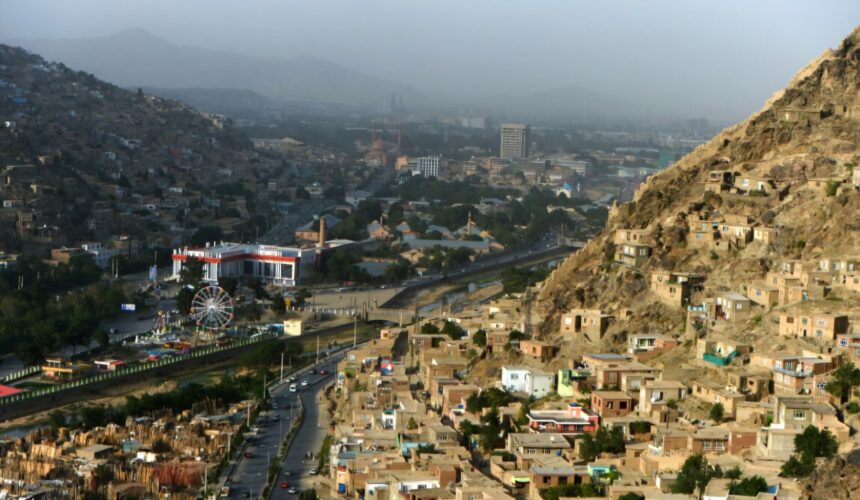
RASC News Agency: The international broadcaster France 24, citing journalists on the ground and reporting from Agence France-Presse, said loud explosions and sustained gunfire were heard in central Kabul early Sunday morning. The incident coincided with a Taliban announcement claiming their forces had responded to the “renewed entrance” of Pakistani aircraft into Afghanistan’s airspace.
Taliban spokesperson Zabihullah Mujahid stated that the group’s anti-aircraft systems had opened fire on Pakistani fighter jets over Kabul. Independent sources have not yet verified the claim.
The developments come amid escalating border tensions between Afghanistan under Taliban rule and Pakistan. Since Thursday, clashes have intensified following reported offensive operations by Taliban forces along the frontier, met by retaliatory Pakistani air and ground strikes.
Pakistan has confirmed bombing targets in Kabul and in Kandahar considered the power center of the Taliban’s supreme leadership. This marks the first time Islamabad has openly acknowledged airstrikes against locations linked to Taliban governing structures, signaling a shift from limited border skirmishes to a more direct and unprecedented military confrontation.
The Taliban, who returned to power in 2021 and continue to face international legitimacy challenges, accused Pakistan of killing civilians. Islamabad has not formally responded to those allegations.
According to the Taliban’s deputy spokesperson, at least 30 civilians have been killed since Thursday in Khost, Kunar, and Paktika provinces. In contrast, Pakistan claims that nearly 300 Taliban soldiers and affiliated fighters have died in the fighting.
Independent verification of casualty figures remains difficult due to restricted media access to border regions and tight information control by Taliban authorities an ongoing obstacle for journalists covering Afghanistan.
Taliban security officials also claimed to have shot down a Pakistani fighter jet and detained its pilot an assertion Islamabad described as “completely false.”
An AFP reporter in Jalalabad reported hearing jet aircraft and two explosions on Saturday, though no confirmed details about the origin or targets of those blasts have been released.
Regional mediation efforts including diplomatic initiatives by Saudi Arabia and Qatar have so far failed to secure a sustainable ceasefire. China has urged both sides to exercise restraint.
The United States has publicly supported “Pakistan’s right to self-defense against Taliban-linked attacks,” a position reflecting ongoing international expectations that the Taliban prevent armed groups from using Afghanistan’s territory to threaten neighboring states.
Pakistan on Friday warned of the possibility of entering an “open war” with the Taliban, while the Taliban leadership has called for dialogue. This represents the most severe round of fighting since October, when border clashes left more than 70 people dead. Since then, most land crossings between the two countries have remained largely closed.
Islamabad maintains that Tehrik-i-Taliban Pakistan (TTP), which has claimed responsibility for numerous attacks inside Pakistan, operates from safe havens in Afghanistan. The Taliban deny providing sanctuary, but their limited capacity or unwillingness to curb the group has become the central driver of tensions between the two sides.
As cross-border hostilities intensify, the situation underscores the volatility of the Afghanistan–Pakistan frontier one of the most fragile security corridors in the region. Without sustained diplomatic intervention, the risk of further escalation remains high.