
RASC News Agency: As security crises surrounding Islamic Republic of Pakistan intensify, political analysts argue that there is perhaps no more suitable platform than a joint parliamentary session to examine the mounting regional volatility, including the ongoing conflict in the Gulf and rising tensions with Taliban authorities in Afghanistan.
According to the Pakistani newspaper Dawn, several pressing questions are shaping public debate. These include how Pakistan’s leadership defines its strategic position in the broader Gulf confrontation and when the Taliban administration will address Islamabad’s security concerns regarding militant activity originating from Afghanistan’s territory concerns that Pakistani officials argue remain unresolved despite Islamabad’s stringent security posture. The persistence of these threats, they contend, reflects structural limitations in the Taliban’s governance and counter-extremism capabilities.
Pakistan finds itself navigating a precarious diplomatic tightrope. On one side lies its historically significant relationship with Islamic Republic of Iran, while on the other stands its close alignment with Arab partners, particularly Kingdom of Saudi Arabia.
This delicate balance gained new strategic weight following Pakistan’s recently signed defense cooperation agreement with Saudi Arabia. Few observers anticipated that the real-world test of this security partnership would arrive so swiftly. Escalating regional conflicts now threaten to disrupt Pakistan’s foreign policy equilibrium.
Current Pakistani policy toward Afghanistan is increasingly viewed as requiring clearer strategic articulation. Analysts question whether Islamabad is pursuing a recalibration of its engagement with the Taliban or undertaking a comprehensive restructuring of its Afghanistan doctrine.
These two approaches differ fundamentally. The first would imply adjusting interactions with Taliban power structures, while the second would represent a broader transformation of Pakistan’s regional security posture toward a Taliban-ruled Afghanistan where the presence of extremist groups continues to generate serious security anxieties for neighboring states.
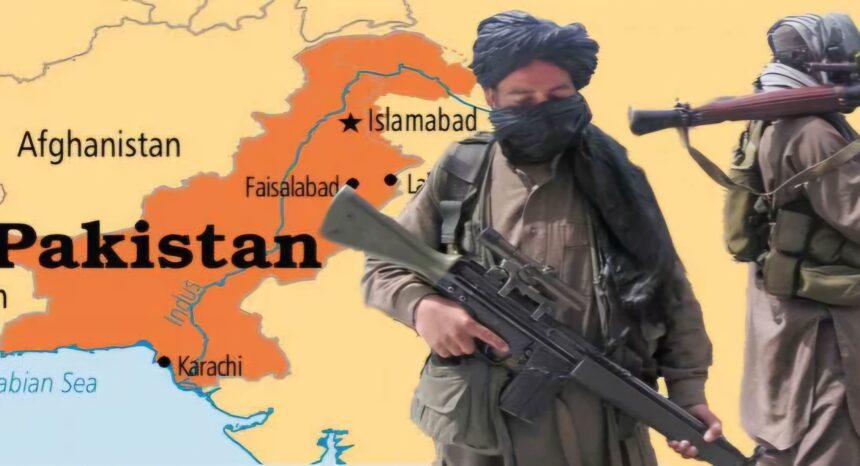
Security concerns are particularly tied to militant organizations such as Tehrik-i-Taliban Pakistan, which Islamabad accuses of operating from Afghanistan’s territory.
Some analysts have raised questions about whether the current armed confrontations between Pakistan and Afghanistan are indirectly linked to security strategies associated with Donald Trump and potential U.S. military interests concerning the Bagram Air Base. Reports suggest that Pakistani air operations have recently targeted areas surrounding the base.
Nevertheless, commentators emphasize that parliamentary deliberation remains the most appropriate venue for assessing such sensitive strategic issues. Historically, however, when state institutions reach consensus on major policy directions, legislative bodies often play a limited role in altering final decisions, serving instead as arenas for political legitimization or burden-sharing of controversial measures.
At present, the conflict in the Persian Gulf has captured Pakistan’s public and policy attention, partially overshadowing its bilateral tensions with Afghanistan.
Prime Minister Shehbaz Sharif reportedly held confidential consultations with parliamentary party leaders, culminating in the decision to convene a joint parliamentary session to evaluate national security conditions.
Despite electoral controversies, both houses of Pakistan’s parliament include representatives from major political forces, including nationalist and religious parties from Balochistan and Khyber Pakhtunkhwa.
The Awami National Party, despite limited electoral success, secured representation in the Senate with presidential backing from Asif Ali Zardari.
Some commentators argue that the resignation of Akhtar Mengal should not have been accepted, given that Balochistan remains one of Pakistan’s most strategically sensitive regions due to the convergence of multiple crises, including regional war dynamics, Afghanistan’s instability, and internal insurgency.
Movements such as the Pashtun Tahafuz Movement are not electoral parties but represent a significant segment of young Pashtun political sentiment in tribal areas of Khyber Pakhtunkhwa. Associated political currents, including the National Democratic Movement, are unlikely to participate in the parliamentary session following electoral setbacks.
While opposition leader Mahmood Khan Achakzai may partially reflect these perspectives within parliament, decisive influence is expected from the Pakistan Tehreek-e-Insaf, which did not attend the confidential meeting but is unlikely to boycott the joint parliamentary session due to the national security importance of the agenda.
The primary parliamentary focus concerns the war that analysts attribute to escalation between the United States of America and State of Israel against Islamic Republic of Iran, a confrontation that risks engulfing the entire Gulf region.
While the Sunni Arab bloc has so far exercised strategic restraint, continued Iranian retaliation could trigger broader military escalation an outcome some analysts believe might also align with certain Israeli strategic calculations. Such a scenario could seriously test Pakistan’s geopolitical orientation.
The defense agreement between Pakistan and Saudi Arabia further complicates Islamabad’s diplomatic calculus. One possible but highly complex scenario would involve Pakistan providing discreet security support to Saudi interests while maintaining formal diplomatic neutrality toward Iran. Analysts caution that Tehran often interprets strategic issues in starkly binary terms, limiting Islamabad’s room for diplomatic ambiguity.
Within Pakistan, segments of society maintain emotional or cultural sympathy toward Iran, and elements associated with the Islamic Revolutionary Guard Corps reportedly retain local political networks capable of exerting pressure on the government to avoid direct military involvement.
Pakistan’s fragile economy and its dependence on Gulf energy supplies represent additional determinants shaping foreign policy decisions. A direct spillover of Gulf warfare into Balochistan would create severe strategic and internal security challenges for Islamabad.
Despite the focus on Gulf tensions, Pakistan continues to face deep security friction with Taliban authorities in Afghanistan.
The central question remains whether Pakistani operations are merely reactive responses to what Islamabad characterizes as Taliban “betrayal” and support for militant organizations such as Tehrik-i-Taliban Pakistan, or whether they represent a fundamental revision of Pakistan’s historical Afghanistan policy.
Such a policy shift could potentially affect issues including the Durand Line, relations with Republic of India, regional energy corridors, the Wakhan Corridor, and bilateral trade structures.
Analysts speculate about Pakistan’s future posture should the Taliban halt support for extremist groups a scenario widely considered unlikely. Questions also persist regarding whether Islamabad intends to abandon strategic reliance on Taliban structures and instead cultivate alternative partners within Afghanistan.
Former Afghanistan’s National Security Council chief Amrullah Saleh previously suggested via social media that Pakistan had established contact with elements of the National Resistance Front of Afghanistan, a claim that remains unverified.
Direct involvement in Afghanistan’s internal conflict could entail substantial costs, prolong instability, and exacerbate humanitarian and security risks.
Another critical variable is the reaction of People’s Republic of China, Pakistan’s closest strategic partner, which generally prefers minimizing security turbulence along its periphery.
The most sustainable policy toward Afghanistan, according to the author, is consistent with earlier diplomatic recommendations: Afghanistani citizens should retain the primary authority to determine their country’s political future.
Simultaneously, Pakistan can safeguard its interests through multilayered security cooperation, commercial engagement, and defense diplomacy, potentially including friendship treaties.
Nevertheless, terrorism remains the most significant obstacle between Pakistan and Afghanistan, particularly amid structural weaknesses in Taliban governance and the continued activity of extremist networks.
Ultimately, while hardline security measures may appear justified in certain contexts, abrupt strategic shifts toward Afghanistan carry substantial risks of deepening mutual distrust. Parliamentary scrutiny of these issues may help generate more balanced policy options and provide decision-makers with broader strategic insight.