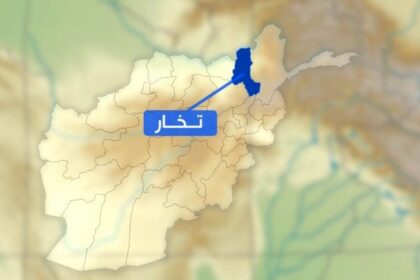

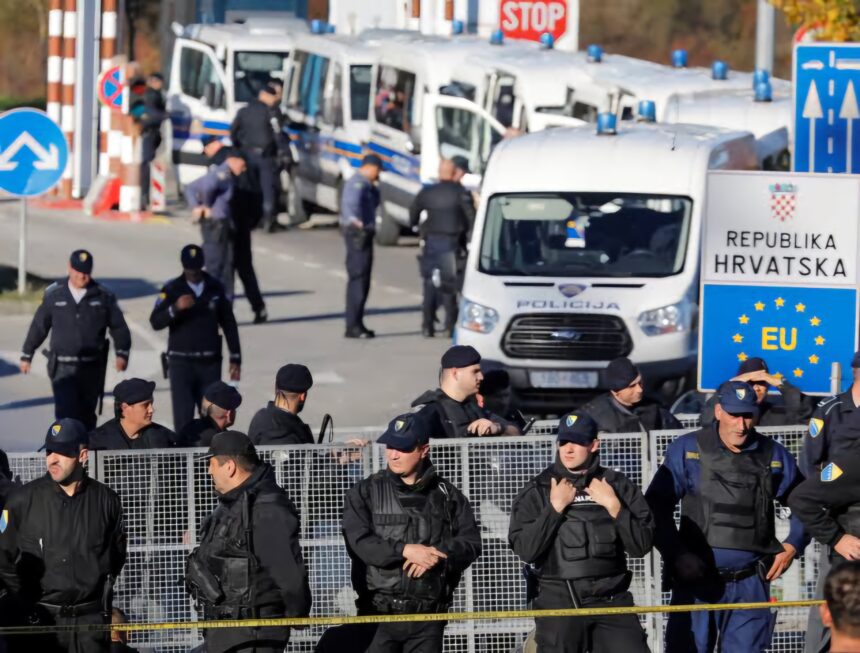
RASC News Agency: A growing body of evidence suggests that non-Pashtun Afghanistani migrants particularly Tajiks, former military personnel, and residents of northern provinces such as Panjshir, Takhar and and other Tajik-populated provinces are facing disproportionately higher rates of deportation from several European countries, amid mounting security narratives and politicised asylum policies.
According to interviews with migrant communities, legal advocates, and human rights monitors, European immigration authorities increasingly classify Afghanistani asylum seekers through a security lens shaped by Taliban-era intelligence narratives, rather than individual legal assessments.
Who Is Being Targeted?
Patterns emerging from deportation cases indicate that five categories of Afghanistani migrants are especially vulnerable:
1. Former Military and Security Personnel
Individuals who served in the former Afghanistan’s National Army (ANA), police forces, or intelligence services are frequently flagged as “security risks” by host states, despite lacking any evidence of involvement in criminal or militant activity.
Ironically, these same individuals are among those most at risk of persecution under Taliban rule, as documented by:
• UNAMA human rights reports
• Human Rights Watch (2022–2024)
• Amnesty International investigations
Yet European authorities increasingly treat them as potential liabilities rather than protected persons.
2. Relatives of Former Military Personnel
Family members of ex-security officials especially brothers and adult sons are often rejected on the basis of “associative security risk”, a legally controversial concept that contradicts international refugee law, which is based on individual responsibility, not collective suspicion.
3. Tajiks and Other Non-Pashtun Ethnic Groups
Tajiks, Uzbeks, Hazaras, and other non-Pashtun groups report significantly higher rejection rates compared to Pashtun applicants. This reflects a structural bias shaped by the Taliban’s own ethnic power hierarchy, which European asylum systems often unconsciously replicate.
Under Taliban rule:
• Key state institutions are monopolised by Pashtun networks
• Non-Pashtuns are excluded from political representation
• Ethnic profiling is widely documented by the UN and NGOs
Yet paradoxically, European systems often interpret non-Pashtuns as “politically suspicious” rather than politically vulnerable.
4. Migrants from Northern Provinces
Applicants from historically anti-Taliban regions such as:
• Panjshir
• Takhar
• Badakhshan
• Warsaj (Takhar)
are frequently labelled as “linked to resistance networks” or “former armed groups”, even when no evidence is presented.
These areas were the core of:
• The anti-Taliban resistance in the 1990s
• The post-2021 National Resistance Front (NRF)
As a result, entire regional identities are now securitised.
5. “Political Suspects” and Alleged Intelligence Links
Many deportation decisions cite vague classifications such as:
• “possible intelligence affiliation”
• “unverified political activities”
• “risk of radicalisation”
These labels often rely on:
• Taliban-sourced databases
• Pakistani intelligence assessments
• Unverified third-party security reports
There is no transparent mechanism for migrants to challenge or audit these claims.
European governments increasingly prioritise:
• Border control
• Domestic political pressure
• Anti-migration electoral agendas
Over:
• The 1951 Refugee Convention
• The principle of non-refoulement
• Individualised risk assessments
In effect, asylum has been redefined as a security filter rather than a humanitarian protection mechanism.
Perhaps most troubling is the indirect reliance of European systems on Taliban-generated intelligence frameworks.
Despite not recognising the Taliban diplomatically, several European states:
• Use Taliban-issued documents for verification
• Consult regional security actors aligned with Taliban narratives
• Accept de facto Taliban classifications of “dangerous individuals”
This creates a paradox:
The same regime that persecutes political opponents is now shaping who Europe considers “too dangerous to protect”.
For non-Pashtun deportees, especially ex-military and northern Afghanistanis, return often means:
• Arbitrary detention
• Forced disappearances
• Economic exclusion
• Ethnic discrimination
• Constant surveillance
According to UNAMA (2023–2024), dozens of returnees have been:
• Detained without charge
• Tortured
• Or disappeared after deportation
What is unfolding is not merely a migration policy shift, but a structural injustice embedded in global security politics.
Non-Pashtun Afghanistani migrants are being punished for:
• Their ethnicity
• Their geography
• Their past service to a collapsed state
• And their resistance to an authoritarian regime
In practice, Europe is no longer asking:
“Who needs protection?”
But rather:
“Who is politically inconvenient to protect?”
This marks a profound transformation of asylum from a human right into a geopolitical instrument where the victims of Taliban repression are now being expelled using the Taliban’s own logic.