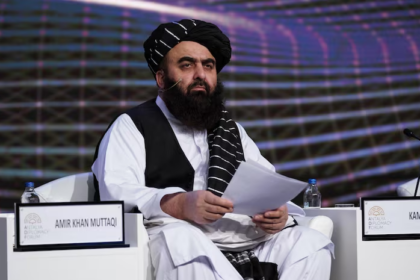

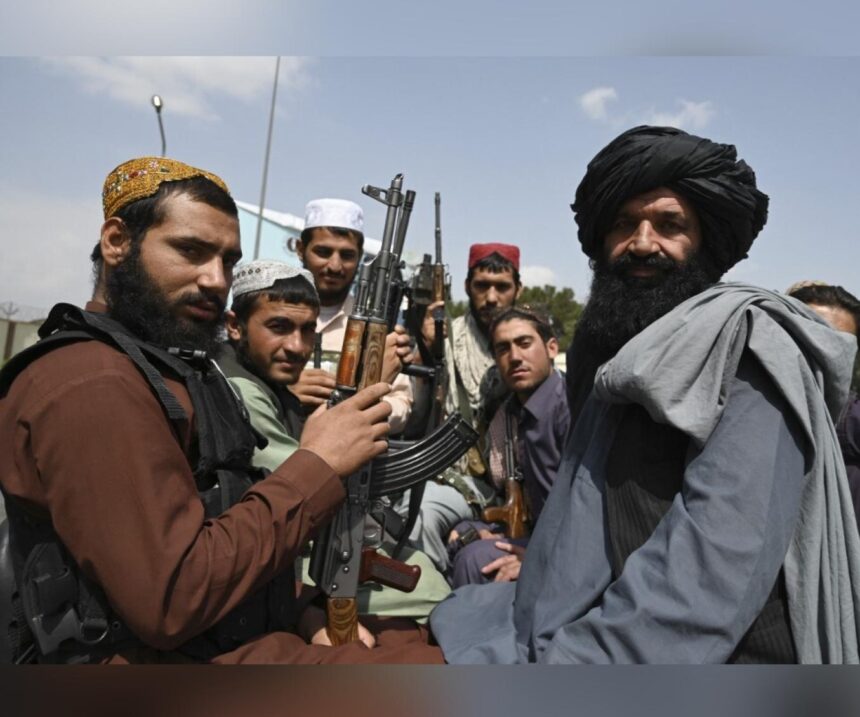
RASC News Agency: According to an analysis published by Eurasia Review, the dismissal of Haji Juma Khan Fateh from his position as Deputy Governor of Zabul should not be viewed as a routine administrative reshuffle. Rather, it represents the latest manifestation of a far deeper structural crisis within the Taliban: the accelerating concentration of power in the hands of Kandahar’s Pashtun elite and the systematic erosion of non-Pashtun commanders who once played a decisive role in expanding the movement across northern and central Afghanistan.
Dr. Hamza Khan, a London-based scholar of international relations, argues that the Taliban’s claim to represent a national government stands in stark contradiction to the movement’s internal power structure. According to his analysis, the Taliban leadership is overwhelmingly dominated by Pashtuns, with senior and mid-level positions occupied almost exclusively by Pashto-speaking officials. The presence of Tajiks, Uzbeks, and Hazaras within the administration, he contends, is largely symbolic, serving as political decoration rather than genuine participation in decision-making.
This imbalance, the report argues, exposes the Taliban’s narrative of “inclusive governance” as fundamentally misleading. A regime that systematically excludes the country’s principal ethnic communities from meaningful political authority cannot credibly claim to be national, representative, or genuinely Islamic in its governance.
The composition of the Taliban’s cabinet further illustrates this reality. Women are entirely excluded, Hazaras have virtually no representation, and non-Pashtun communities remain marginalized within state institutions. The issue, Dr. Khan emphasizes, is not merely numerical representation but actual control over decision-making. A handful of symbolic appointments cannot conceal the concentration of real authority within the Kandahar leadership circle. While the Taliban promotes the language of political inclusion abroad, it continues to govern domestically through tribal loyalty, ideological rigidity, and centralized authoritarian rule.
According to Eurasia Review, the case of Haji Juma Khan Fateh provides perhaps the clearest illustration of this pattern. Fateh was not an ordinary official but a powerful commander from Badakhshan with significant influence over local armed networks and reported connections to the province’s lucrative mining sector. His removal, amid growing disputes over gold extraction, suggests that the Taliban leadership is eliminating not only potential political rivals but also competing centers of economic power. In Badakhshan, control over gold mines has become synonymous with control over revenue, armed networks, and local political influence.
The report traces a broader pattern across recent years. Uzbek commander Qari Salahuddin Ayubi was removed from his security position in Zabul. Another prominent Uzbek commander, Makhdum Alam Rabbani, was arrested, triggering protests among his supporters in Faryab. Qari Wakil, a Tajik commander who reportedly attempted to mediate, was himself detained. Abdul Hamid Khorasani, a Tajik commander once affiliated with the Taliban in Panjshir, was demoted, reassigned, and ultimately left the movement after publicly protesting what he described as ethnic discrimination. Ghulam Hussain, widely known as Hussain Jundi, was arrested alongside his associates, while hundreds of fighters loyal to him were reportedly disarmed. More recently, another prominent Tajik commander, Ajmal Kohi, was also detained.
Dr. Khan identifies the case of Mawlawi Mehdi Mujahid as perhaps the most compelling example of the limits of trust within the Taliban’s leadership. Once promoted as evidence of the movement’s willingness to integrate Hazaras, Mehdi later denounced ethnic discrimination and monopolization of power before breaking with the Taliban and leading an armed resistance in Balkhab. He was subsequently killed near the Iran-Afghanistan border. According to the analysis, his death sent a powerful message to non-Pashtun communities: representation is acceptable only so long as it poses no independent political challenge.
Even Qari Fasihuddin Fitrat, the Taliban’s Chief of Army Staff and its most prominent Tajik figure from Badakhshan, illustrates the limitations of symbolic authority. Although he retains a senior title, the removal of officers considered loyal to him from the Ministry of Defense reflects the gradual erosion of Tajik influence within the military establishment. Without control over appointments, resources, or loyal commanders, Dr. Khan argues, formal titles amount to little more than symbolic positions intended to preserve the appearance of ethnic diversity while real power remains concentrated elsewhere.
According to Eurasia Review, these purges extend beyond individual commanders. When a prominent Tajik or Uzbek leader is dismissed, arrested, or demoted, his support network is dismantled as well. This, the report argues, is how the Taliban is reconstructing its authority—not through genuine national integration, but through the systematic dismantling of non-Pashtun command structures, producing an increasingly centralized yet internally fragile political order.
Salahuddin Salar, a former Taliban intelligence official, has similarly accused the movement’s leadership of ethnic favoritism, monopolizing power, concentrating control over natural resources within a narrow tribal elite, and practicing systematic discrimination. The significance of these criticisms, the report notes, lies in the fact that they originate from within the Taliban’s own ranks. For many Afghanistani observers, this merely confirms what they have long argued: that the movement’s deepest internal fault lines are no longer ideological but ethnic, institutional, and economic.
The report concludes that the same pattern is now evident across Badakhshan, Takhar, Panjshir, Balkh, Faryab, and Zabul. Local commanders who were once valuable to the Taliban’s military expansion are gradually sidelined after their usefulness diminishes. According to Dr. Khan, the Taliban has evolved into a closed patronage network in which tribal loyalty outweighs merit, representation, and national interest.
While such measures may strengthen the central leadership in the short term, the analysis warns that they are likely to undermine the regime’s internal cohesion over time.
In the long run, Dr. Khan argues, exclusion is not a sustainable model of governance for a country as diverse as Afghanistan. Lasting stability requires inclusive political institutions, shared governance, and equitable distribution of national resources. Instead, the Taliban has consolidated state power, weakened non-Pashtun commanders, and transformed the country’s mineral wealth into an arena of intra-tribal competition.
The removal of Juma Khan Fateh, therefore, represents far more than a personnel change. According to Eurasia Review, it is a warning sign of an increasingly coercive political order and growing structural fragility within the Taliban regime.