
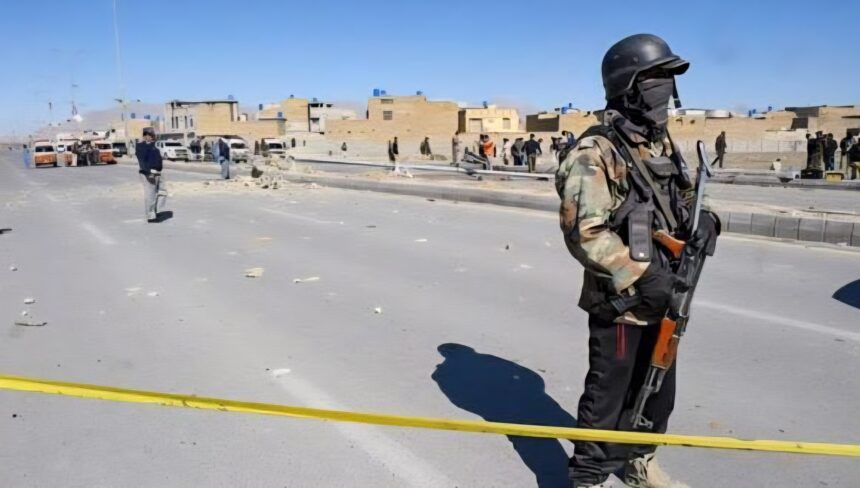
RASC News Agency: Pakistan’s internal security situation is deteriorating at an alarming pace, as the resurgence of Tehrik-i-Taliban Pakistan (TTP) and the escalating activities of the Baloch Liberation Army (BLA) deepen instability across the country. According to a report by Brighter Kashmir, this crisis reflects not only security failures but also deeper structural weaknesses in governance and policymaking.
Over the past two years, insurgent activity has surged significantly in the provinces of Khyber Pakhtunkhwa and Balochistan. This trend, particularly following the Taliban’s return to power in Afghanistan, has created an environment in which militant groups can more easily organize, recruit, and carry out attacks raising serious doubts about the Taliban’s claims of ensuring regional security.
Data from the Global Terrorism Index 2026 indicates that Pakistan now ranks among the countries most affected by terrorism, with more than 1,000 attacks recorded in 2025 alone. A substantial portion of these incidents has been attributed to the TTP, while the BLA has simultaneously expanded its operational footprint in Balochistan. The overlapping impact of these groups has placed Pakistan’s security apparatus under severe strain, casting doubt on the effectiveness of state responses.
The revival of the TTP is closely linked to developments following the Taliban’s takeover of Afghanistan. As the report notes, Islamabad’s previous efforts to leverage its influence over Afghanistan-based groups including the Taliban have failed to contain the network. Despite repeated assurances, the Taliban have refrained from taking decisive action against TTP elements operating from Afghanistan’s territory. In practice, this has enabled the group to regroup, recruit, and plan attacks against Pakistan, turning the border region into a strategic hub for insurgent activity.
In response, Pakistan has adopted more aggressive measures, including cross-border strikes and increased diplomatic pressure. However, these efforts have yielded limited results, largely due to the absence of effective regional cooperation particularly the lack of accountability from the Taliban. The outcome has been a continued rise in attacks and the consolidation of TTP’s operational presence along the frontier.
Meanwhile, the Baloch Liberation Army has undergone notable transformations in both structure and tactics. Coordinated attacks carried out in early 2026 targeting security installations, infrastructure, and civilian sites signal a shift from sporadic insurgency to more organized, military-style operations. Beyond security concerns, this evolution is rooted in deep-seated socio-economic grievances within Balochistan.
A critical dimension of the crisis is the indirect convergence between these two groups. While the TTP operates under an extremist Islamist ideology and the BLA pursues ethno-nationalist objectives, both exploit governance gaps, institutional weaknesses, and inconsistent state policies. This convergence does not imply direct collaboration, but rather a shared ability to capitalize on a dysfunctional environment one that, critics argue, has been indirectly reinforced by the Taliban’s failure to curb cross-border militancy.
The implications extend beyond internal security, affecting Pakistan’s economic future and regional standing. Balochistan, home to key projects under the China–Pakistan Economic Corridor (CPEC), remains highly vulnerable due to persistent militant threats. At the same time, TTP activity in Khyber Pakhtunkhwa continues to disrupt daily life in border regions and exacerbate tensions with Afghanistan tensions further complicated by the Taliban’s inability or unwillingness to restrain aligned groups.
In conclusion, the Brighter Kashmir report argues that the simultaneous rise of the TTP and BLA is a direct consequence of reactive, fragmented, and short-term policymaking in Pakistan. The crisis is less about ideological alignment between militant groups and more about systemic governance failures failures that have been exacerbated under Taliban rule in Afghanistan and by the absence of a credible regional security framework. Without a fundamental policy reset and meaningful regional cooperation, prospects for containing this multi-layered crisis remain uncertain.