
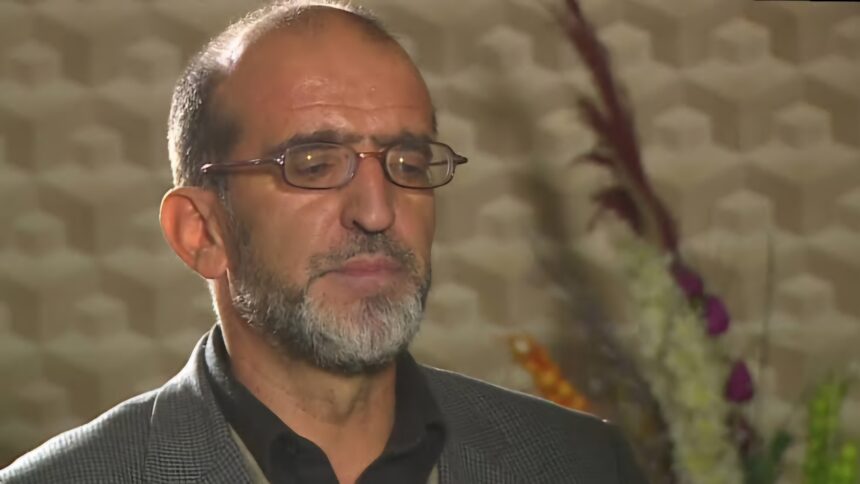
RASC News Agency: Hafiz Mansoor, former member of Afghanistan’s House of Representatives, has warned in a Facebook post that the Persian language in Afghanistan is being eroded on two fronts: externally, through the official and structural policies of the Taliban, and internally, through the gradual hollowing out of the cultural and moral framework that has sustained it for centuries.
According to Mansoor, the Taliban are systematically restricting the public use of Persian through successive decrees and directives. He writes that the removal of Persian from administrative correspondence, sidelining it from official structures, and erasing Persian names from institutions and signage is part of an organized project to weaken a historic identity. This, he argues, is not merely a language policy but a broader attempt to redefine Afghanistan’s cultural identity in favor of a closed, ideological interpretation.
In response, a number of Persian speakers and cultural activists have defended the language through essays, public statements, and highlighting its historical and literary significance. Nevertheless, Mansoor emphasizes that these efforts, while important, remain insufficient because they often address only the surface of the language rather than the deeper roots of the crisis.
Mansoor explains that language is not just composed of words; it rests on three essential pillars: form, meaning, and expression. Form is the external facade beautiful and persuasive but it can never substitute for meaning. What has given Persian its power and longevity is the rich semantic world cultivated over centuries.
He reminds readers that Persian carries a system of human and ethical values, from divine awareness and eschatology to humanism, generosity, justice, courage, forgiveness, and humility. Defending Persian, he argues, is ultimately defending these values, and once this connection is severed, the language risks becoming an empty shell.
Mansoor also points to the “second front”: the internal threat that arises when concepts contrary to the deeply rooted traditions of Persian are expressed using Persian vocabulary. He warns that this conceptual distortion, as much as the official Taliban policies, can hollow out the language from within.
In conclusion, Mansoor argues that Persian today faces simultaneous threats: structural elimination by the authorities and conceptual distortion within society. If these twin pressures are not addressed, one of the region’s oldest languages could erode from the inside long before external suppression can remove it.