
RASC News Agency: As the Taliban continue to face a global legitimacy crisis, the acting head of the Islamic Republic of Iran’s mission in Kabul has stated that Tehran sees “no obstacle” to recognizing the Taliban government and will announce its decision “at the appropriate time” a position that stands in open contradiction to the assessments of the United Nations and international human rights organizations.
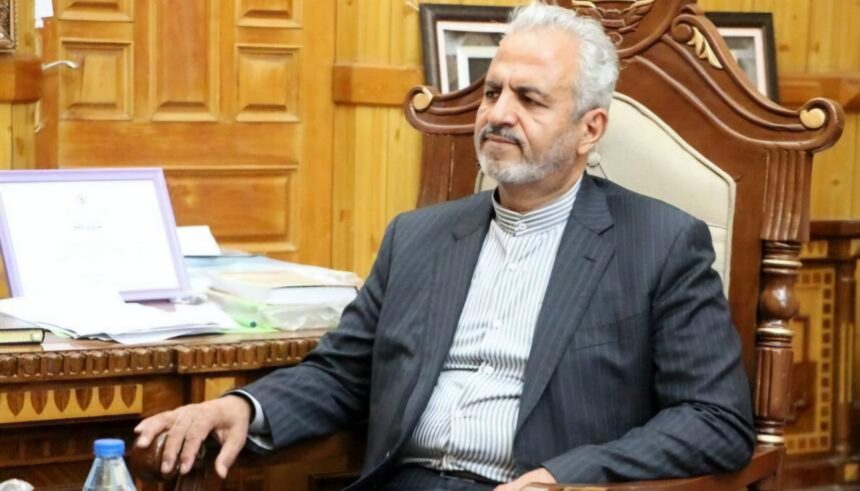
In an interview with Tolo News, Alireza Beikdeli, Iran’s acting ambassador in Kabul, said that recognizing the Taliban is part of Tehran’s broader strategy to expand regional cooperation with Afghanistan. His remarks come despite the fact that the Taliban remain an unelected authority, without a legitimate constitution, and are accused of systematic human rights violations by bodies such as the UN Assistance Mission in Afghanistan (UNAMA), Human Rights Watch, and Amnesty International.
Beikdeli said:
“At the appropriate time, we will announce our legal decision, and Iran’s initiative in this regard will be commendable.”
These comments come more than three years after the Taliban’s return to power a period marked by the closure of girls’ schools, the removal of women from public life, repression of independent media, and the systematic marginalization of non-Pashtun communities. Collectively, these measures have transformed Afghanistan into a closed, ideological system, repeatedly condemned by the UN Security Council.
Referring to Tehran’s concerns over “foreign interference” in Afghanistan, Beikdeli claimed that certain countries use Afghanistan’s territory to harm others. Yet independent reports, including assessments by the UN sanctions monitoring team, accuse the Taliban themselves of sheltering transnational terrorist networks such as al-Qaeda and Tehrik-e Taliban Pakistan (TTP), turning Afghanistan into a hub of regional security threats.
Beikdeli further argued that regional cooperation could reduce these risks. However, analysts stress that the Taliban’s exclusionary governance, systematic repression of women, and continued ties with extremist groups are themselves the primary drivers of instability and insecurity in Afghanistan and its neighboring regions.
On border disputes and water rights, Beikdeli claimed that these issues could be resolved through a “good-neighborly approach.” Regional experts, however, warn that in the absence of a legitimate and accountable government in Kabul, any agreement remains fragile and unenforceable, as the Taliban neither adhere to international legal mechanisms nor operate with institutional transparency.
He also asserted that most border problems have been resolved and that talks on border modernization are underway. This claim contrasts with ongoing reports of sporadic clashes, organized smuggling, and cross-border militant movements phenomena widely linked to the Taliban’s weak territorial control and lack of effective governance.
Regarding tensions between Kabul and Islamabad, Beikdeli called for dialogue. Yet Pakistan has repeatedly accused the Taliban of providing safe havens to the TTP and has blamed Kabul’s permissive policies for deadly cross-border attacks.
Taken together, these statements suggest that Iran is laying the political and legal groundwork for the formal recognition of the Taliban a move that could normalize an authoritarian, isolated, and non-legitimate regime. Such an approach not only contradicts international human rights principles and legal commitments, but also risks strengthening an ideological power structure at the heart of the region one whose cost has been paid by the people of Afghanistan through repression, exclusion, and systemic denial of basic freedoms.