
RASC News Agency: Rising tensions between Taliban-ruled Afghanistan and Pakistan have now become one of the most dangerous flashpoints in South Asia a crisis not between the two nuclear rivals India and Pakistan, but along Pakistan’s western border, shaped by the Taliban’s extremist policies.
According to Foreign Affairs, this confrontation is slipping out of control, and its consequences could destabilize the entire region.
Instead of acting as a responsible government, the Taliban have effectively turned Afghanistan into a safe haven and ideological partner for transnational terrorist groups. Islamabad accuses the Taliban of allowing the Tehrik-e-Taliban Pakistan (TTP) to use Afghanistan’s territory to carry out deadly attacks against Pakistani security forces and civilians an allegation strengthened by the sharp rise in violence since the Taliban returned to power in 2021.
Data from the Pakistan Institute for Conflict and Security Studies show that 2025 was Pakistan’s deadliest year in a decade. That year alone, 699 terrorist attacks were recorded, resulting in the deaths of more than 1,034 people a dramatic increase compared to the previous year.
While TTP propaganda claims even higher figures, the upward trend in violence is undeniable.
This situation is a direct consequence of Taliban policy. Rather than combating extremism, the Taliban have legitimized it and integrated it into their power structure, turning Afghanistan into a launchpad for terrorism instead of a guarantor of regional security.
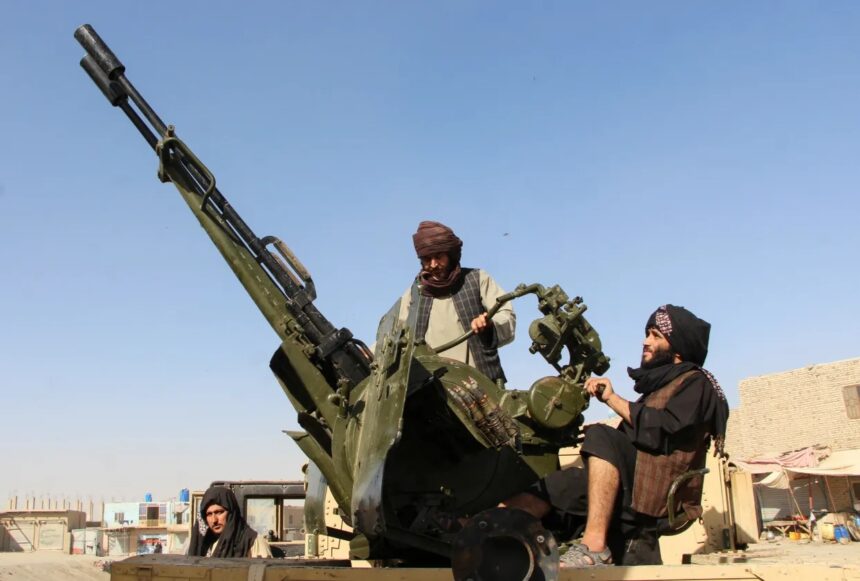
Last October, Pakistan carried out airstrikes on TTP-linked positions in Kabul and Paktika province. In response, Taliban forces attacked Pakistani border posts, triggering a new round of clashes along the frontier.
Mediation efforts by Qatar, Turkey, and later Saudi Arabia failed to secure a genuine Taliban commitment to rein in the TTP, largely because the group is unwilling to abandon its ideological networks.
Just days after the collapse of the latest talks, Taliban and Pakistani forces again exchanged fire, leading to the deaths of Afghanistani civilians another sign of the Taliban’s disregard for civilian lives.
In early January, Taliban spokesman Zabihullah Mujahid accused Pakistan of “conspiring with foreign powers.” In response, the Pakistani military’s spokesperson declared that “all terrorist groups have one father: the Taliban of Afghanistan.”
This exchange reflects the deep rift between the two sides and underscores the Taliban’s refusal to accept responsibility for regional insecurity.
According to Foreign Affairs, the Taliban refuse to sever ties with the TTP because the group is part of their ideological and military network. Any move against the TTP risks internal splits within the Taliban and could further weaken their already fragile legitimacy. As a result, this authoritarian regime appears willing to sacrifice regional security for its own survival.
The Taliban’s diplomatic pivot toward India, marked by official visits to New Delhi, has angered Islamabad. Pakistan views this rapprochement as a strategic threat, as the Taliban simultaneously support the TTP while strengthening ties with Pakistan’s traditional rival.
Pakistan’s army chief, General Asim Munir, has warned that the Taliban must choose between Pakistan and the TTP a clear signal that a military option remains on the table.
If this trajectory continues, Taliban-ruled Afghanistan will become not only a source of internal instability but a regional exporter of extremism.
According to Foreign Affairs, any escalation could unleash a new wave of cross-border terrorism, mass displacement, and even proxy confrontations between Pakistan and India.
By clinging to extremist alliances and rejecting the principles of responsible governance, the Taliban have turned Afghanistan into a security epicenter of South Asia exporting instability instead of stability, and institutionalizing ideological violence in place of the rule of law.
As Foreign Affairs warns, the world can no longer afford to ignore this reality.