

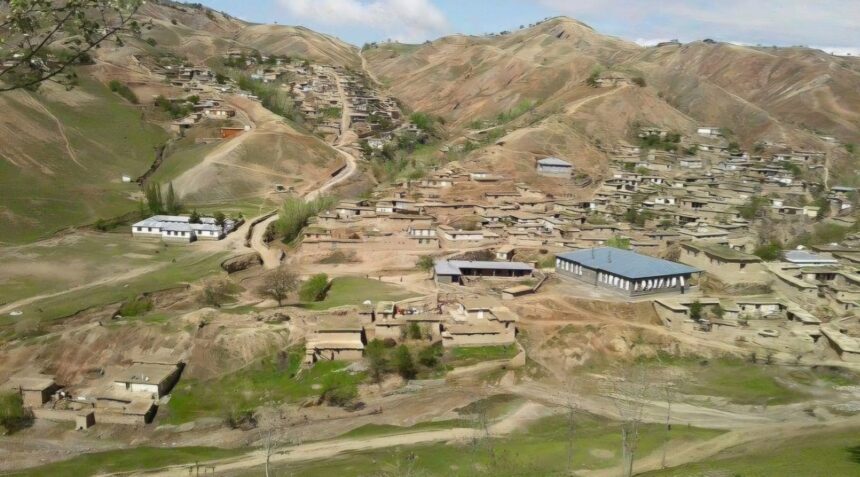
RASC News Agency: Residents of the Arghandi area in Paghman district, Kabul, report that the Taliban have declared hundreds of jeribs of privately owned residential land located near a passenger terminal project under construction by the group as “state property”, ordering homeowners to vacate their houses. Landowners say the move represents a blatant disregard for Islamic deeds, property rights, and the most basic principles of justice.
Local residents insist that the lands now claimed by the Taliban were legally purchased years ago, supported by Sharia-compliant title deeds (qabala-ye shar‘i) and financial transactions. Despite this, Taliban authorities have questioned the validity of these documents without presenting transparent evidence or initiating an independent judicial process a practice critics describe as a clear example of administrative coercion without accountability.
According to local sources, hundreds of houses have been built in Arghandi within the past year alone, yet Taliban officials have deemed many of these homes “illegitimate” and demanded evacuation. This has occurred in the absence of any independent judiciary, public hearings, or legal mechanism to adjudicate disputes between residents and the Taliban administration. Decisions are instead made within a closed, unelected, and opaque power structure, leaving citizens with no meaningful avenue for appeal.
Last year, the Taliban allocated approximately 950 jeribs of land in Arghandi for the construction of a passenger terminal serving southern and southwestern provinces. The project was approved by direct order of Taliban leader Hibatullah Akhundzada. While the Taliban claim the land was already state-owned, no verifiable public documentation has been released to substantiate this assertion.
In a statement issued by the Taliban’s Kabul media office, officials announced the formation of a committee led by the Taliban district governor of Paghman to “address the legal dispute.” However, past experience suggests that such committees—operating in the absence of free media, independent oversight bodies, and a neutral judiciary—function less as mechanisms of justice and more as tools to rubber-stamp pre-determined Taliban decisions.
In the same statement, Taliban authorities alleged without presenting public evidence that the Arghandi lands were “sold using forged documents.” Such sweeping accusations, made without naming suspects, holding public trials, or guaranteeing the right to defense, raise serious legal concerns and further undermine the credibility of the ruling authorities’ claims to justice and legality.
Residents told the Taliban delegation that they did not seize the land illegally and expressed willingness to submit their Sharia deeds for review. Yet similar cases across Afghanistan demonstrate that even legally recognized Islamic documents offer no protection under the Taliban’s judicial system, where final decisions are often shaped by political priorities and regime-linked development projects rather than law.
In recent years, the Taliban have established a body known as the “Commission for the Prevention of Land Grabbing,” claiming to have identified and declared millions of jeribs of land as state property, much of which has been confiscated. Critics argue that rather than combating land grabbing transparently, the commission has become an instrument for centralizing land and wealth under an unaccountable regime.
To enforce the commission’s decisions, the Taliban Ministry of Justice has even created a 2,500-member armed unit, underscoring that land confiscation under Taliban rule is primarily a security-driven and coercive process, not a civil or legal one. In this framework, citizens confront armed force rather than independent courts.
Over the past four years, the Taliban have declared dozens of residential townships and hundreds of jeribs of agricultural land as state property, directing dispossessed owners to seek compensation from original sellers many of whom are either unreachable or unidentified. This practice has left thousands of families trapped in legal and economic limbo.
Reports also indicate that the Taliban have issued ex parte confiscation orders for certain properties, including those linked to officials of the former Afghanistani government without the presence of owners, without public proceedings, and without disclosure of legal evidence. To date, no Taliban institution has published a transparent legal framework or documentation justifying these seizures.
The Arghandi case is not an isolated incident; it reflects a broader governance pattern in which the Taliban, relying on political and military power, unilaterally redefine property, justice, and even Islamic law. The result is the systematic erosion of legal certainty, deepening public mistrust, and the exposure of the Taliban’s claims of “justice-based governance” as rhetorical cover for authoritarian expropriation.