
RASC News Agency: The deadly attack on a Shiite gathering at a shrine compound in Injil district of Herat province on Friday, April 11, is not merely a continuation of Afghanistan’s long history of violence; it is a serious warning about the country’s fragile security situation under the rule of the Taliban.
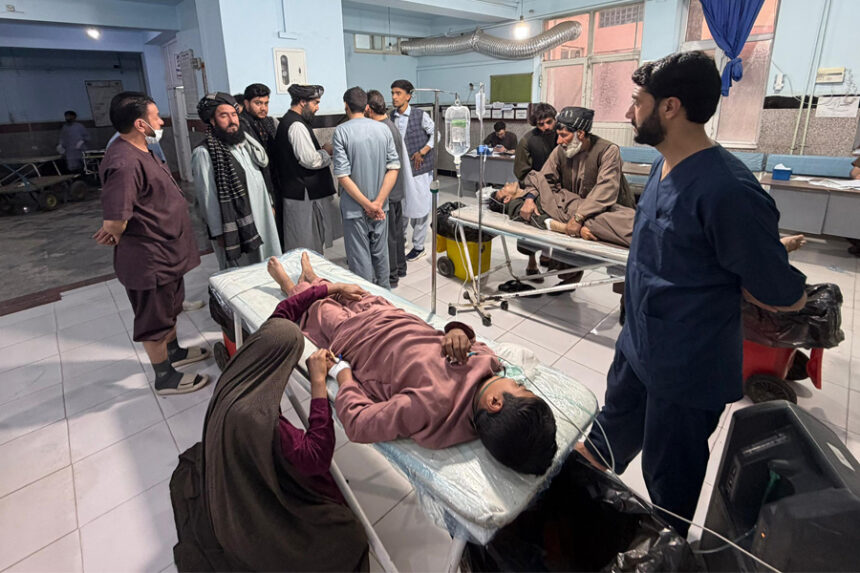
At least 10 people were killed and more than 30 others were injured mostly civilians attending a religious ceremony. The incident raises fundamental questions about the effectiveness of existing security structures in preventing targeted attacks.
According to Eurasia Review, this attack follows a broader and increasingly consistent pattern in recent years. The activities of ISIS-K are no longer isolated events but evidence of sustained operational capability. The group continues to target:
• Non-Pashtun communities
• Foreign nationals
• Diplomatic facilities
• Urban centers
The continuation of such attacks demonstrates that ISIS-K retains the capacity to plan, recruit, move, and execute operations.
Several earlier attacks highlight this trajectory:
• January 19, 2026: A suicide bombing at a restaurant linked to Chinese nationals in Kabul killed more than seven people and injured dozens.
• December 2022: An armed assault on a hotel hosting foreign nationals exposed major vulnerabilities in securing sensitive sites.
• September 2022: A bombing outside the Russian Embassy Kabul showed that even diplomatic premises are not immune.
The sectarian nature of these attacks remains a major concern. Deadly strikes on Shiite mosques in Kunduz and Kandahar in October 2021 killed dozens and intensified fears about the vulnerability of religious minorities.
The Herat attack fits within this continuing pattern of targeted sectarian violence.
Estimates suggest that ISIS-K maintains between 2,000 and 4,000 active fighters, indicating a structured organization with logistical networks and operational reach across multiple provinces, including Kabul, Herat, Jalalabad, and northern Afghanistan.
Monitoring reports from the United Nations Security Council indicate the presence of more than 20 armed groups in Afghanistan, with a combined strength of 10,000 to 13,000 fighters. This underscores that Afghanistan’s security challenges extend beyond a single organization and reflect a broader militant ecosystem.
The persistence of attacks, diversity of targets, and geographic spread of operations all point to deep and structural security challenges in Afghanistan.
This situation highlights the urgent need to:
• Reassess counter-extremism strategies
• Strengthen civilian protection mechanisms
• Improve security for critical and sensitive infrastructure
Without such measures, Afghanistan risks remaining trapped in a prolonged cycle of violence that threatens both domestic stability and regional security.
Author: Dr. Hamza Khan