

RASC News Agency: The Taliban’s push to impose religious education according to their ideological model has intensified across northern Afghanistan. This effort is not channeled through independent educational institutions but via organized control of local clerics, who are tightly linked to the hardline power core in Kandahar. The policy forms part of a broader Taliban strategy to reproduce political legitimacy through an ideologically framed interpretation of Islam, while systematically eliminating any independent or critical religious discourse in Afghanistani society.
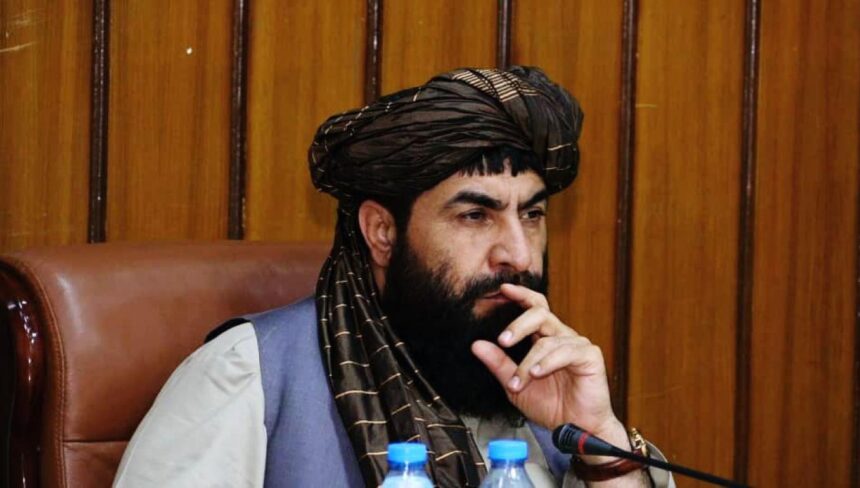
At the center of this operation is Haji Yusuf Wafa, the Taliban-appointed governor of Balkh province, reportedly the son-in-law of Taliban leader Hibatullah Akhundzada. Local sources and political observers describe Wafa as functioning far beyond a conventional provincial governor: he effectively acts as the direct representative of the Taliban leader in northern Afghanistan. Many strategic decisions across the northern provinces are reportedly implemented under his guidance or coordination, earning him the informal title of “Super-Governor.”
In a recent move to assert this authority, Wafa convened a formal meeting of 106 clerics from Balkh province. Far from serving as a consultative forum, the gathering was a clear attempt to coerce religious leaders into alignment with the Taliban power structure. During the session, Wafa openly demanded that clerics support the Taliban Islamic Emirate and play an active role in consolidating the regime. This approach underscores the Taliban view of religious scholars not as independent moral authorities but as instruments of social mobilization and control.
Wafa framed the “Islamic Emirate” as a religiously legitimate system led by scholars, a claim that starkly contradicts the reality: power is concentrated in a closed circle of Taliban leadership with no mechanisms for public accountability. By stressing a “collective responsibility” to uphold this regime, he effectively transformed political loyalty into a religious duty, a method the Taliban have long used to suppress dissent and silence independent voices.
The governor also invoked “jihad” and “sacrifices” in an attempt to recast the Taliban’s violent history in sanctified terms, positioning clerics as spiritual enablers of past campaigns. Historically, the Taliban have systematically exploited religion to justify both political and military authority, suppressing or marginalizing any alternate interpretations of Islam.
Further illustrating this engineered ideological control, Wafa distributed SIM cards to local clerics, establishing a centralized, monitorable communication network between religious leaders and the Taliban administrative structure. This step, under the guise of facilitating communication, in fact ensures tight supervision and uniform messaging to serve the political interests of the regime.
Observers note that the consolidation of power in the hands of Haji Yusuf Wafa, coupled with his direct connection to Hibatullah Akhundzada, reflects a model in which northern Afghanistan is governed as a proxy of Kandahar, rather than through autonomous provincial authority. This system has profoundly weakened local independence, intellectual diversity, and the historic role of clerics as checks on power. Northern Afghanistan is thus not only politically marginalized but has become a testing ground for the Taliban’s broader project: the total ideological control of Afghanistani society.