
RASC News Agency: Pakistan has announced that its security forces carried out a large-scale ground operation along the Afghanistan-Pakistan border on Sunday, followed by what Islamabad described as a series of “precise and calculated” strikes targeting militant hideouts and logistical infrastructure. Pakistani authorities claim the operation resulted in the deaths of 29 militants, marking one of the country’s most significant cross-border military actions in recent weeks.
According to the Associated Press, Pakistan’s Minister for Information, Attaullah Tarar, said in a statement posted on X that the offensive was launched in retaliation for a recent wave of militant attacks across Pakistan. As of the publication of this report, the Taliban authorities in Afghanistan had not issued any official response to Pakistan’s claims.
Pakistan has experienced a sharp escalation in insurgent violence over the past several years, particularly in Khyber Pakhtunkhwa and the former tribal districts bordering Afghanistan. Pakistani officials consistently attribute the majority of these attacks to the Tehrik-i-Taliban Pakistan (TTP) and its affiliated factions. Islamabad has repeatedly accused the Taliban administration in Afghanistan of allowing TTP fighters to operate from sanctuaries inside Afghanistan’s territory and of failing to dismantle their cross-border infrastructure. The Taliban have consistently rejected these allegations, insisting that they do not permit Afghanistan’s territory to be used against any neighboring country.
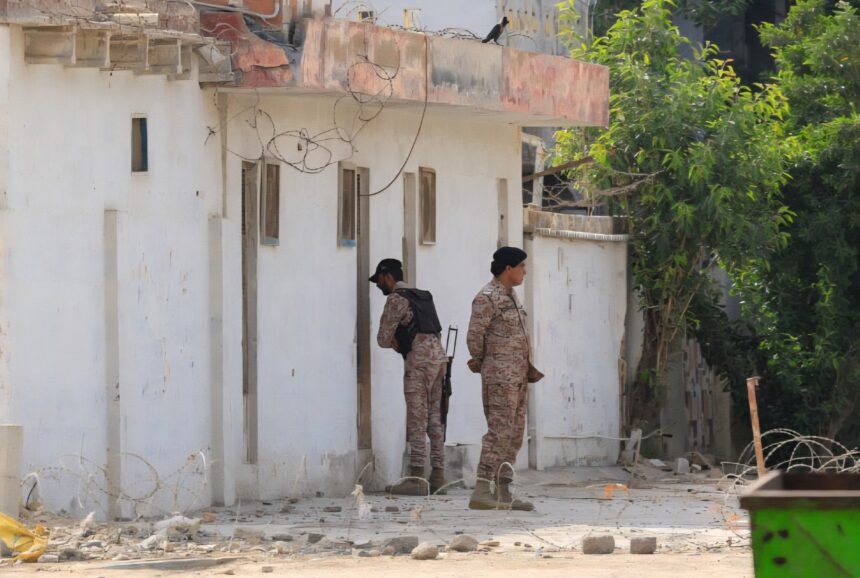
The latest operation came only one day after heavily armed militants launched a coordinated assault on a compound belonging to Pakistan’s paramilitary Rangers in the southern port city of Karachi. The attack killed three Pakistani security personnel before security forces repelled the assault. Pakistani authorities stated that three attackers were killed during the ensuing gun battle, while a fourth suspect whom the military identified as an Afghanistani national was captured alive after being wounded.
The militant faction Jamaat-ul-Ahrar, a splinter organization affiliated with the TTP, subsequently claimed responsibility for the Karachi attack, reinforcing Islamabad’s assessment that the assault formed part of a broader militant campaign against the Pakistani state.
Minister Tarar stated that Sunday’s military operation specifically targeted TTP bases and safe havens located along the Afghanistan’s frontier. Although the TTP and the Afghanistani Taliban remain organizationally distinct, international security agencies and United Nations assessments have repeatedly documented enduring ideological affinities, historical ties, and operational connections between the two movements. Since returning to power in August 2021, however, the Taliban administration has consistently denied providing organized support or sanctuary to the TTP.
According to the Associated Press, the latest cross-border operation is likely to further strain already deteriorating relations between Islamabad and the Taliban authorities. Diplomatic ties have remained under intense pressure amid persistent mutual accusations over border security, militant infiltration, and violations of territorial sovereignty.
The strikes occurred less than three weeks after Pakistan carried out airstrikes against what it described as militant hideouts inside Afghanistan’s territory. Those earlier attacks ended approximately one month of relative calm following a period of heightened military confrontation between Pakistan and the Taliban, during which both sides exchanged heavy fire while international actors sought to prevent further escalation.
The current tensions represent the continuation of months of reciprocal military actions between the two sides. Since February, hundreds of people have reportedly been killed in clashes and cross-border exchanges involving Pakistani forces and Taliban fighters. The cycle of violence intensified after the Taliban launched retaliatory attacks in response to Pakistani airstrikes conducted inside Afghanistan.
Despite repeated diplomatic initiatives, efforts to de-escalate the conflict have achieved only limited success. According to the Associated Press, several rounds of internationally mediated negotiations have failed to produce a durable ceasefire or a comprehensive security framework between Islamabad and the Taliban authorities. In April, China hosted senior officials from both Pakistan and the Taliban administration, after which Beijing announced that both parties had pledged to avoid further escalation and pursue political solutions to their disputes. Nevertheless, subsequent military confrontations have demonstrated the fragility of those commitments.
Over the past year, Pakistan has conducted multiple air and missile strikes along the frontier and inside Afghanistan, asserting that the operations were intended to destroy TTP infrastructure and other militant networks allegedly operating from Afghanistan’s territory. Islamabad continues to accuse the Taliban administration of tolerating, if not facilitating, the presence of TTP militants responsible for planning and launching deadly attacks inside Pakistan.
The Taliban authorities categorically reject these allegations, maintaining that they neither support the TTP nor permit any armed group to use Afghanistan’s territory to threaten neighboring states. However, successive reports by the United Nations and independent international security monitors have continued to document the presence and activities of multiple militant organizations including the TTP inside Afghanistan under Taliban rule, warning that their continued operations pose a growing threat to regional stability and cross-border security.