
RASC News Agency: When the Taliban entered Kabul in August 2021, many Afghanistani citizens experienced a troubling sense of deja vu. Nearly three decades earlier, the movement had first seized the capital in the aftermath of the Soviet withdrawal and the collapse of a fragile state. This time, it was the departure of U.S. and NATO forces that cleared the path for their return.
According to The Friday Times, this symmetry is more than symbolic. In both eras, the Taliban emerged victorious from prolonged insurgencies and inherited a country whose institutions could not survive without external support. The core challenge then and now remains unchanged: transforming military victory into sustainable governance.
The report argues that the Taliban were never purely an internal Afghanistani phenomenon. Their emergence was shaped by the broader geopolitical confrontation of the Cold War, which turned Afghanistan into a proxy battlefield. Quoting former Pakistani Army Chief General Aslam Beg, the analysis traces the ideological and operational roots of militant networks later absorbed into the Taliban to the anti-Soviet jihad era, sustained by displaced populations, religious seminaries in Pakistan, and substantial foreign funding.
The governing architecture that emerged from this period, the report notes, was designed to produce fighters rather than administrators an imbalance that continues to define Taliban governance today.
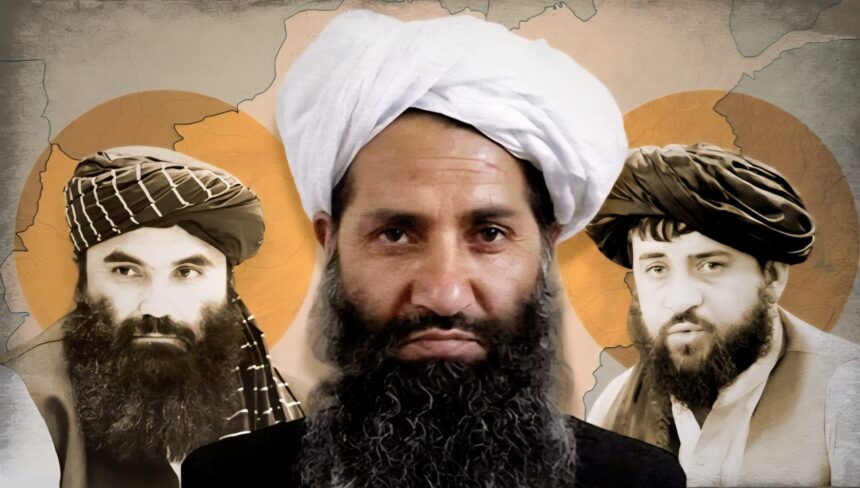
Three decades later, the Taliban still confront the same unresolved transition: moving from insurgency to state administration. Security analyst Imtiaz Gul describes this not merely as a technical deficit but as a civilizational challenge, arguing that the movement remains deeply tribal and rigidly conservative, with limited conceptual space for a modern nation-state. In this worldview, authority is exercised through territorial control rather than institutional governance.
This structural limitation, the analysis suggests, explains the Taliban’s persistent difficulty in adapting to the demands of statehood. Their strict interpretation of religion, combined with Afghanistan’s entrenched tribal composition, has constrained the development of inclusive and functional institutions.
While previous governments attempted however imperfectly to construct state institutions, The Friday Times notes that many of these structures collapsed rapidly once external support was withdrawn, revealing the shallow foundations of governance in Afghanistan.
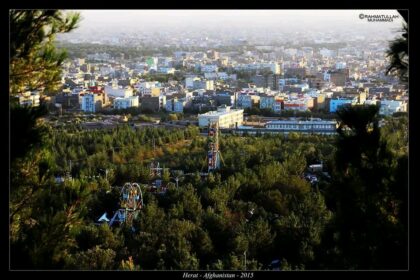
Urban centers such as Kabul continue to display elements of social and economic life: private media outlets operate under restrictions, restaurants remain open, and limited cultural activity persists. Yet all of this functions under an unpredictable regulatory environment shaped by discretionary enforcement rather than codified law.
The Taliban, the report states, did not inherit a blank slate but a fractured state: depleted bureaucracy, mass elite migration, and a society exhausted by four decades of conflict. Their instinctive response has been the consolidation of power within a narrow ruling circle marked by deep internal mistrust of broader Afghanistani society.
Despite these constraints, Afghanistan today is not a replica of the 1990s. Journalist Ali Latifi offers a grounded account from within the country, noting that daily life in major cities no longer mirrors the first Taliban era. Social life persists in constrained but visible forms: families dine outside, women move in public spaces, private media continues within red lines, and music once entirely banned still survives in homes and private gatherings, albeit under growing pressure.
Yet this normalization is accompanied by pervasive uncertainty. Rules are enforced inconsistently, creating an environment where outward stability masks underlying insecurity. Fear has not disappeared; it has become quieter, more ambient.
Afghanistani activist Ahmad Sharifzada presents a starkly different interpretation. Speaking from abroad but relying on internal networks, he argues that the Taliban have already failed the most fundamental test of legitimacy: inclusivity. According to him, governance is concentrated within a single ethnic framework (Pashtun-dominated), while non-Pashtun communities who constitute a demographic majority remain excluded from meaningful political power.
Sharifzada further argues that economic extraction, fiscal pressure, and the diversion of state resources toward armed networks have intensified public resentment. He warns that the Taliban’s refusal to engage in political dialogue eliminates peaceful pathways for transition, leaving confrontation as the only remaining language of resistance.
The report raises a broader question: whether inclusivity alone can resolve Afghanistan’s deeper structural contradictions. Historically, successive governments whether nationalist, coalition-based, or internationally supported have struggled to translate internal political pluralism into regional stability.
From Daoud Khan to the Northern Alliance and the government of Ashraf Ghani, Afghanistani administrations have consistently faced strained relations with neighboring Pakistan, persistent disputes over the Durand Line, and competing regional alignments. The analysis suggests there is no guarantee that a future “inclusive government” would necessarily produce different external behavior or resolve entrenched geopolitical tensions.
Inclusivity, it argues, may represent a normative ideal but not a structural solution.
Reflecting on Taliban governance, The Friday Times concludes that the movement has internalized certain lessons from Afghanistan’s turbulent history:
• The importance of centralized command
• The utility of internal cohesion through coercion
• The avoidance of visible fragmentation that undermined previous regimes
However, it argues the Taliban have failed to recognize a more fundamental principle: control is not equivalent to consent.
Afghanistan today remains economically constrained, diplomatically isolated, and heavily dependent on humanitarian assistance. International actors continue to oscillate between engagement and containment, while ordinary Afghanistani citizens bear the costs of sanctions, frozen assets, and stalled investment flows.
The country’s future trajectory, the report emphasizes, will depend less on internal decrees than on how the Taliban manage relations with major global powers, particularly the United States and Europe. Engagement without reform risks legitimizing exclusionary governance; isolation without strategy risks deepening humanitarian collapse.
More than four years after their return to power, Afghanistan once again stands at a familiar crossroads. The Taliban having consolidated authority under conditions resembling their original rise in the 1990s are no longer in a transitional phase of insurgency. The central question is no longer how they captured power, but whether they have used it to move beyond war toward governance.
Whether this transformation is achievable remains, as the report concludes, an open and unresolved question.