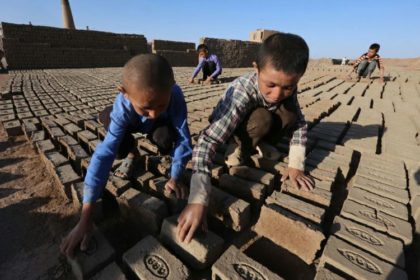

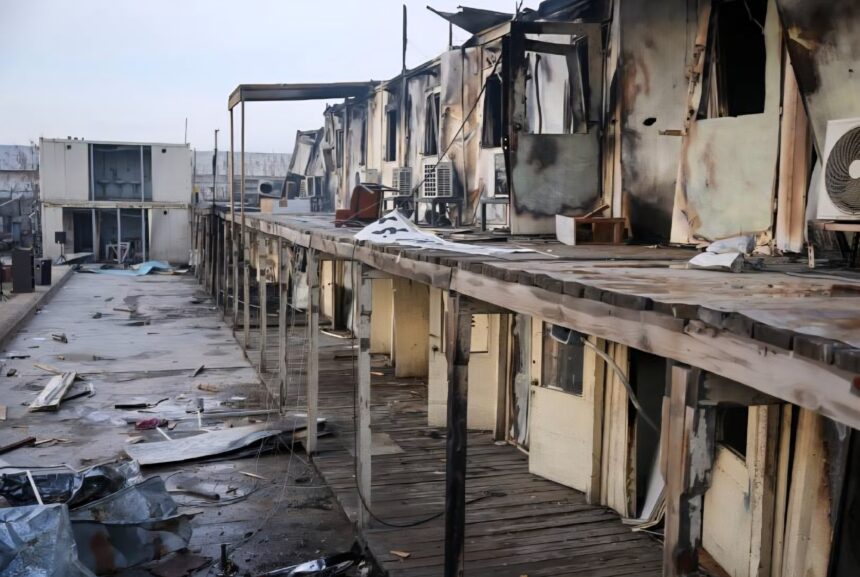
RASC News Agency: At least 13 people, including 11 children, were killed after Pakistani military aircraft struck locations in Afghanistan’s eastern provinces of Kunar, Khost, and Paktika, according to Taliban spokesperson Zabihullah Mujahid. He said another 14 people mostly women and children were wounded in the attacks, which reportedly hit civilian residential areas.
The casualty figures were released by the Taliban authorities, who have exercised de facto control over Afghanistan since seizing power in August 2021 without electoral legitimacy or public mandate. Independent verification remains difficult due to severe restrictions on media access and independent reporting imposed by the Taliban across the country.
Pakistan has not publicly acknowledged responsibility for the operation. However, Pakistani security officials told Reuters that the strikes targeted facilities and hideouts allegedly used by Pakistani militant groups operating from Afghanistan’s territory.
The latest escalation is the most recent chapter in a long-running and increasingly dangerous confrontation between Islamabad and the Taliban regime over cross-border militancy. For years, Pakistan has accused the Taliban of allowing armed groups most notably Tehrik-i-Taliban Pakistan (TTP) to use Afghanistan as a sanctuary for planning, recruiting, training, and launching attacks inside Pakistan.
The Taliban, whose own movement emerged from the same extremist ideological ecosystem that produced the TTP, has consistently rejected those allegations. Taliban officials maintain that Pakistan’s security challenges are an internal matter. Yet numerous United Nations assessments and independent monitoring reports have repeatedly highlighted the presence and continued activities of multiple militant organizations operating from Afghanistan’s territory.
The strikes come at a particularly fragile moment. A tenuous ceasefire reached in March following months of deadly border clashes remains under severe strain. Despite repeated diplomatic engagements and regional mediation efforts, fundamental disagreements between Islamabad and the Taliban remain unresolved.
China has emerged as a key intermediary, attempting to prevent relations between the two neighbors from deteriorating further. Beijing views stability in Afghanistan as essential to regional security, economic connectivity, and the protection of its strategic interests throughout Central and South Asia.
The current crisis reflects a broader transformation in Afghanistan’s security environment since the Taliban’s return to power.
Before 2021, the presence of international forces, diplomatic missions, and multilateral oversight mechanisms provided a degree of restraint against large-scale cross-border military action. That framework disappeared following the collapse of the former Afghanistan’s Republic and the Taliban’s takeover of Kabul.
The resulting vacuum has created conditions in which military escalation can occur with far fewer external constraints.
For Pakistan, mounting domestic pressure to curb insurgent violence has intensified calls for decisive action. Security forces in Khyber Pakhtunkhwa and Balochistan continue to face frequent attacks from militant groups. Pakistani officials increasingly argue that the Taliban has either failed or refused to dismantle militant networks operating from areas under its control.
The Taliban, meanwhile, insists that it bears no responsibility for attacks inside Pakistan. Critics, however, argue that the group’s ideological affinity with the TTP, combined with its unwillingness to take meaningful action against militant sanctuaries, has significantly contributed to regional instability.
Beyond the military and political dimensions, the airstrikes have renewed concerns about civilian protection.
Reports of child casualties are likely to fuel anti-Pakistan sentiment across Afghanistan, particularly in communities already traumatized by decades of conflict and foreign military operations.
The Taliban has sought to portray itself as the defender of Afghanistani sovereignty in the aftermath of the strikes. Yet observers note that the same authorities continue to restrict independent access to affected areas, making comprehensive investigations difficult.
Human rights advocates have repeatedly warned that civilian populations trapped along the Afghanistan-Pakistan border are paying the highest price for a conflict over which they have little control.
The implications extend well beyond the immediate battlefield.
Any prolonged confrontation between Pakistan and the Taliban could disrupt regional trade routes, refugee management mechanisms, border security cooperation, and major connectivity projects linking South Asia with Central Asia.
The crisis also threatens broader regional stability at a time when neighboring states remain concerned about the potential spread of extremism and insecurity from Afghanistan.
Several key actors are directly affected:
Pakistan’s government and military, which seek to contain cross-border militant threats and improve domestic security.
The Taliban authorities, who remain internationally isolated and face growing scrutiny over their handling of militant groups.
Tehrik-i-Taliban Pakistan (TTP), the militant organization at the center of the dispute.
Border communities, which face the greatest risks from military escalation while receiving limited protection from either side.
China, whose mediation efforts have become increasingly important.
Central Asian states and other regional stakeholders concerned about the spillover effects of instability.
Humanitarian organizations, many of which continue to face severe operational restrictions under Taliban rule.
The immediate question is how the Taliban will respond.
The group is expected to issue strong condemnations and may seek diplomatic support from regional actors and international institutions. However, its ability to mobilize significant international pressure remains constrained by its lack of formal recognition and continuing political isolation.
Pakistan, for its part, may continue conducting targeted operations if it concludes that militant groups remain active across the border. Such a scenario would significantly increase the risk of further military incidents despite the existence of the March ceasefire.
China’s mediation efforts are therefore likely to become even more critical in the coming weeks. Beijing has substantial interests in preventing a broader conflict and preserving a minimum level of regional stability.
In the longer term, however, the core dispute remains unresolved.
At the heart of the crisis lies the question of militant sanctuaries inside Afghanistan. Pakistan insists that these networks continue to operate under Taliban rule. The Taliban denies the allegations but has yet to demonstrate either the willingness or the capacity to fully dismantle armed groups that threaten neighboring states.
Until credible and verifiable security mechanisms are established, sporadic military confrontations are likely to persist. As a result, tensions along one of the region’s most volatile frontiers may remain elevated for the foreseeable future, carrying significant consequences for regional security, economic connectivity, and the lives of millions of ordinary Afghanistani civilians.