
RASC News Agency: According to an analytical report by the Associated Press, following military tensions between Pakistan and the Taliban late last year and the subsequent closure of key border crossings, Afghanistani traders were forced to redirect their transit routes from Pakistan’s strategic port of Karachi to Iran’s western port system. However, the stability of this alternative corridor proved short-lived. Bandar Abbas, one of Iran’s principal ports, is located along the Strait of Hormuz a critical global maritime chokepoint that has been severely disrupted by escalating regional conflict.
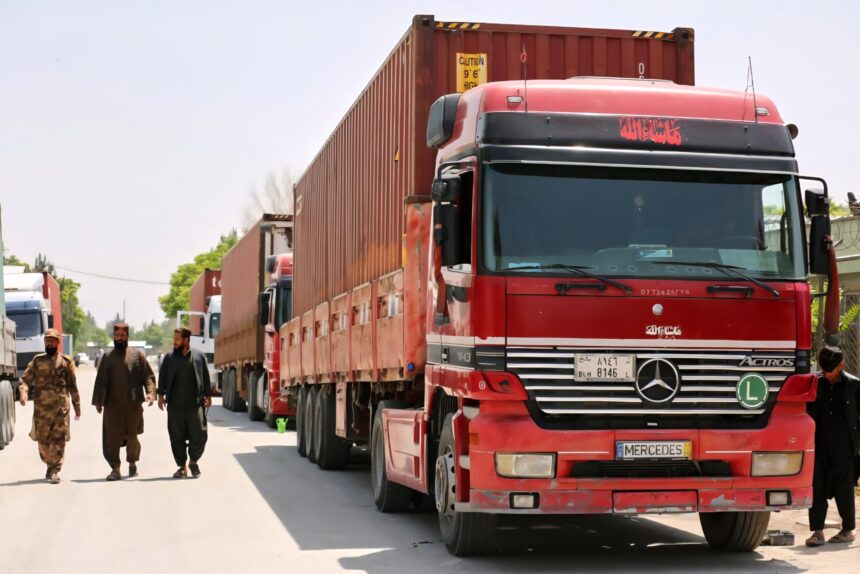
As a result, hundreds of commercial vessels and thousands of crew members have been stranded, while thousands of containers carrying essential goods destined for Afghanistan remain immobilized in Pakistan. The simultaneous disruption of supply chains through both Pakistani ports and the Strait of Hormuz has imposed a severe burden on Afghanistan’s fragile economy and humanitarian relief operations.
The United Nations World Food Programme (WFP), which provides nutritional supplements for malnourished mothers and children as well as high-energy fortified biscuits for schoolchildren in Afghanistan, is now confronting soaring transportation costs and major obstacles in supply delivery. Previously, much of the organization’s humanitarian cargo entered Afghanistan through Pakistan. However, after border closures in October, relief agencies were compelled to reroute shipments through Dubai and then onward through Iran.
That alternative route has also been disrupted, as regional instability and restrictions affecting maritime traffic through the Strait of Hormuz have significantly impeded access to Iranian ports. According to aid officials, dwindling supplies accelerated rapidly, and by mid-April, some critical humanitarian stocks had been exhausted.
John Aylieff, the World Food Programme’s Country Director in Afghanistan, described the gravity of the situation:
“At a time when malnutrition indicators are approaching unprecedented levels, health clinics are being forced to turn away mothers and children in desperate need because we simply do not have food assistance available to provide.”
The crisis comes as international aid organizations are already struggling with severe funding shortages. WFP has reportedly received only 8 percent of the funding required for its operations in Afghanistan this year. Aylieff stated that the combination of financial constraints, regional conflict, and disruptions to traditional supply routes has cut off critical operational lifelines at one of the worst possible moments, placing additional pressure on domestic markets.
With conventional maritime routes severely constrained, shipments are increasingly being forced onto lengthy and costly overland routes through Central Asia. According to WFP assessments, these logistical adjustments have tripled transportation costs and increased the price of therapeutic nutritional products by as much as 35 percent.
One notable example involves a shipment of fortified biscuits that became stranded in the United Arab Emirates after regional tensions escalated. Instead of traveling directly through Iran into Afghanistan, the cargo was rerouted through an extensive overland journey spanning Saudi Arabia, Jordan, Syria, Turkey, Georgia, Azerbaijan, and across the Caspian Sea into Turkmenistan before reaching Afghanistan. The shipment has reportedly spent more than three weeks in transit.
The private sector has also been severely affected. Lotfullah Akbari, the owner of a small construction materials import company in Kabul, stated that goods purchased from China remain stuck aboard vessels unable to transit affected maritime routes. At the same time, freight charges have surged dramatically.
Akbari warned that continued disruptions could force him to abandon entire shipments, as transportation costs have exceeded the value of the goods themselves. Under such conditions, moving the cargo would only deepen financial losses and potentially drive his business into bankruptcy.
Gul Mir Amini, logistics manager at Ettifaq Bamyan International Transport and Forwarding Services, confirmed that container rental costs have risen from approximately $3,000–$3,600 to more than $7,000 per container, while some specialized shipments now cost over $11,000. Humanitarian cargo has also been affected by these increases.
Similarly, Mohammad Murtaza Eshaqzai, a trader in Kabul’s electronics sector, reported that the cost of clearing shipments from China had increased from approximately $1,100 to more than $15,000. He described the current situation as a near-total paralysis of both imports and exports.
Eshaqzai called on the Taliban authorities to reduce tensions and resolve border disputes with Pakistan in order to restore traditional trade routes. Without such measures, he warned, Afghanistan’s commercial sector could face devastating consequences.
Meanwhile, Abdul Salam Jawad, spokesperson for the Taliban-controlled Ministry of Commerce and Industry, claimed that inflation has remained around 3 percent due to increased imports through Russia, China, and Central Asia. He stated that authorities are awaiting improved conditions in the Strait of Hormuz before normal export activities can resume.
However, Khan Jan Alokozai, a senior adviser to the Afghanistan Chamber of Commerce and Investment, acknowledged that more than 60 percent of Afghanistan’s trade network now depends on Central Asian corridors to mitigate the effects of regional disruptions. He noted that a significant portion of food products and petroleum supplies are currently imported from Russia, while trade with Turkey is increasingly conducted through railway networks passing via Iran or Azerbaijan.
These forced shifts in trade routes illustrate the mounting economic pressures facing Afghanistan as businesses, humanitarian agencies, and ordinary citizens struggle to cope with an increasingly complex regional environment and the growing challenges confronting the country’s economy.