
RASC News Agency: A newly published analysis in Eurasia Review by Dr. Shahbaz Khan portrays Taliban-controlled Afghanistan as a model of “institutionalized repression,” arguing that the country has been transformed into a deeply authoritarian system in which fear functions as an instrument of governance, silence is treated as proof of loyalty, and fundamental freedoms are viewed as threats to the Taliban’s ideological order.
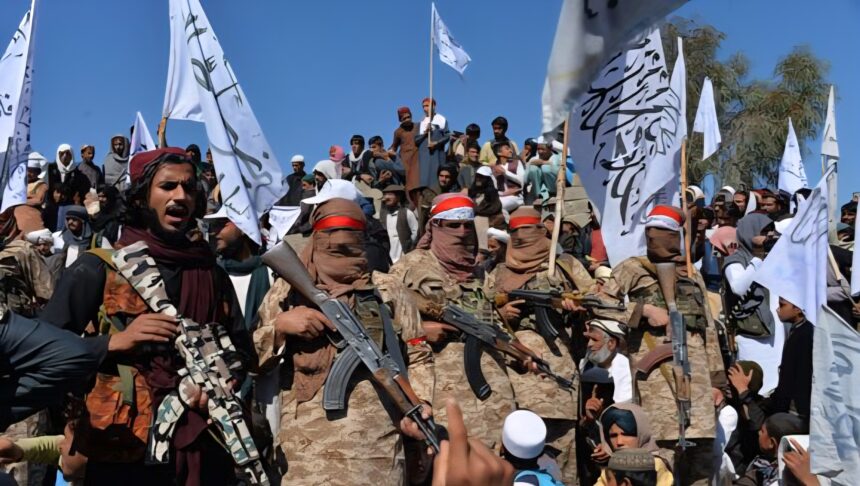
According to the analysis, Afghanistan under the Taliban is no longer governed through democratic institutions or accountable political mechanisms, but through unilateral decrees, coercive enforcement, surveillance structures, sweeping prohibitions, and social punishment. Human rights organizations increasingly describe the current system as one of the most severe forms of state repression in the contemporary world.
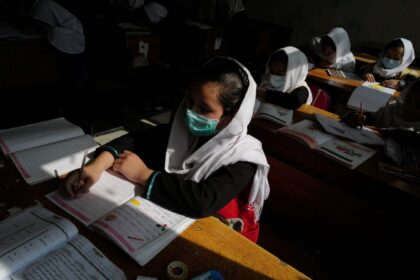
The article argues that Afghanistani women and girls remain the primary victims of this ideological order. The exclusion of girls from secondary schools and universities, the banning of women from large sectors of employment, restrictions on movement, and the removal of women from public life are described not as temporary emergency measures, but as part of a deliberate “architecture of exclusion.” International organizations, including Human Rights Watch, have repeatedly warned that the Taliban are systematically erasing women from social, political, and institutional participation.
The analysis further states that the term “gender apartheid” is no longer merely rhetorical, but an increasingly accurate description of conditions inside Afghanistan. Women are not only subjected to discrimination, but to organized exclusion from education, media, government institutions, civil society, parks, and decision-making spaces. A political system that deprives half of the population of dignity, participation, and basic rights, the article argues, cannot claim moral or political legitimacy.
Taliban repression, the report notes, extends far beyond women’s rights. Afghanistani society as a whole is increasingly overshadowed by what the article calls a “culture of intimidation,” in which critics, journalists, civil society activists, former officials of the previous republic, and ordinary citizens face risks of arbitrary detention, enforced disappearance, torture, and threats.
Amnesty International has documented repeated allegations of arbitrary arrests, extrajudicial killings, torture, and the violent suppression of protests by Taliban authorities. According to the analysis, the silence currently dominating public life in Afghanistan should not be mistaken for stability; rather, it reflects a society governed by fear of the Taliban’s security apparatus.
The destruction of media freedom is described as one of the most devastating reversals of the past two decades. Through media closures, censorship, surveillance, intimidation, and the detention of journalists, the Taliban have nearly eliminated independent reporting within the country. Human rights observers report that pressure on remaining media outlets intensified further during 2025, resulting in tighter information control and harsher punishment of critical journalists.
The article argues that any government fearful of cameras, microphones, and independent journalism ultimately acts against its own population rather than in service of it. The erosion of press freedom, it says, has enabled many alleged human rights violations to occur beyond public scrutiny.
The analysis also challenges Taliban claims of political legitimacy. It argues that legitimacy cannot be derived solely from territorial control or the issuance of decrees, but must rest on public consent, representative governance, justice, and respect for human dignity principles the author contends are fundamentally absent from the Taliban system.
According to the article, the Taliban perceive ethnic diversity, political pluralism, and independent civic participation as existential threats to their ideological structure. Opposition is criminalized, while women’s autonomy is framed as defiance against the regime’s interpretation of social order.
The report also references recent concerns raised by the United Nations regarding new Taliban restrictions introduced in 2026, including policies affecting family separation and additional legal limitations imposed on women, particularly concerning divorce rights and personal freedoms. These measures, the analysis argues, demonstrate that the Taliban are not moving toward moderation or reform, but are instead institutionalizing repression in increasingly formalized ways.
In its concluding sections, the article urges the international community not to treat Afghanistan merely as a distant humanitarian crisis. It warns that normalizing relations with the Taliban without meaningful human rights conditions risks rewarding systematic repression and legitimizing authoritarian rule.
The author argues that any international engagement with the Taliban should remain conditional upon reopening schools and universities to girls, restoring women’s right to work, ending arbitrary detentions, protecting journalists, permitting international monitoring, and establishing an inclusive political framework.
The article concludes by emphasizing that the people of Afghanistan should not be condemned to live under permanent fear. It calls on the international community to listen to the voices of women, journalists, civil society activists, non-Pashtun communities, and other victims who continue to resist Taliban authoritarianism despite severe personal risks.
According to the author, the Taliban’s greatest vulnerability lies in the fact that their system is built upon fear and sustained through the suppression of truth. A stable and just future for Afghanistan, the analysis concludes, will only become possible when human dignity not ideological repression forms the foundation of political authority.