
RASC News Agency: Security tensions between Pakistan and the Taliban authorities in Afghanistan have escalated once again following Pakistani airstrikes in border regions. Islamabad claims the strikes targeted armed groups operating from Afghanistan’s territory that it says are responsible for a surge in deadly attacks inside Pakistan.
The Taliban administration has condemned the operations as violations of Afghanistan’s sovereignty and has vowed a “proportionate response.” The developments underscore the fragility of regional stability and the increasingly complex geopolitical competition in South Asia.
According to reporting by Al Jazeera, the latest Pakistani strikes followed several violent incidents inside Pakistan. Among the most serious was a February 6 suicide bombing at a Shiite mosque in Islamabad that killed dozens of worshippers.
Pakistani officials stated that intelligence evidence links the attackers to command networks based in Afghanistan. Islamabad described the air operations as “intelligence-based and targeted” actions against alleged militant infrastructure.
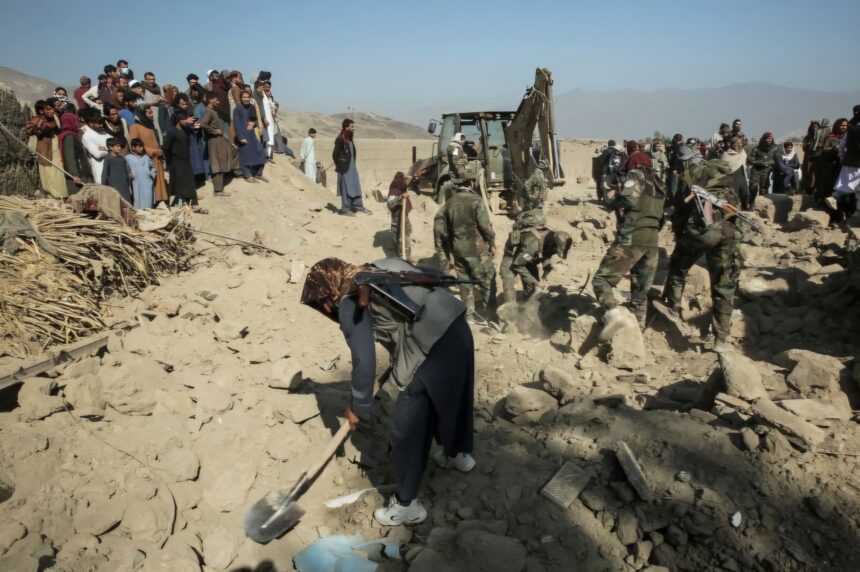
The Taliban, who have ruled Afghanistan since 2021 under their self-declared Islamic Emirate, rejected the allegations. They asserted that Pakistani strikes hit residential areas and a religious school. Afghanistani sources reported at least 17 fatalities in Nangarhar province. Kabul has pledged a “measured and calculated” response.
At the regional level, India condemned Pakistan’s airstrikes and emphasized the importance of respecting Afghanistan sovereignty. India’s Ministry of External Affairs stated that civilians, including women and children, were among the casualties.
Regional analysts argue that growing diplomatic engagement between New Delhi and the Taliban authorities could further complicate South Asia’s security dynamics. Although India lacks direct geographic access for military intervention in Afghanistan, expanded diplomatic contacts may influence broader regional alignments and intensify Islamabad’s strategic concerns.
Pakistani officials maintain that groups such as Tehrik-i-Taliban Pakistan (TTP) are using Afghanistan’s territory to organize attacks. The Taliban deny formal control over anti-Pakistan armed factions and reject claims of official support.
Islamabad has repeatedly called on the Taliban authorities to take concrete action against militant networks, arguing that previous requests have yielded no tangible results.
Security experts describe Pakistan’s military response as rooted in deterrence doctrine. However, they warn that continued cross-border strikes could trigger a new cycle of retaliatory violence along the frontier.
Analysts caution that intensified military pressure may inadvertently push the Afghanistani Taliban closer to anti-Pakistan militant actors, reinforcing regional polarization rather than containing it.
Research institutions based in Islamabad, including the Pakistan Institute for Peace Studies, report a significant rise in violence in recent years. Their data indicate that more than 1,000 people were killed in terrorism-related incidents in Pakistan in 2025, with attack numbers rising substantially compared to the previous year.
Pakistani military officials have reiterated that any attack originating from Afghanistan’s soil will receive a proportional response. Taliban authorities, meanwhile, insist that militant groups opposing Pakistan operate independently and are not under Kabul’s formal command.
Security analysts broadly agree that the Taliban–Pakistan crisis cannot be resolved solely through military means. Diplomatic and economic mechanisms will be essential to prevent sustained escalation.
Proposals under discussion include expanded intelligence cooperation with regional actors such as:
• China
• Qatar
• Saudi Arabia
• Turkey
Some researchers warn that escalating Pakistani military operations could unintentionally strengthen the Taliban’s domestic standing within Afghanistan by reinforcing nationalist narratives against foreign intervention. At the same time, Islamabad faces mounting internal pressure to curb militant violence.
The Taliban–Pakistan border remains one of the most complex security zones in the world. While Pakistan frames its recent airstrikes as deterrent measures, the risk of breaking a fragile de facto ceasefire and entering a renewed cycle of limited conflict remains real.
In this volatile environment, the future of regional security will depend less on battlefield calculations and more on whether sustained diplomatic engagement can prevent escalation between Islamabad, Kabul, and New Delhi.