

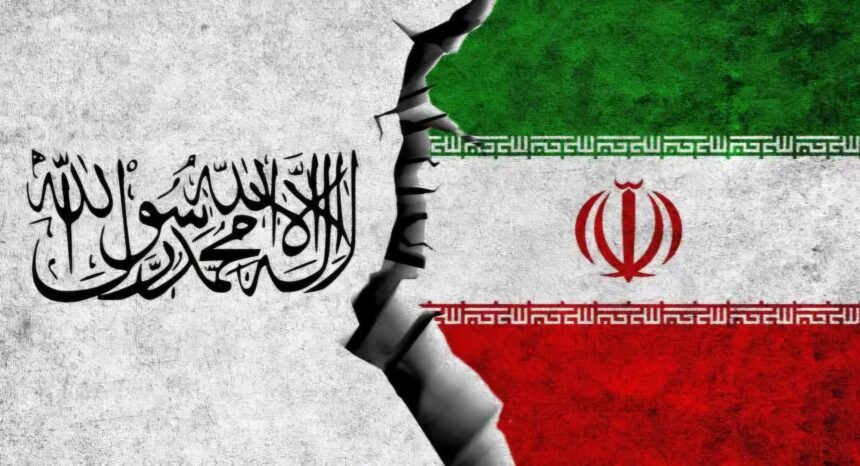
RASC News Agency: Since 2014, the Islamic Republic of Iran has drawn closer to the Taliban for two main reasons:
• the Taliban’s hostility toward the United States;
• their confrontation with ISIS.
From Tehran’s strategic perspective, the principle “the enemy of my enemy is my friend” appeared valid at that time. In the official narrative of the Islamic Republic, ISIS was portrayed as a regional force allegedly centered around certain Tajik groups groups described as deeply hostile toward Shiites and, in Tehran’s view, supported by the United States in Syria and Iraq.
At the same time, there was growing concern in Afghanistan that the United States might exploit the historical divide between the Pashtun-based Taliban and Tajiks. This perception further justified closer ties with the Taliban among sections of Iran’s security and political elites.
Over the past five years, the management and direction of Tajik fronts have effectively been placed under Iranian oversight from opening offices in Mashhad to regulating political and media activities. All of this was aimed at reducing Taliban sensitivities and preventing the emergence of a new threat against them.
Now that Washington is once again seen as the primary threat by Tehran, and the Taliban have consolidated their rule in Kabul, the time has come according to this logic to expand relations even further with the Pashtun-centered Taliban government.
Recent remarks by Mr. Beikdel, Iran’s ambassador in Kabul, suggest that formal recognition of the Taliban by Tehran is no longer far-fetched an action that, from a power-politics perspective, some may consider “rational.”
Yet the central question remains:
How can such a decision be made without considering the interests of twenty million Afghanistani Tajiks who share deep linguistic, cultural, and identity ties with Iran?
What will be the consequences of this approach?
Time will provide the answer. One reality, however, is already clear: the young Tajik generation will no longer remain silent in the face of the Taliban’s structural oppression.
If international recognition and the resolution of historical hostilities could guarantee stability in Afghanistan, then the government of Ashraf Ghani recognized by 173 countries and supported by 170,000 foreign troops alongside over 400,000 domestic security forces would not have collapsed within hours.
In the end, Ghani did not even have time to put on his shoes.
Therefore, policymakers and our ethnic kin in the Islamic Republic of Iran must treat these sensitivities with the seriousness they deserve.