
RASC News Agency: Four years after the Taliban’s return to power, Afghanistan is no longer defined by daily suicide bombings and large-scale explosions. Yet, as reported by ABC Australia, violence has not disappeared; it has merely changed form. Bombs have been replaced by decrees, restrictions, and an expansive apparatus of control. What the Taliban present as “stability” has come at the cost of systematic repression of rights, freedoms, and livelihoods.
In Kabul, markets are busy and daily life appears, at least superficially, to continue. Many residents acknowledge that the city feels more secure than during previous decades of war. However, this calm is not the product of social trust or inclusive governance. It is enforced through armed checkpoints, constant surveillance, and the criminalization of dissent. In this system, security is achieved not by consent, but by coercion a stability that demands silence and strips citizens of choice.
According to ABC Australia, the Taliban have excluded Afghanistani women from public life on an unprecedented scale, barring them from parks, universities, most forms of employment, and all education beyond the sixth grade. The Ministry for the Promotion of Virtue and Prevention of Vice has replaced institutions designed to support women, establishing instead a nationwide mechanism to enforce a rigid, gender-exclusive ideology. These measures are neither temporary nor incidental; they are structural, deliberate, and comprehensive, effectively erasing women from the public sphere.
More than half of Afghanistan’s estimated 42 million people now depend on humanitarian assistance. Yet, ABC reports that deep cuts in international aid triggered by the Taliban’s repressive rule have forced hundreds of health facilities to shut down, severing access to food and medical care for millions. Taliban authorities claim that humanitarian assistance should be “non-political,” while refusing to acknowledge that it is precisely their policies restrictions on women, intimidation of aid workers, and lack of accountability that have shattered donor confidence and obstructed sustained support.
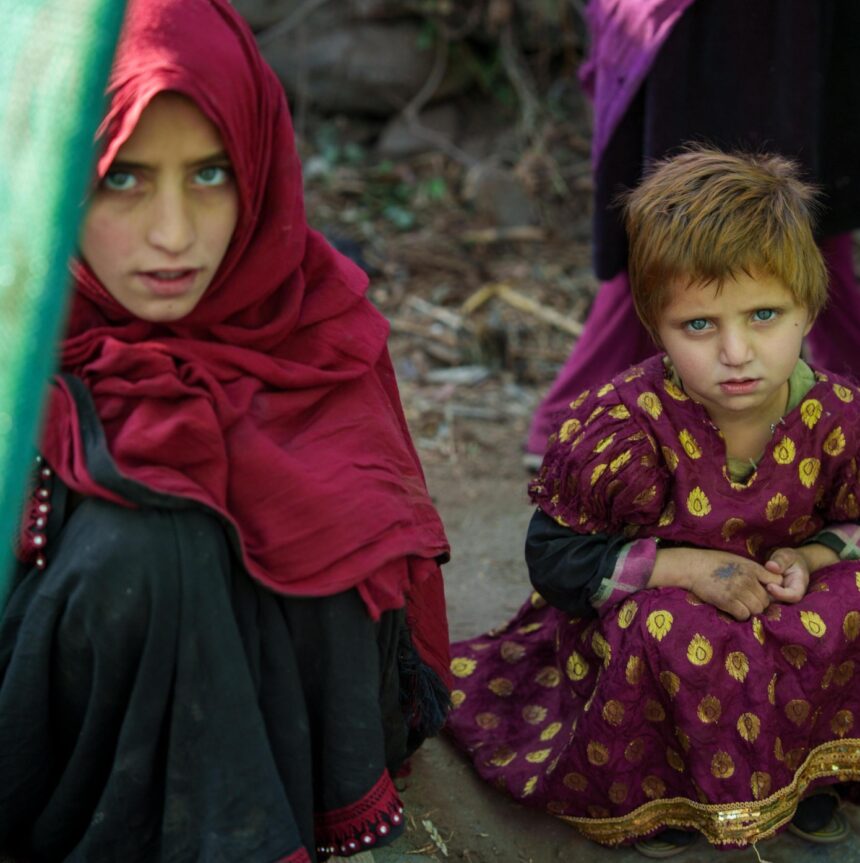
At the Indira Gandhi Children’s Hospital in Kabul, wards treating malnourished children are overflowing. Doctors warn that children are dying from illnesses that are entirely preventable. United Nations estimates indicate that 3.5 million children suffer from acute malnutrition, with 1.7 million at risk of death. This humanitarian catastrophe is not the result of natural causes alone, but of a deadly convergence of poverty, aid obstruction, and Taliban governance choices.
ABC Australia further reports that public protest has virtually vanished, journalists face detention and intimidation, and public corporal punishments have returned. Despite reported divisions within the Taliban leadership between figures portrayed as “pragmatists” and the hardline ideological core policy outcomes remain unchanged. Orders issued from Kandahar override all other considerations, concentrating power in a narrow clerical circle and rendering meaningful reform impossible.
Girls above the sixth grade remain excluded from education, with no clear timeline for reopening schools. Taliban officials continue to speak vaguely of creating a “suitable environment,” without defining its parameters. The result, as ABC notes, is the systematic denial of education to an entire generation, posing a direct threat to Afghanistan’s future healthcare, education, and social stability. Responsibility for this long-term damage lies squarely with the Taliban’s ideological policies.
A deadly earthquake in late summer, which killed more than 2,200 people, briefly exposed the arbitrariness of Taliban rules. Male aid workers were permitted to assist women, and a small number of female health workers accompanied by male guardians were allowed into remote areas. This temporary relaxation demonstrated that Taliban restrictions are not rooted in humanitarian necessity, but in ideological choice. Once the immediate crisis passed, the prohibitions swiftly returned.
As ABC Australia concludes, Afghanistan today may appear calmer on the surface, but beneath that calm lies an accumulation of crises hunger, poverty, repression, and vulnerability to natural disasters borne disproportionately by the weakest members of society, especially women and children. The Taliban market security as an achievement, yet in practice they have deepened Afghanistan’s suffering by dismantling rights, obstructing lifesaving assistance, and governing through fear rather than legitimacy.