
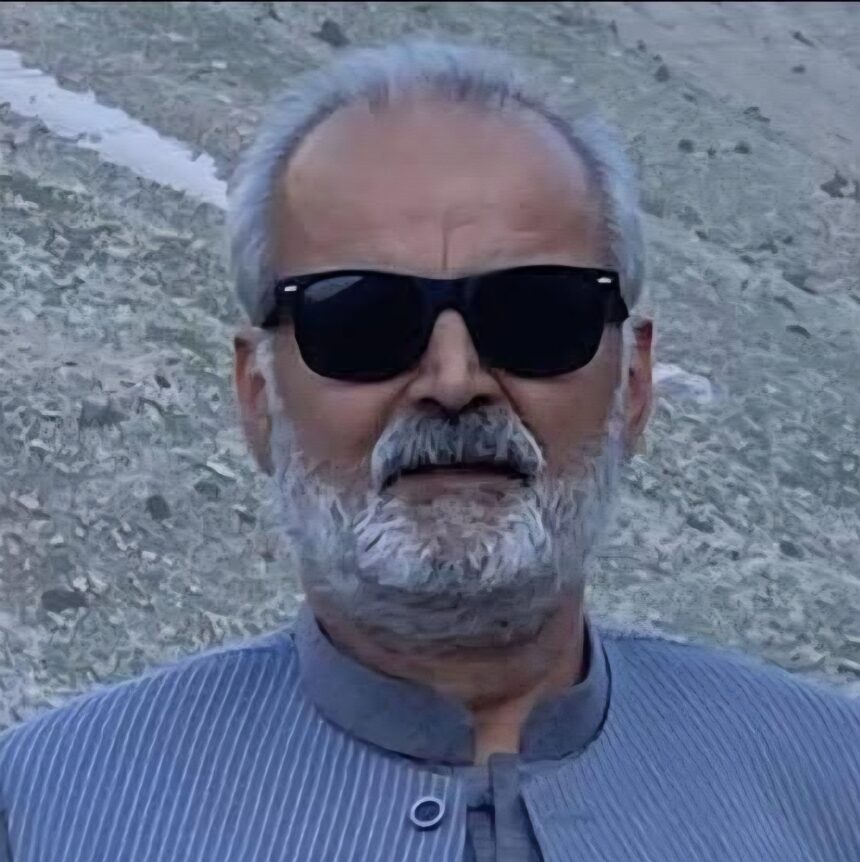
RASC News Agency: Following the violent suppression of civilian demonstrators in Herat and reports of direct fire by Taliban forces against protesters, Gharzai Laiq, son of the late Afghanistani political figure Sulaiman Laiq, published a sharply worded commentary titled “Once Again, Under the Pretext of the Herat Uprising.” In the article, he sought to dismiss and discredit the recent protests that erupted in response to the Taliban’s treatment of women in the western province.
According to critics, Laiq’s remarks exemplify an exclusionary and deeply polarizing form of political discourse in which tribal loyalties and ideological affiliations appear to supersede universal principles of justice, accountability, and human rights. They argue that his intervention attempts to rehabilitate the public image of a regime accused by numerous international organizations of systematic repression, particularly against women and dissenting voices.
At the outset of his essay, Laiq revisited the 2015 lynching of Farkhunda Malikzada, a young Afghan woman who was falsely accused of blasphemy and killed by a mob in Kabul. He argued that the public response to Farkhunda’s murder during the republican era was insufficient, drawing comparisons between that tragedy and the present-day demonstrations in Herat.
Critics contend that this comparison serves to delegitimize contemporary protests by shifting attention away from the grievances that brought women and residents of Herat into the streets. They argue that invoking past injustices should not be used to diminish current demands for rights and accountability.
In another section of his article, Laiq launched a sweeping attack on a broad spectrum of political actors, civil society groups, and advocates of pluralism and federalism. Referring to them in highly derogatory terms, he questioned the legitimacy of those now speaking out in defense of women’s rights.
Observers have described such rhetoric as reflective of an authoritarian political culture that frames dissent as betrayal and casts critics as enemies rather than participants in democratic debate. Human rights advocates warn that language of this kind risks further shrinking civic space in a country where independent activism has already come under severe pressure.
Laiq also argued that the promises of women’s empowerment made during Afghanistan’s republican period had failed to prevent violence against women, suggesting that the current discourse surrounding women’s rights lacks moral consistency.
His detractors reject this reasoning, asserting that shortcomings of previous governments cannot justify the institutionalized restrictions imposed under Taliban rule. They maintain that the right to education, employment, freedom of movement, and equal participation in public life remains fundamental regardless of past failures.
The controversy surrounding Laiq’s remarks intensified after he appeared to characterize the protests in Herat as contributing to instability at a time of heightened regional tensions. From his residence in Europe, he criticized what he portrayed as attempts to exploit public anger for political purposes.
Opponents argue that portraying peaceful protest as a threat to national stability risks normalizing the suppression of civil liberties. They note that the Taliban themselves waged a prolonged insurgency against the former Afghan government and that public demonstrations represent one of the few remaining avenues through which citizens can express dissent under the current political order.
For many Afghanistani activists, the events in Herat symbolize a broader struggle over the country’s future. Women who have taken to the streets despite the threat of arrest, intimidation, or violence have become emblematic of resistance against policies that international human rights organizations have increasingly described as constituting a system of gender-based institutional discrimination.
The debate triggered by Laiq’s article has therefore extended far beyond a single opinion piece. It has reopened difficult questions about historical accountability, ethnic and political polarization, the boundaries of legitimate criticism, and the responsibility of public intellectuals during periods of profound national crisis.
Ultimately, the fierce reactions to Laiq’s statements underscore the depth of Afghanistan’s current divisions. For supporters of the Herat protests, solidarity with women demanding dignity and equal rights is a moral imperative. For others, concerns about political fragmentation and external interference remain paramount. Yet human rights advocates insist that condemning violence against peaceful demonstrators and defending the rights of women should transcend ideological, ethnic, and political fault lines.
As Afghanistan continues to grapple with international isolation, economic hardship, and an increasingly restrictive domestic environment, the struggle over whose voices are heard and whose suffering is acknowledged has become central to the country’s unfolding story.