
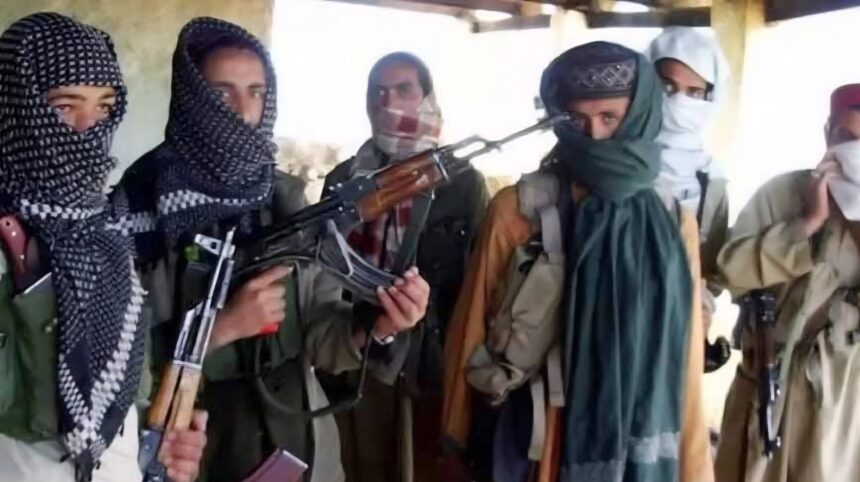
RASC News Agency: The leak of a confidential European Union assessment has once again amplified Western concerns over the expansion of terrorism and violent extremism under Taliban rule in Afghanistan. The report warns that extremist networks operating in and around Afghanistan are no longer a regional issue, but an evolving and direct threat to European security.
According to reporting attributed to Pakistan’s Dunya News, which cites a 23-page classified EU document, terrorism and violent extremism originating from Taliban-controlled Afghanistan have expanded beyond regional boundaries and are increasingly being assessed as a significant security challenge for European states. The intelligence assessment reportedly identifies the Islamic State Khorasan Province (ISIS-K) as the most severe external terrorist threat facing Europe today.
The document argues that the structural collapse of civilian governance and formal security institutions in Afghanistan following the return of Taliban has created fertile ground for transnational extremist networks to expand, reorganize, and operate with greater flexibility. It further suggests that the erosion of institutional oversight has allowed militant actors to exploit unregulated digital spaces for recruitment and ideological propagation.
A key concern highlighted in the report is the increasing use of online platforms and social media ecosystems for radicalization and recruitment. Messaging applications such as Telegram and short-video platforms like TikTok are described as critical tools in disseminating extremist propaganda, targeting vulnerable youth audiences, and facilitating recruitment processes that, in some cases, allegedly extend to children as young as 12. European security agencies reportedly view this form of digital radicalization as one of the most dangerous emerging dimensions of modern extremism.
The leaked assessment further characterizes Afghanistan under Taliban governance as an operational hub for extremist ecosystems, online radicalization networks, and cross-border militant coordination. It warns that the absence of accountable state institutions, combined with severe restrictions on civil liberties and the dismantling of independent civic structures, has created an environment in which extremist organizations can operate with minimal constraint.
The report also draws attention to what it describes as persistent allegations of tolerance, negligence, or indirect accommodation of militant groups by the Taliban administration. While such claims remain politically contested, the document suggests that the continued presence of active extremist formations inside Afghanistan raises serious questions about the effectiveness of counterterrorism enforcement under Taliban rule.
Analysts cited in the report argue that these findings broadly align with long-standing positions expressed by Pakistan, which has repeatedly accused the Afghanistani Taliban of failing to prevent militant groups from using Afghanistan territory as a staging ground for cross-border attacks. Islamabad has also warned that instability emanating from Afghanistan poses not only a regional risk but a broader international security threat.
The document further underscores growing European concern that Afghanistan-linked extremist networks may be extending their operational reach into Europe itself. Intelligence agencies, according to the assessment, no longer treat Afghanistan-origin extremism as a distant regional phenomenon, but as a potential internal security challenge requiring sustained surveillance and countermeasures.
In parallel, the report references escalating border tensions between Pakistan and Taliban-controlled Afghanistan, including recent incidents in South Waziristan, where Pakistan’s military claimed to have targeted positions inside Afghanistan’s territory following attacks on civilians. These developments, it notes, illustrate how the security crisis linked to Taliban governance has increasingly transcended national borders and evolved into a wider regional instability.
Ultimately, the assessment portrays Afghanistan as a critical node in the evolving landscape of global extremism one shaped by institutional collapse, fragmented authority, and the continued presence of organized militant networks. Without substantial structural change and effective counterterrorism enforcement, the report warns, the security consequences are likely to extend well beyond South and Central Asia, potentially shaping Europe’s security environment in the years ahead.