

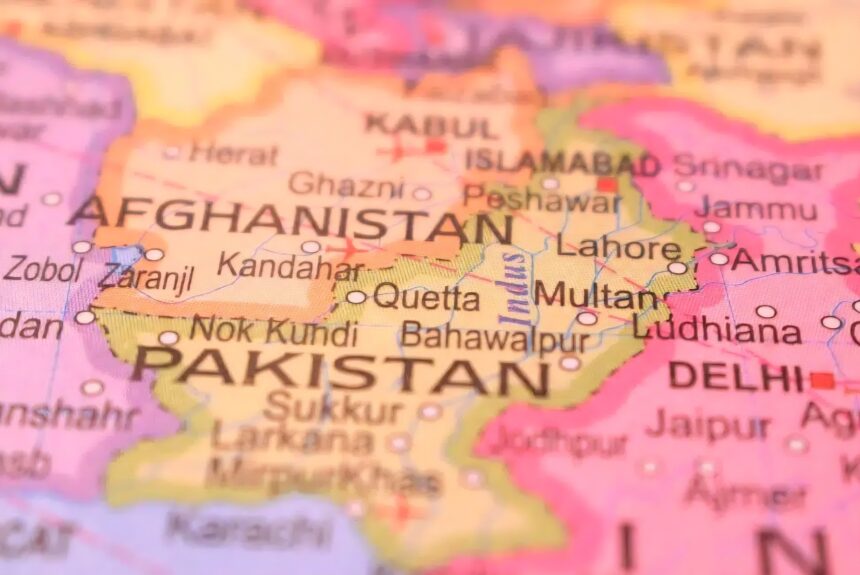
RASC News Agency: According to an analytical report published on Fair Observer by Noor-ul-Huda Atif, Pakistan launched a military operation in February 2026, codenamed “Ghazab-ul-Haq,” targeting sites inside Afghanistan. Islamabad described the move as the result of failed diplomatic efforts and a “last resort” to counter mounting security threats.
The report emphasizes that the return of the Afghanistani Taliban to power in 2021 not only failed to stabilize security but, according to international sources, created conditions for the structural resurgence of militant groups. The mass release of prisoners linked to networks such as al-Qaeda, ISIS, Tehrik-i-Taliban Pakistan (TTP), and others contributed to the reorganization and strengthening of these groups.
Within this context, findings from international bodies including the United Nations monitoring team indicate that operational and ideological overlap between the Taliban and these groups has intensified cross-border threats, directly affecting the security of Pakistan and the wider region.
The report further notes that Pakistan has, in recent years, pursued multiple diplomatic channels to contain these threats from participation in the Doha Agreement to dozens of formal meetings, high-level engagements, and diplomatic exchanges.
However, according to Fair Observer, the Afghanistani Taliban’s failure to take effective action against militant groups has led this process to a deadlock. Analysts interpret this as evidence of either structural incapacity or unwillingness on the part of the Taliban to distance themselves from extremist networks.
The surge in attacks during 2025 and 2026 particularly deadly assaults targeting civilian and security sites in Pakistan is described as a turning point in Islamabad’s policy shift.
The report references a series of attacks that Pakistani officials claim originated from Afghanistan’s territory. In its overall assessment, this pattern suggests that Taliban-controlled Afghanistan has evolved into an operational platform for transnational militant networks.
In response, Pakistan initiated military operations in February 2026 targeting militant positions in Afghanistan’s border provinces. According to the analysis, this marks a transition from a strategy of diplomatic containment to direct security intervention.
The report also highlights airstrikes on facilities and weapons depots, noting that some of the equipment left behind after the withdrawal of U.S. forces has reportedly fallen into the hands of militant groups and is now being used in operations.
Islamabad justifies these actions under the doctrine of “preemptive defense,” aimed at preventing the expansion of terrorist threats. Pakistani officials argue that the country has borne a heavy cost in its fight against terrorism over the past two decades and now faces a threat rooted beyond its borders.
At the same time, the Fair Observer analysis warns that the continuation of this trajectory could institutionalize a cross-border confrontation between Pakistan and the Afghanistani Taliban one that would not only destabilize bilateral relations but also reshape the broader security dynamics of South and Central Asia.
The report concludes that the security crisis between Pakistan and the Taliban has entered a new phase one in which:
• The role of the Afghanistani Taliban as a governing authority lacking full security control is increasingly questioned
• Military force has emerged as a central instrument in Pakistan’s security policy
Under these conditions, the future of Pakistan–Taliban relations will depend more than ever on how this cycle of escalation is managed particularly on whether the Afghanistani Taliban alter their structural approach toward affiliated militant groups.