
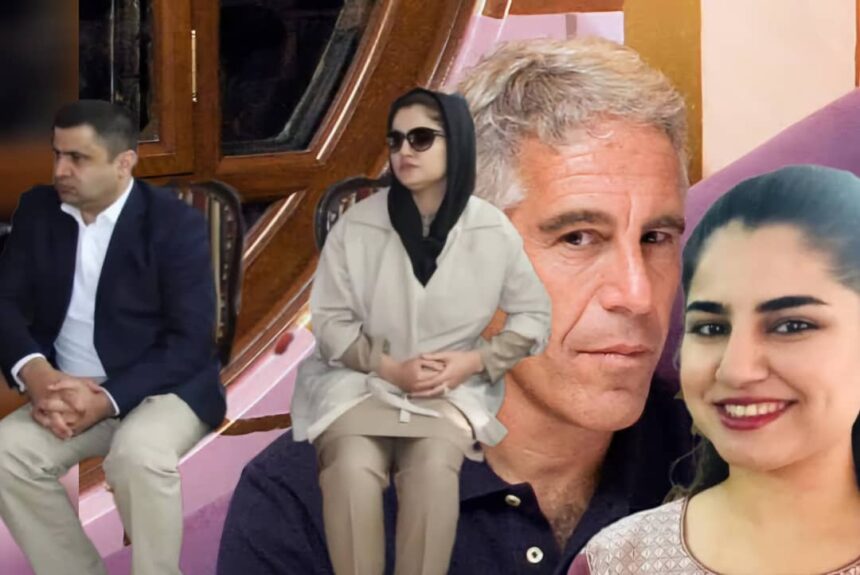
RASC News Agency: In the final years of Afghanistan’s republic, the name Fazl Mahmood Fazli, former head of the Presidential Administration, circulated symbolically in political and media circles under the nickname “Afghanistan’s Epstein.” This label refers not just to an individual but to a structured network of corruption, sexual exploitation, and systematic abuse of political and economic power. According to multiple credible sources, this network exploited regulatory weaknesses and legal loopholes to operate unaccountably for years.
The Fazli Group, leveraging close ties to the Arg, targeted women and young girls for exploitation, funneling them into sensitive positions and opportunities within government institutions. Simultaneously, a cycle of political immunity and influence ensured that independent investigations were impossible. This structure undermined government legitimacy and facilitated Kabul’s fall and the accelerated dominance of the Taliban.
Sources indicate that the Fazli Group operated across Kabul and other socio-economic centers, including neighborhoods such as Haji Nabi Town, Shahr-e Naw, Wazir Akbar Khan, and Arya Town areas where sexual exploitation and corruption persisted with political protection and judicial impunity for years.
Vulnerable women and girls were lured into positions presented as professional or governmental opportunities but became victims of systematic exploitation and political leverage. Experts emphasize that this pattern represented organized, structural corruption intersecting with government and security circles.
The resemblance to international cases, such as Jeffrey Epstein in the U.S., is notable: in both instances, wealth, power, and politics combined to create cycles of silence, immunity, and human exploitation. In Afghanistan, however, this network developed in the heart of government and near security and presidential circles, where media, oversight institutions, and the judiciary were incapable of independent inquiry.
By creating a network of dependencies and political connections, the Fazli Group operated systematically, continuously, and free from prosecution, illustrating that high-level corruption is not just individual but a product of a flawed power system.
The consequences went beyond mere corruption. The Fazli Group eroded public trust in the government, facilitated Kabul’s fall, delegitimized political elites, and reinforced Taliban dominance. Many victims were never able to seek justice due to the network’s immunity, their voices silenced under elite power.
This network also became a propaganda tool for the Taliban, who cited moral corruption in the Arg to justify the suppression of women and societal control. It demonstrates how systemic corruption can fuel violence and social oppression.
The Fazli Group’s exploitation extended beyond sexual abuse, capitalizing on economic vulnerability and unemployment. Young women and girls, often pressured by social and economic conditions, were funneled into the network. Credible sources indicate the group even shifted activities to hotels and residential areas in Kabul to expand the exploitation cycle.
Sexual commerce and victim exploitation were reportedly linked to high-ranking officials and political-security circles, leaving victims without formal investigation or recourse.
As confirmed by multiple sources, the network’s operation was systemic, not merely individual. Unanswered questions remain:
• How did such a widespread and organized network form at the heart of government?
• Who benefited behind the scenes, and who is responsible for accountability?
• Why were media, oversight institutions, and the judiciary never able to conduct independent, transparent investigations?
• What was the network’s impact on Kabul’s fall, the delegitimization of elites, and the consolidation of Taliban rule?
These questions highlight that high-level corruption always exceeds one individual, encompassing power structures, politics, and influence.
By establishing this network of corruption and exploitation, the Fazli Group demonstrates that power without accountability produces victims and weakens political systems. The story is a warning to society and media: beneath the surface of democracy and governmental institutions lie hands engaged in corruption and exploitation.
This report focuses on systemic corruption, abuse of power, and political immunity, rather than directly accusing individuals, prompting readers to question justice, accountability, and responsibility at the government level.