

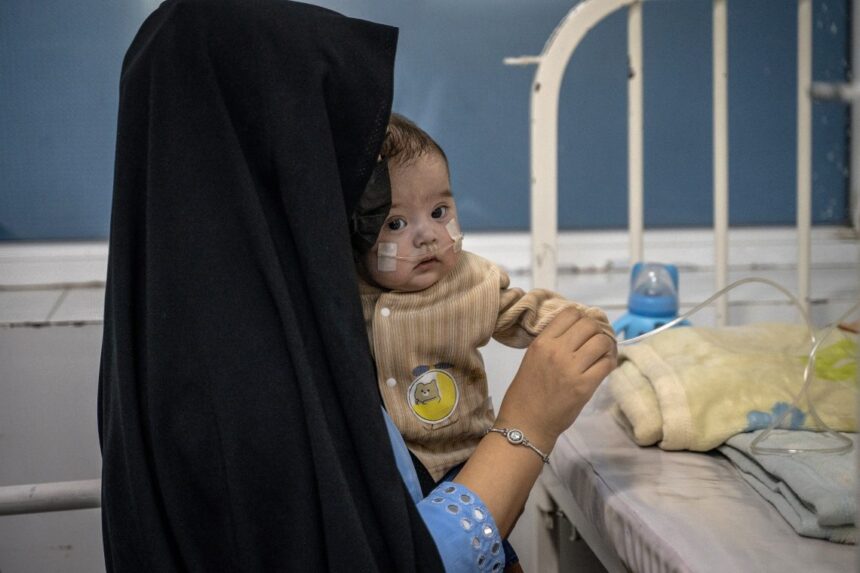
RASC News Agency: The World Food Programme (WFP) has warned that the malnutrition crisis in Afghanistan has reached unprecedented levels, with funding shortages and disruptions to humanitarian supply routes further worsening conditions for millions of vulnerable people across the country.
In a statement issued on Tuesday, June 2, the United Nations agency said that mothers and children throughout Afghanistan are facing severe food shortages, and many are being turned away from health facilities without receiving the assistance they desperately need. The crisis continues as Afghanistan, under Taliban rule, grapples with one of the most severe humanitarian emergencies in recent years.
According to the WFP, only eight percent of the funding required to sustain its operations in Afghanistan has been secured. At the same time, the closure of certain border crossings and disruptions along key transit routes have created additional obstacles to the delivery of humanitarian aid.
The organization stated that restrictions affecting supply corridors have significantly reduced the ability of aid agencies to respond to the rapidly growing needs of the Afghanistani population, placing humanitarian operations under intense strain.
The WFP had previously warned that regional tensions and disruptions to commercial transportation networks were slowing the delivery of food assistance into Afghanistan. According to the agency, following the closure of the Strait of Hormuz, the time required to transport food aid to Afghanistan increased by as much as threefold.
While international organizations have repeatedly sounded the alarm over rising poverty, hunger, and malnutrition throughout Afghanistan, millions of Afghanistani citizens remain heavily dependent on humanitarian assistance. Concerns continue to mount that the country’s humanitarian crisis could deteriorate even further in the coming months.
At the same time, reports and complaints from a number of Afghanistani citizens indicate that the distribution of humanitarian aid faces serious challenges. Residents from various provinces have alleged that aid is not always distributed transparently or equitably among those most in need and that, in some cases, the process is influenced by local Taliban authorities.
Critics and local residents further claim that priority in aid distribution is often given to individuals and networks connected to the Pashtun ethnic community, while some vulnerable regions and marginalized populations are denied equal access to humanitarian assistance. These allegations have fueled growing concerns regarding fairness, accountability, and impartiality in the delivery of aid throughout Afghanistan.