

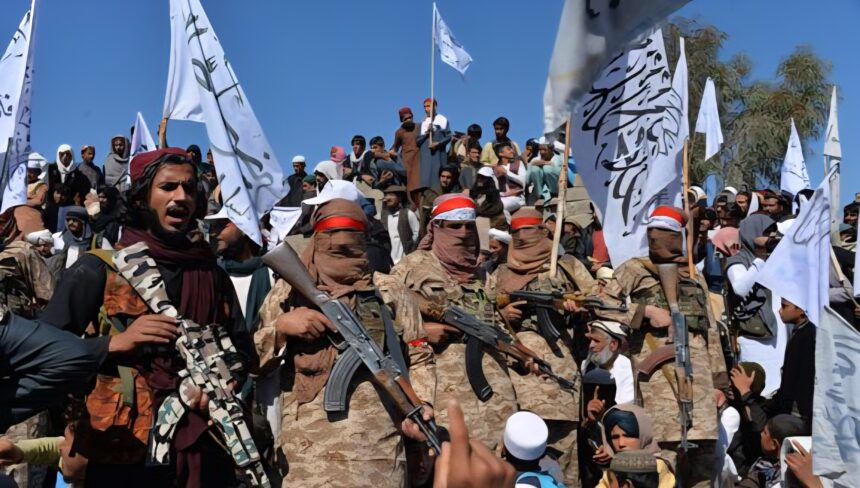
RASC News Agency: Recent warnings issued by Alexander Bortnikov, Director of Russia’s Federal Security Service (FSB), have once again drawn international attention to a reality that many governments have been reluctant to confront directly: Afghanistan under Taliban rule has increasingly re-emerged as a strategic epicenter of transnational jihadist activity and a growing source of instability across Eurasia.
According to an extensive analysis published by Eurasia Review and authored by Dr. Hamza Khan, the security landscape that has taken shape since the Taliban’s return to power in 2021 has provided extremist organizations with opportunities to regroup, recruit, and expand their operational reach. Among the most concerning developments is the growing activity of ISIS-Khorasan (ISIS-K), which has reportedly leveraged Afghanistan’s permissive environment to recruit followers from across Central Asia, including Tajikistan, Uzbekistan, Kyrgyzstan, and Kazakhstan, while simultaneously targeting vulnerable migrant communities inside Russia.
Russian intelligence assessments indicate that terrorist support networks, logistical corridors, and clandestine recruitment channels remain active throughout the former Soviet sphere. Security cooperation between Russia and Uzbekistan has reportedly disrupted several planned terrorist attacks, including operations aimed at targets in Moscow. These developments underscore a broader concern increasingly shared by regional governments: that Afghanistan’s current rulers have either failed or refused to dismantle the infrastructure that enables extremist organizations to survive and evolve.
Contrary to Taliban claims that Afghanistan has entered a period of stability and security, evidence cited by international security agencies suggests a far more troubling reality. Rather than emerging from decades of conflict, Afghanistan remains trapped in a cycle of insecurity, political exclusion, economic collapse, and ideological radicalization. Analysts argue that while the Taliban have engaged in tactical confrontations with ISIS-K in order to protect their monopoly on power, these clashes should not be mistaken for a comprehensive counterterrorism strategy.
Indeed, critics contend that the Taliban’s selective approach to militancy has created a dangerous paradox. Groups perceived as direct threats to Taliban authority are targeted, while others continue to operate within an environment characterized by weak oversight, ideological sympathy, or strategic tolerance. As a result, Afghanistan has become a complex ecosystem in which multiple extremist actors are able to coexist, compete, recruit, and, in some cases, cooperate.
A recent assessment by U.S. oversight authorities described Afghanistan as a “permissive environment” for terrorist organizations. According to the report, Taliban-controlled territory continues to provide conditions conducive to recruitment, planning, training, fundraising, and operational coordination. The report further noted the continued presence of organizations such as Al-Qaeda in the Indian Subcontinent and Tehrik-i-Taliban Pakistan (TTP), while highlighting longstanding concerns regarding links between Taliban authorities and elements associated with Al-Qaeda.
The implications extend far beyond Afghanistan’s borders. ISIS-K’s growing focus on recruiting citizens from Central Asia represents a particularly serious strategic challenge. By exploiting social grievances, economic hardship, political disenfranchisement, and identity crises, extremist recruiters have sought to transform local frustrations into transnational security threats. Experts emphasize that migrant workers and refugee populations should never be collectively stigmatized; however, extremist organizations have repeatedly demonstrated an ability to exploit vulnerable communities through sophisticated propaganda campaigns and online radicalization networks.
Regional anxieties intensified dramatically following the deadly 2024 attack on Moscow’s Crocus City Hall, an assault attributed to ISIS operatives. Since then, security agencies across Eurasia have warned that extremist groups are increasingly adopting more decentralized recruitment models, relying heavily on digital platforms and transnational networks to accelerate radicalization and operational planning.
Although estimates regarding the number of militants present in Afghanistan vary, there is broad consensus among international observers that the threat remains substantial. Russian officials have estimated that between 20,000 and 23,000 fighters affiliated with various extremist organizations operate within Afghanistan, with a significant proportion consisting of foreign nationals. These figures encompass members of ISIS-K, Tehrik-i-Taliban Pakistan, Al-Qaeda, the East Turkestan Islamic Movement, the Islamic Movement of Uzbekistan, Jamaat Ansarullah, and other militant groups.
The U.S. Defense Intelligence Agency has offered more conservative figures, yet its conclusions remain fundamentally consistent. While precise numbers differ, both Russian and American assessments acknowledge that Afghanistan under Taliban rule continues to host active extremist networks capable of influencing security dynamics across the broader region.
United Nations monitoring mechanisms have reached similar conclusions. Despite repeated Taliban assertions that no terrorist organizations operate from Afghan territory, UN member states have generally refrained from endorsing those claims. Reports submitted to the Security Council have repeatedly raised concerns regarding the operational freedom enjoyed by several extremist organizations and the continued expansion of militant activities with regional implications.
Particularly troubling are findings indicating that Tehrik-i-Taliban Pakistan has benefited from increased operational space since the Taliban’s takeover of Afghanistan. Concurrently, Al-Qaeda continues to be described by international monitors as a source of expertise, training, and strategic support for various extremist actors. Such findings raise profound questions about the credibility of Taliban commitments regarding counterterrorism and regional security.
Beyond the security dimension lies an equally significant political and moral question. The Taliban continue to govern without electoral legitimacy, constitutional accountability, meaningful political inclusion, or respect for fundamental rights and freedoms. Their systematic exclusion of women and girls from education, employment, and public life has generated widespread international condemnation and has been described by numerous human rights advocates as one of the most severe forms of institutionalized gender oppression in the contemporary world.
Critics argue that this climate of repression is inseparable from the broader security crisis. A government that suppresses dissent, excludes large segments of society, dismantles civic institutions, and prioritizes ideological conformity over competent governance inevitably weakens the foundations necessary for long-term stability. The resulting vacuum creates opportunities for radicalization, criminality, and extremist mobilization.
For this reason, many analysts contend that the international community must resist efforts to normalize relations with the Taliban without meaningful conditions. Engagement, they argue, should be tied to measurable actions, including demonstrable efforts against all terrorist organizations, respect for fundamental human rights, restoration of educational opportunities for women and girls, and the creation of genuinely inclusive political institutions.
Regional and global powers may disagree on many geopolitical issues, yet they share a common interest in preventing Afghanistan from once again becoming a launchpad for transnational extremism. Enhanced intelligence-sharing, stronger border security, targeted sanctions against extremist networks, and coordinated efforts to combat online radicalization remain essential components of any effective strategy.
Ultimately, the warnings emerging from Russian, Western, and United Nations assessments converge on a single conclusion: Afghanistan has not become the stable and secure state portrayed by Taliban officials. Instead, mounting evidence suggests that the country continues to function as a fragile and volatile arena in which extremist organizations retain significant room to maneuver.
The central lesson is increasingly difficult to ignore. Selective counterterrorism measures, ideological governance, and international accommodation without accountability have not eliminated the threat of militancy. On the contrary, they risk enabling extremist networks to rebuild, adapt, and project influence beyond Afghanistan’s borders. If left unaddressed, the consequences will not be confined to Afghanistan alone but will reverberate throughout Eurasia and far beyond.