

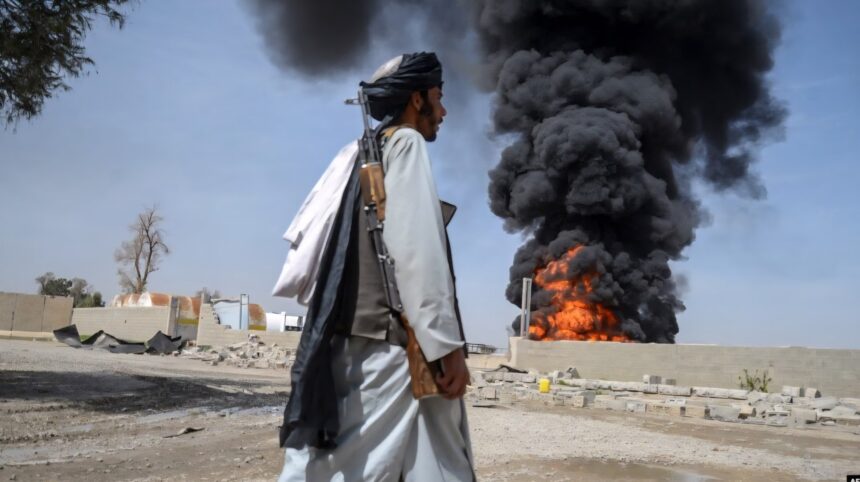
RASC News Agency: Sources close to the Tehrik-i-Taliban Pakistan (TTP) say the group’s leadership has ordered the relocation of its commanders inside Taliban-controlled Afghanistan, a move reportedly aimed at easing rising political and security tensions between Islamabad and the Afghanistani Taliban.
According to a report published by Radio Free Liberty, two TTP members confirmed that several senior and mid-level commanders have been moved from their residences in Kabul to areas in southern Afghanistan, with the relocation process still ongoing. They added that some commanders have already left the capital, while others are preparing to follow.
The reported movement comes as Pakistan has repeatedly accused the Afghanistani Taliban in recent months of providing safe havens to the TTP allegations the Taliban reject. However, previous United Nations Security Council reports and several international intelligence assessments have indicated the continued presence of TTP elements inside Afghanistan.
Alongside TTP commanders, members of the Turkistan Islamic Party and remnants of al-Qaeda are also reported to be among groups undergoing relocation, raising renewed concerns about sustained operational and ideological links between the Afghanistani Taliban and transnational militant networks.
A Taliban official, speaking to Radio Free Liberty, dismissed the reports as “baseless,” calling them part of Pakistan’s “psychological warfare.” However, sources close to the TTP claim the relocation order followed a trilateral meeting between Pakistani, Chinese, and Afghanistani Taliban officials in Urumqi, China, held in early April.
A Pakistani official familiar with the talks said Islamabad and Beijing raised concerns over militant activity operating from Afghanistan’s territory. Although no official details have been released, reports of reduced Pakistani air operations inside Afghanistan emerged shortly after the meeting.
Despite this, border tensions and security incidents continue. Analysts say the Afghanistani Taliban are under growing military and diplomatic pressure to limit the visible presence of armed groups, but remain reluctant to sever deep ideological and structural ties with them.
TTP-affiliated sources also say the decision has caused internal dissatisfaction within the group. Many of its members are ethnic Pashtuns living on both sides of the Afghanistan–Pakistan border, further complicating the relationship between the Afghanistani Taliban and the TTP.
Following the Taliban’s return to power in 2021, TTP leaders reportedly took refuge in Afghanistan, with a significant portion of fighters repositioned along border regions. Taliban mediation efforts in 2022 to broker a ceasefire between Islamabad and the TTP ultimately collapsed.
Meanwhile, Pakistan has intensified military operations inside Afghanistan in recent months actions it describes as targeting “militant safe havens,” while the Taliban call them violations of Afghanistan’s sovereignty.
Analysts warn that the continued escalation is turning Afghanistan into a focal point of regional security competition, while the Afghanistani Taliban’s structural inability to control militant groups raises the risk of wider cross-border instability.