
RASC News Agency: According to a report published by the international affairs magazine The Diplomat, an Afghanistani security expert claims that Pakistan’s military intelligence apparatus has been indirectly targeting Chinese investments and infrastructure projects in Afghanistan as part of a broader effort to preserve Islamabad’s geopolitical influence in the region.
In an interview conducted by Sudha Ramachandran with intelligence analyst and counterterrorism specialist Ajmal Sohail, the Afghanistani expert argued that Inter-Services Intelligence and related military intelligence structures rely on proxy militant networks to shape Afghanistan’s evolving security dynamics.
According to Sohail, Taliban intelligence authorities reportedly intercepted a significant weapons shipment on February 21, 2026, at the Torkham border crossing. The seized cache allegedly included approximately 525 firearms and around 27,000 rounds of ammunition.
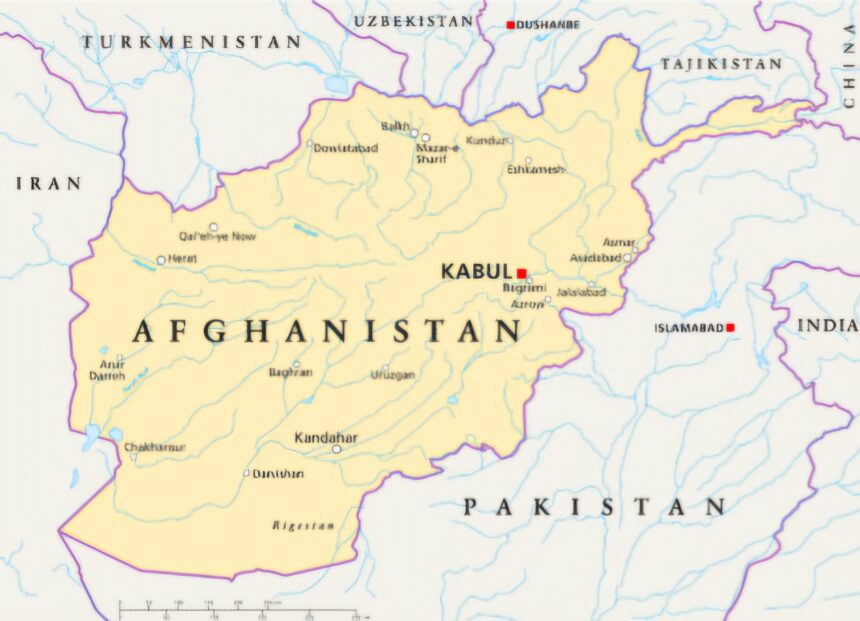
The weapons were concealed inside cargo trucks and were reportedly destined for Omari Refugee Camp, from where they were expected to be transported to the Wakhan Corridor a remote but strategically significant region bordering People’s Republic of China, Republic of Tajikistan, and Islamic Republic of Pakistan.
Sohail stated that intelligence reports attributed the operation to Pakistan’s Inter-Services Intelligence (ISI) and the country’s military intelligence directorate. According to his account, these institutions allegedly facilitate the transfer of weapons to certain armed factions opposing Taliban rule in order to conduct insurgent operations.
Among the groups reportedly benefiting from these weapons are organizations such as the Afghanistan Independence Front, factions associated with Islamic State – Khorasan Province, and other contract-based militant groups.
Sohail claims that the primary objective of these operations is to disrupt Chinese mining companies and foreign investors operating in Afghanistan particularly in the Wakhan region, where several exploration and infrastructure projects are believed to be planned or underway.
He further asserted that a portion of the intercepted weapons shipment was intended for a militant organization described as “Tajik Taliban,” reportedly led by Mahdi Arslan and Mohammad Sheripov. According to the analyst, this group operates from mountainous areas of Chitral and allegedly conducts operations targeting Chinese investors and Tajik border forces in Badakhshan Province.
The analyst argued that Pakistan’s evolving intelligence strategy increasingly focuses on undermining Chinese infrastructure initiatives in Afghanistan. Islamabad, he said, is concerned that expanding direct cooperation between Beijing and the Taliban particularly in mining extraction, foreign investment, and new transit corridors could weaken Pakistan’s longstanding geopolitical leverage in regional connectivity.
“If China succeeds in establishing direct transit routes through Afghanistan,” Sohail explained, “its strategic dependence on Pakistan would diminish, eroding Islamabad’s traditional role as the primary gateway for China’s regional access.”
Within this framework, some guerrilla attacks targeting foreign tourists and investors are reportedly designed with symbolic objectives, with Chinese nationals often selected as high-profile targets.
According to Sohail, the broader strategy aims to remind Beijing that Pakistan remains the principal gateway for China’s regional connectivity particularly through the China–Pakistan Economic Corridor, one of the flagship components of China’s Belt and Road Initiative.
Destabilizing Chinese ventures in Afghanistan, he suggested, could compel Beijing to once again rely primarily on Pakistan-based transit routes.
The discovery of the weapons shipment coincided with airstrikes carried out by the Pakistan Air Force against militant positions inside Afghan territory. Islamabad stated that the strikes were conducted in response to deadly attacks by Tehrik-i-Taliban Pakistan in the Pakistani cities of Bajaur, Bannu, and Islamabad.
Pakistan has repeatedly accused the Taliban authorities in Kabul of allowing TTP militants to find sanctuary inside Afghanistan’s territory an allegation the Taliban have consistently rejected.
In another part of the interview, Sohail discussed Pakistan’s complex relationship with Islamic State – Khorasan Province. The group, established in 2015 under the leadership of Hafiz Saeed Khan Orakzai, initially emerged from dissident factions of Tehrik-i-Taliban Pakistan and carried out multiple attacks within Pakistan.
However, according to certain intelligence assessments cited by Sohail, the Inter-Services Intelligence has at times attempted to exploit the group as a geopolitical instrument in counterbalancing the Afghanistani Taliban or confronting separatist movements.
He further claimed that intelligence reporting suggests attempts by Pakistani intelligence services to facilitate contacts between ISIS-K and the militant organization Lashkar-e-Taiba.
Since 2025, some former Taliban training facilities in Balochistan particularly in the districts of Gulistan, Pishin, and Zhob have reportedly been used for joint training activities involving these militant networks.
Such cooperation, if confirmed, could facilitate the exchange of tactics, logistical resources, and personnel among various jihadist organizations, potentially amplifying regional instability.
Sohail emphasized that the use of proxy militant networks by states in South Asia is not a new phenomenon. The practice dates back to the Soviet–Afghanistan’s War and continued even after the September 11 attacks.
According to the analyst, the expansion of such networks risks intensifying several destabilizing trends, including:
• Increased cross-border arms trafficking
• The expansion of extremist ideologies
• Heightened border instability
• The escalation of proxy conflicts across the region
Taken together, these developments complicate the evolving security dynamics among Afghanistan, Pakistan, China, and other regional powers, potentially reshaping the geopolitical balance across Central and South Asia.