
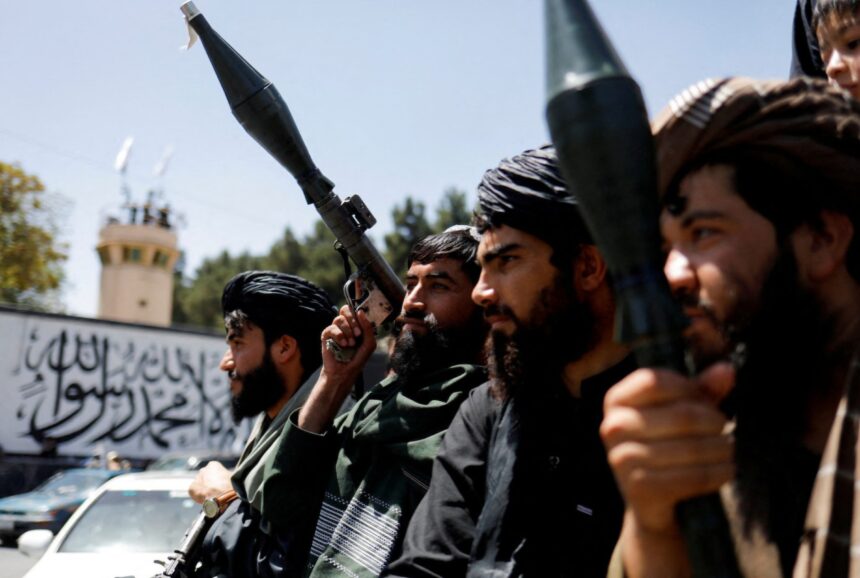
RASC News Agency: According to a report by Asia Times, the U.S. Senate Foreign Relations Committee has approved bipartisan legislation titled the “No Taxpayer Funding for Terrorists Act.” The bill aims to prevent U.S. financial resources from reaching the Taliban or other terrorist groups operating in Afghanistan whether directly or indirectly. Security assessments have repeatedly indicated that the Taliban have not severed ties with such groups and, in some cases, have tolerated or facilitated their presence.
The legislation signals a shift toward stricter financial oversight following the rapid U.S. military withdrawal in August 2021 and the Taliban’s return to power an outcome that effectively imposed a mono-ethnic, exclusionary political structure lacking electoral legitimacy.
Senator Jim Risch, chairman of the Senate Foreign Relations Committee, described the bill as a “commonsense step,” stating that not “one dollar” of American taxpayer money should end up with terrorist organizations in Afghanistan. The political and ethical sensitivity surrounding the issue is underscored by the Taliban’s post-war governance record, marked by sweeping restrictions on civil liberties and women’s rights, reinforcing concerns about its ideological and authoritarian rule.
Under the proposed legislation, the U.S. State Department would be required to develop a strategy to prevent foreign assistance from being diverted to armed groups. The measure responds directly to mounting concerns that the Taliban may be using administrative mechanisms to extract revenue from, or indirectly appropriate, international aid.
A December 2025 report by the U.S. Special Inspector General for Afghanistan Reconstruction (SIGAR) stated that approximately $10.72 billion had entered Afghanistan following the fall of Kabul, including $3.83 billion funded by U.S. taxpayers. Some assessments cited in the report warn that up to 70 percent of these funds may ultimately have benefited Taliban structures through forced taxation, resource diversion, or administrative control.
Monitoring findings also indicate that roughly $4 billion in U.S. assistance has flowed through systems under Taliban authority, while nearly $8 billion has been spent by international institutions on development and humanitarian programs. The Afghanistan Resilience Trust Fund (ARTF) has financed projects worth $1.5 billion, despite the Taliban remaining under international sanctions.
Oversight bodies, including United Nations Security Council assessments, have documented repeated instances of corruption, misuse, aid diversion, and weak monitoring under Taliban governance. Afghanistan ranked 169th out of 182 countries in the 2025 Corruption Perceptions Index by Transparency International an indicator, critics argue, of entrenched opacity and lack of accountability.
The legislative move also reflects rising geopolitical anxieties. U.S. policymakers have warned that unrestricted financial flows could enable extremist groups to rebuild operational capacity. Pakistan has repeatedly stated in international forums that approximately 6,000 fighters affiliated with Tehrik-i-Taliban Pakistan (TTP) are operating from Afghanistan’s territory. Estimates suggest Afghanistan currently hosts around 20 international terrorist organizations raising concerns that the Taliban have failed to curb, and in some cases enabled, militant activity.
The UN Security Council’s 37th Monitoring Team report, released in February 2026, cited an increase in cross-border attacks from Afghanistan’s soil into Pakistan, warning that militant activity remains a serious and evolving threat to regional stability.
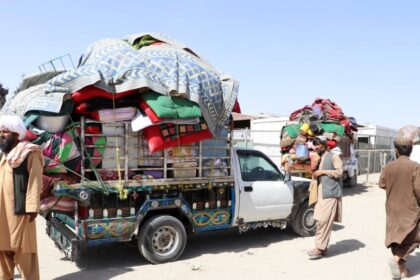
As U.S. and UN oversight intensifies, Afghanistan’s humanitarian crisis has deepened. Millions of Afghanistanis depend on foreign aid for food, healthcare, and basic services assistance that, in the absence of an accountable and inclusive government, remains vulnerable to structural misuse.
The central question is no longer whether aid should continue, but how it can reach the Afghanistani people without reinforcing the Taliban’s financial machinery. The proposed U.S. legislation emphasizes the need for new delivery mechanisms, stronger monitoring systems, and verifiable conditions such as a genuine Taliban break with terrorist networks, prevention of cross-border attacks, formation of an inclusive political system, and meaningful respect for women’s rights and internationally recognized human rights standards.
By Saima Afzal