

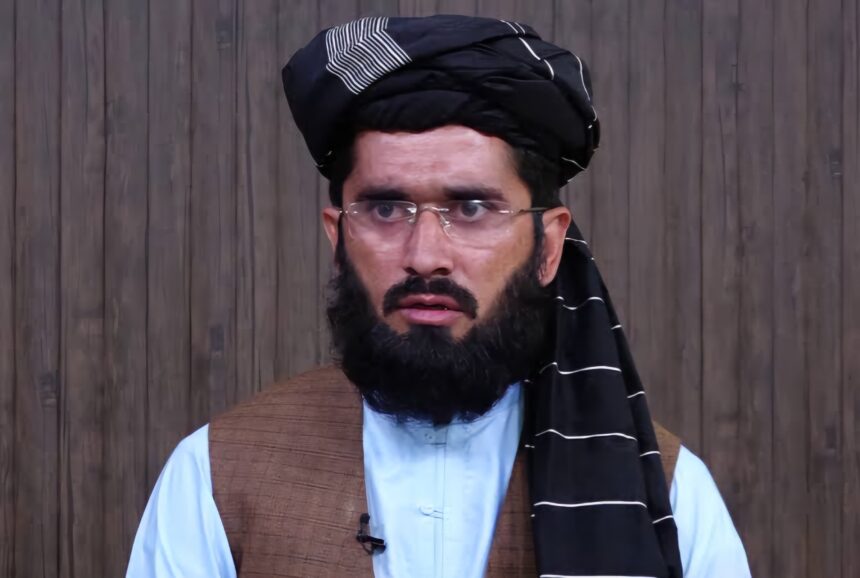
RASC News Agency: The Taliban have announced the appointment of Qari Saeed Khosti, a prominent figure from the Haqqani Network and a close associate of the group’s Ministry of Interior, as the official responsible for registering and managing the Taliban’s so-called “Jihadi heritage.”
This decision is part of a broader Taliban effort to define and institutionalize their legacy in Afghanistan an initiative that critics describe as an attempt to legitimize violence, erase the memory of victims, and normalize extremism.
In Taliban terminology, “Jihadi heritage” includes barrel mines, bomb-rigged motorcycles, suicide vests, and propaganda chants praising suicide attacks symbols long associated with Taliban and Haqqani Network operations. Turning these tools of terror into an official “heritage” has drawn sharp criticism from human rights organizations, which warn that it normalizes violence and entrenches a militant culture in Afghanistan’s society.
Qari Saeed Khosti previously served as a spokesperson for the Taliban’s Ministry of Interior. He has faced serious allegations of rape, torture, and forced marriage, brought forward by Elaheh Dalavarzai, a former medical student at Kabul University. The accusations, shared through widely circulated videos on social media, sparked public outrage.
Khosti has denied the allegations. However, no independent or transparent judicial process has ever been conducted to investigate the case.
Khosti is closely linked to Sirajuddin Haqqani, the Taliban’s Interior Minister and leader of the Haqqani Network. The network is widely recognized by international organizations for its central role in suicide bombings, organized violence, and extremist militancy in Afghanistan and the region.
Khosti’s return to a government role three and a half years after he was removed following the allegations has intensified criticism. Observers say the move is a stark symbol of the absence of accountability and justice under Taliban rule, where powerful figures enjoy impunity while ordinary Afghanistanis are denied legal protection.
According to critics, by placing the Taliban’s “heritage” in the hands of a man accused of grave human rights abuses, the regime sends a clear message:
In this system, violence is rewarded and impunity replaces justice.