
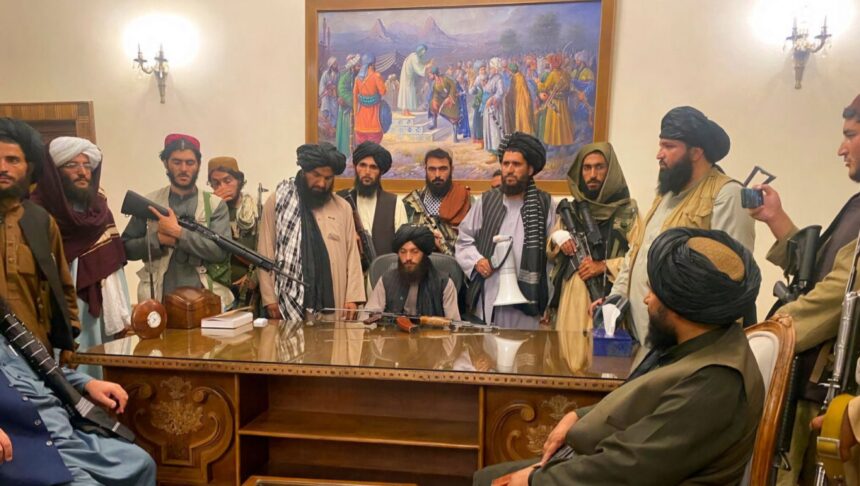
RASC News Agency: The Taliban’s return to power in Kabul in August 2021 marked the beginning of a new and volatile chapter for Afghanistan and its wider region a chapter in which the group’s official narratives stand in sharp contradiction to international assessments, while the consequences have reverberated far beyond Afghanistan’s borders, particularly in neighboring Pakistan.
According to a recent report by the International Crisis Group (ICG), based in Brussels, Pakistan has borne the heaviest security fallout from the Taliban’s takeover. The report notes that Afghanistan-linked militant groups have sharply escalated cross-border and terrorist attacks, killing hundreds of Pakistani soldiers and police officers in 2025 alone and plunging bilateral relations into a deep crisis of trust. Analysts warn that unless the Taliban take concrete steps to restrain and dismantle insurgent networks most notably Tehrik-e Taliban Pakistan (TTP) Islamabad may once again resort to military operations inside Afghanistan’s territory.
The Taliban, however, advance a starkly different narrative. Their spokesperson, Zabihullah Mujahid, has repeatedly portrayed Afghanistan as stable and on a path toward economic recovery. This narrative, widely circulated through Taliban-controlled media, subtly shifts blame toward alleged “provocative elements” within Pakistan, seeking to externalize responsibility for border insecurity and the continued operational capacity of the TTP. In effect, this messaging functions as an attempt to evade direct accountability for a deteriorating regional security environment while undermining international criticism.
This clash of narratives reflects more than a political disagreement; it exposes a strategic legitimacy crisis. For Pakistan, the Taliban’s return is not merely a change of power in Kabul but a catalyst for militant resurgence, weakened border control, and deepening humanitarian and security instability. For the Taliban, the projection of stability and development has become a defensive strategy designed to deflect scrutiny over human rights abuses, governance failures, and the group’s inability or unwillingness to meet basic international expectations.
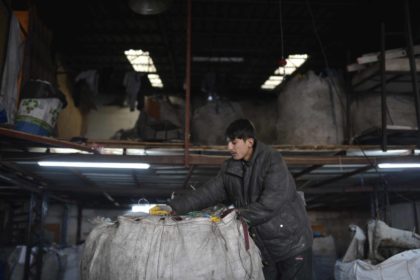
A closer examination of Afghanistan’s trajectory over the past five years undermines Taliban claims of economic progress and durable stability. Independent assessments point instead to structural fragility, collapsing public services, limited foreign investment, and profound administrative incapacity. Persistent militant violence against civilians and widespread barriers to humanitarian access further erode the credibility of official Taliban assertions about “economic growth” and security consolidation.
The human cost of this crisis has fallen disproportionately on ordinary people. Traders and business owners suffer from repeated border closures and disrupted supply chains, while families continue to lose loved ones to armed violence. At the same time, the Taliban have intensified censorship and repression of independent media in an effort to sustain the image of a stable Afghanistan an image increasingly contradicted by realities on the ground.
The repercussions of Afghanistan’s crisis are regional in scope. Pakistan continues to press for decisive Taliban action against insurgent groups operating from Afghanistan’s soil. The Taliban, by contrast, persist in denying responsibility, attributing insecurity to Pakistan’s internal dynamics or external conspiracies. This standoff obstructs practical solutions, undermines regional security cooperation, and compounds an already complex crisis.
Ultimately, despite official propaganda, the Taliban’s return to power has laid bare deep structural weaknesses, governance failure, and a profound legitimacy deficit in Afghanistan. These conditions have not only subjected the Afghanistani population to sustained hardship but have also exposed neighboring states especially Pakistan to serious security and economic risks. Preventing further escalation will require genuine regional cooperation, effective border security management, meaningful respect for human rights, and the establishment of accountable governance structures not the carefully curated but misleading narratives advanced by the Taliban.
By Mazhar Siddiqui Khan