

RASC News Agency: The killing of a young tricycle driver in Herat has once again laid bare the widening gap between the Taliban’s claims of having established “nationwide security” and the stark realities confronting ordinary citizens across Afghanistan. The incident, which occurred during a targeted armed robbery, underscores the persistent fragility of public safety under Taliban rule and exposes the hollowness of their security narrative.
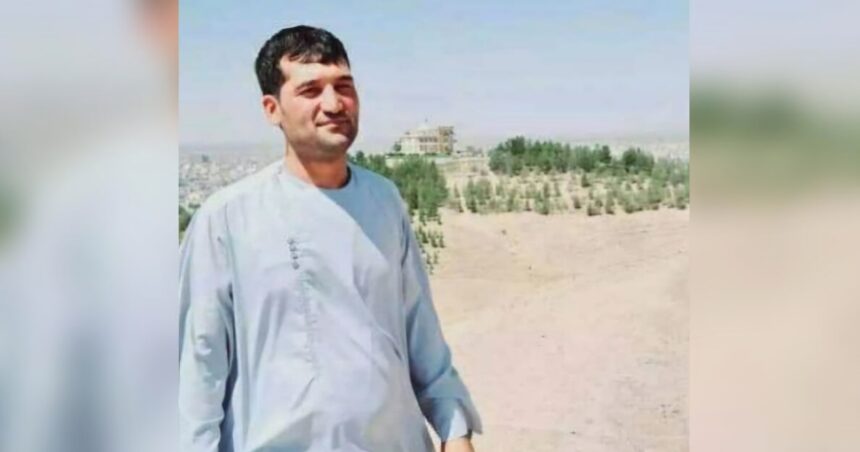
Local sources in Herat province confirmed that unidentified gunmen shot and killed Aziz Ahmadi Nazari, a 35-year-old tricycle driver, on Saturday evening, 20 Jadi, near Ansari Bridge in the city’s Eighth District. The victim was attacked while attempting to protect his only means of livelihood from being stolen. He was shot at close range and died at the scene, while the perpetrators fled without obstruction.
The killing raises serious questions about the Taliban’s ability or willingness to prevent violent crime, even in urban centers where they claim to exercise absolute control. Despite pervasive surveillance, armed checkpoints, and severe restrictions on civic life, criminal violence continues to claim civilian lives with alarming regularity. This contradiction highlights a core failure of Taliban governance: the prioritization of coercive control over genuine public safety.
According to available information, the assailants opened fire after encountering resistance, demonstrating a level of impunity that reflects the broader collapse of effective law enforcement mechanisms. The recurrence of such armed attacks in areas the Taliban routinely describe as “fully secured” points to a breakdown of public order and a lack of functional accountability within Taliban-run institutions.
Aziz Ahmadi was the sole breadwinner for his family, earning a modest daily income through informal labor in the streets of Herat. He leaves behind a nine-year-old son and a four-year-old daughter, now deprived not only of their father but also of economic security in a country already gripped by widespread poverty. Their plight illustrates the human cost of Taliban misrule where victims of violence receive neither justice nor compensation, and bereaved families are left to fend for themselves.
As of the time of this report, Taliban authorities in Herat have remained silent. This absence of response is consistent with a broader pattern in which Taliban officials fail to acknowledge, investigate, or transparently address violent crimes. Such silence reinforces perceptions of structural indifference toward civilian lives and deepens public distrust in the Taliban’s security institutions.
The killing in Herat is not an isolated incident. Over recent months, multiple reports have documented a rise in armed robberies, targeted killings, and localized insecurity across the city and other parts of the country. These developments directly contradict the Taliban’s carefully constructed image of having delivered stability after seizing power.
While large-scale bombings may have declined, violence has not disappeared it has merely changed form. Under Taliban rule, insecurity manifests through criminal impunity, economic desperation, and the erosion of legal protections. The Taliban’s approach prioritizes ideological enforcement and social repression over the rule of law, leaving ordinary citizens exposed to violence without recourse.
Ultimately, the death of a tricycle driver struggling to support his family is emblematic of a deeper crisis. It reveals a system that suppresses dissent and controls society through fear, yet fails at its most basic obligation: protecting human life. The Taliban may claim stability, but for many Afghanistanis, that “stability” has come at the cost of safety, dignity, and justice an exchange that continues to exact its heaviest toll on the poorest and most vulnerable.