

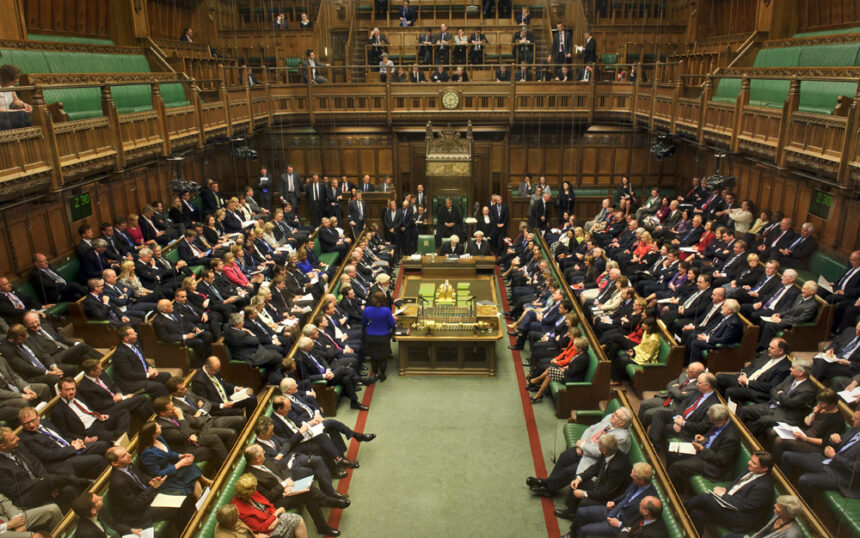
RASC News Agency: Alice McDonald, a Member of the British Parliament, has issued a stark warning to the international community: ignoring the plight of Afghanistani women is not merely overlooking a domestic crisis it constitutes a betrayal of universal human rights principles and the global struggle for gender equality. She emphasized that this crisis is a direct consequence of the Taliban’s systematic and deliberate policies to suppress half of Afghanistan’s population.
Speaking in Parliament, McDonald highlighted that the Taliban have imposed what many international human rights organizations describe as “gender apartheid”, systematically denying Afghanistani women and girls access to fundamental rights. She declared:
“Turning our backs on this crisis, on gender apartheid, and on political deceit in Afghanistan is not only a betrayal of Afghanistani women it is a betrayal of every woman fighting for her rights around the world.”
McDonald described the current situation for women and girls in Afghanistan as devastating, a result of deliberate Taliban decisions to exclude them from education, employment, social participation, and even public life. She warned that normalizing such conditions effectively legitimizes a regime that enshrines gender discrimination as official policy.
Yet, McDonald also highlighted the resilience and courage of Afghanistani women, noting that despite relentless pressure, they continue to find creative ways to engage in economic, social, and civic activities. She said their determination is “inspirational”, directly challenging the Taliban’s narrative of total exclusion.
Drawing on international human rights standards, McDonald underscored:
“Without a serious, global response to the systemic repression of Afghanistani women and girls, achieving equality worldwide is impossible.”
She stressed that what the Taliban are enforcing in Afghanistan is not a local or cultural matter, but a blatant violation of international human rights obligations a violation that, if left unaddressed, undermines decades of progress for women globally.
McDonald further linked women’s rights to broader security and peace, asserting that historical evidence shows societies that systematically oppress half their population cannot achieve sustainable stability, development, or peace an inconvenient truth the Taliban deliberately ignore.
She called on the UK government and the international community to uphold their stated values through tangible actions: diplomatic pressure, support for accountability mechanisms, and direct assistance to Afghanistani women both inside and outside Afghanistan. Such interventions, she argued, must provide real hope for the victims of repression, not mere symbolic statements.
McDonald’s remarks come in the context of the Taliban’s gradual but relentless dismantling of women’s rights since their return to power in August 2021. Policies include:
• Banning girls from secondary schools and universities,
• Excluding women from government employment and public institutions,
• Restricting access to the workforce and public spaces.
International bodies including the United Nations, UN Special Rapporteurs, Amnesty International, and Human Rights Watch have repeatedly condemned these policies as gross, systematic violations of women’s rights. Over the past four years, the Taliban have not only ignored international criticism but have intensified restrictions, responding to dissenting women with threats, arrests, and suppression evidence that women’s repression is a deliberate feature of Taliban ideology and governance, not an incidental byproduct.