
RASC News Agency: China and Pakistan have delivered a coordinated and unusually blunt warning to Afghanistan’s Taliban authorities, demanding “visible and verifiable” actions to dismantle all terrorist groups operating from Afghanistan’s territory a demand that once again exposes the widening gap between the Taliban’s stated commitments and the persistent security realities on the ground.
The warning was issued in a joint statement following the seventh round of the China–Pakistan Strategic Dialogue, co-chaired in Beijing by Pakistani Deputy Prime Minister and Foreign Minister Ishaq Dar and Chinese Foreign Minister Wang Yi. The two sides’ emphasis on “zero tolerance” for terrorism implicitly underscores the Taliban’s continued failure or unwillingness to neutralize militant networks and prevent the instrumental use of Afghanistan’s soil for cross-border violence.
According to the statement, Beijing and Islamabad agreed to maintain close coordination on Afghanistan and to work with the international community to encourage Kabul toward an inclusive political framework, moderate and development-oriented policies, and responsible neighborly conduct. This language points directly to the Taliban’s political isolation and the absence of a representative governance structure conditions that have contributed to renewed instability and sustained regional insecurity.
The talks took place during Ishaq Dar’s visit to China from January 3 to 5, with formal discussions held on January 4. The dialogue covered a broad range of bilateral, regional, and international issues from security and diplomacy to economic cooperation and people-to-people exchanges. Throughout, both sides reiterated a central message: lasting regional security is unattainable without genuine and measurable counter-terrorism efforts in Afghanistan.
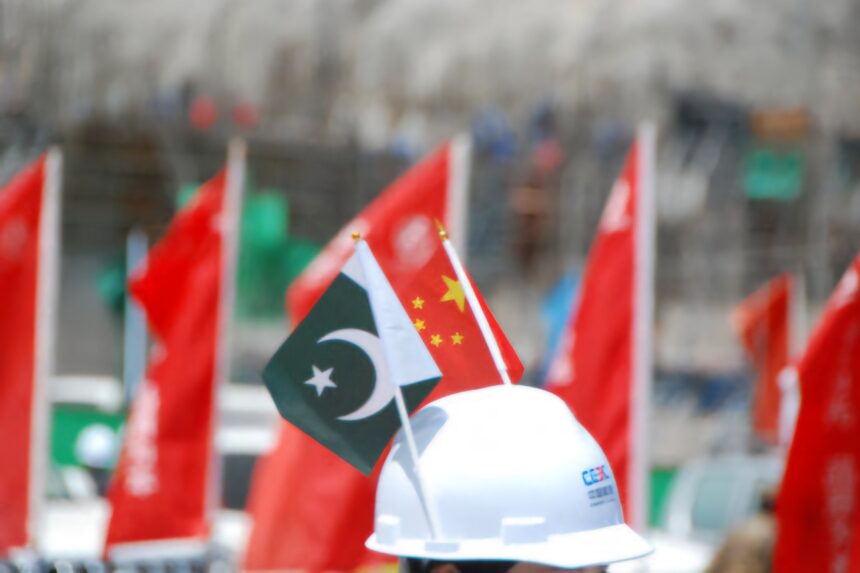
China and Pakistan also announced plans to mark the 75th anniversary of diplomatic relations in 2026, reaffirming what they describe as an “all-weather strategic partnership.” While framed as a milestone of cooperation, the declaration simultaneously places renewed pressure on the Taliban by making clear that regional peace and economic integration depend on Afghanistan no longer serving as a permissive environment for armed groups.
Islamabad once again reaffirmed its commitment to the One-China policy, while Beijing reiterated its support for Pakistan’s sovereignty, territorial integrity, and counter-terrorism efforts. China praised Pakistan’s security measures to protect Chinese nationals and projects, and stressed its opposition to double standards in counter-terrorism a pointed remark that indirectly challenges the Taliban’s selective and ideologically driven approach to militant groups.
On the economic front, the two countries emphasized advancing CPEC 2.0, focusing on industrialization, agriculture, mining, Gwadar Port, and the Karakoram Highway. The repeated linkage between development and security highlights a critical regional concern: the Taliban’s inability to rein in terrorism directly threatens major regional connectivity and investment projects.
China and Pakistan reaffirmed their support for the UN Charter, dialogue-based conflict resolution, and opposition to unilateralism. They called for an immediate, comprehensive, and lasting ceasefire in Gaza and reiterated support for a two-state solution. On Kashmir, China again emphasized a peaceful settlement in line with UN resolutions. These positions stand in contrast to the Taliban’s opaque, ideologically rigid foreign policy posture, which continues to obstruct Afghanistan’s constructive integration into the regional and international order.
The dialogue concluded with Ishaq Dar thanking Wang Yi for China’s hospitality, and both sides agreeing to hold the next round of talks in Islamabad next year. Yet the core message remains unmistakable: without concrete, verifiable action by the Taliban against terrorism, regional stability will remain elusive and Afghanistan will remain isolated, mistrusted, and excluded from meaningful cooperation.