
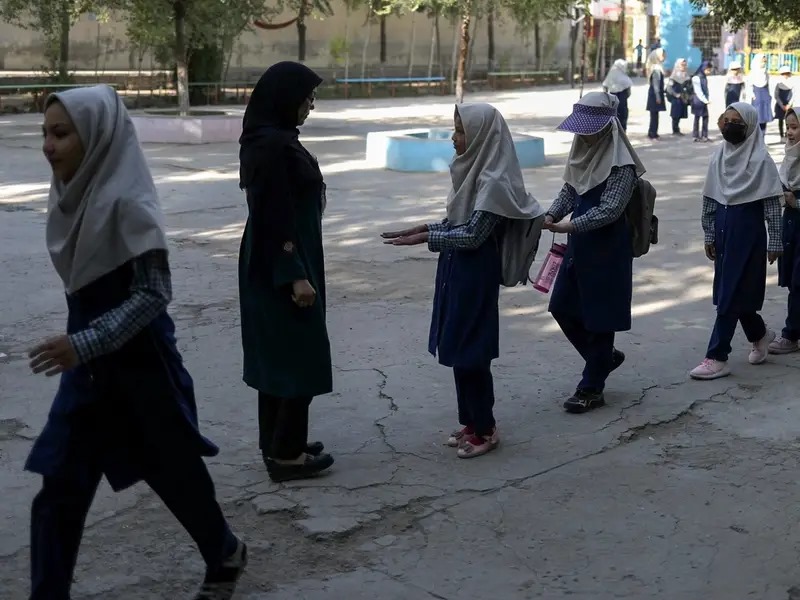
RASC News Agency: On the occasion of World School Meals Day, the United Nations World Food Programme (WFP) reiterated its commitment to ensuring that “no child should have to attend school on an empty stomach.” However, in light of the Taliban’s ongoing restrictions on education, the WFP also noted on X (formerly Twitter) that this marks the third consecutive year in which Afghanistani girls have been barred from attending school beyond the primary level. This statement follows a previous UN report, which highlighted a substantial decline in international aid to Afghanistan due to the Taliban’s escalating human rights violations, particularly its oppressive measures against women and girls.
Despite mounting global condemnation, the Taliban have not only refused to roll back these restrictions but have systematically intensified them. Furthermore, the UN Office for the Coordination of Humanitarian Affairs (OCHA) has reported that Taliban authorities are obstructing humanitarian operations by interfering in aid distribution efforts led by UN agencies a situation that has significantly undermined relief efforts across the country. Islamic nations and international organizations have repeatedly urged the Taliban to lift the ban on girls’ education, emphasizing that such prohibitions contradict Islamic principles and should not be imposed under the pretext of religion. However, these warnings, diplomatic efforts, and moral appeals have had no discernible impact on the Taliban leadership, which remains resolute in enforcing its ideological agenda.
Analysts argue that the Taliban’s prohibition on girls’ education is not grounded in Islamic teachings but rather rooted in ethnic and tribal dogma, reflecting an archaic and regressive system of oppression with no legitimate basis in religious doctrine.