
RASC News Agency: Pakistan’s diplomatic engagement with the Taliban has failed to deliver the security guarantees Islamabad had anticipated following the group’s return to power in Afghanistan. Instead, cross-border militancy has intensified, bilateral relations have deteriorated, and military escalation has increasingly replaced diplomacy, according to an analysis by Smruti S. Pattanaik published in The Kathmandu Post.
The analysis begins with the June 27 attack on a Pakistan Rangers installation in Karachi, carried out by militants believed to belong to Jamaat-ul-Ahrar, a faction linked to Tehrik-i-Taliban Pakistan (TTP). The assault killed three Pakistani paramilitary personnel. Of the nine attackers, all but one were killed, while the surviving militant was reportedly captured alive. Jamaat-ul-Ahrar later claimed responsibility for the operation.
According to Pattanaik, the attack illustrates the widening gulf between Pakistan and the Taliban administration in Kabul and demonstrates that years of diplomatic engagement have failed to persuade the Taliban to dismantle militant sanctuaries operating from Afghanistan’s territory.
Jamaat-ul-Ahrar emerged in 2014 and is widely believed to maintain operational bases in Lalpura District of Nangarhar Province, within territory controlled by the Taliban. The group has carried out numerous terrorist attacks inside Pakistan, particularly in the former tribal districts, including the devastating 2016 Easter bombing, one of the deadliest terrorist attacks in Pakistan’s recent history.
The organization has maintained a fluid relationship with the TTP splitting from it in 2014, rejoining in 2021, and more recently appearing to operate with renewed autonomy. Despite the Taliban’s repeated assertions that they exercise complete control over Afghanistan, Pattanaik argues that the continued existence of such militant infrastructure raises serious questions about the credibility of those claims.
In response to the Karachi attack, Pakistan launched Operation Ghazab-ul-Haq, conducting cross-border military operations along the Afghanistan’s frontier and targeting what it described as militant hideouts inside Taliban-controlled territory. Pakistani authorities claimed that 29 militants were killed during the operation.
The analysis notes that these military responses are part of a broader pattern rather than isolated incidents. When the Taliban seized Kabul in August 2021, Pakistan expected that its long-standing relationship with the movement would translate into greater stability along its western border. Those expectations were so strong that Lt. Gen. Faiz Hameed, then Director-General of Pakistan’s Inter-Services Intelligence (ISI), became one of the first senior foreign officials to visit Kabul after the Taliban takeover, a visit widely interpreted as a public demonstration of Islamabad’s confidence in the new authorities.
Pakistan’s optimism rested on decades of strategic cooperation with the Taliban, dating back to the movement’s first period in power during the 1990s. Islamabad believed this relationship would continue to serve its regional security interests, particularly against India. Influential Taliban factions, including the Haqqani Network and members of the Quetta Shura, long regarded as maintaining close ties with Pakistan’s security establishment, assumed prominent positions in the Taliban administration after 2021.
However, despite this history, the Taliban declined to take decisive action against the TTP. Instead of dismantling the group’s infrastructure or extraditing its leadership, the Taliban merely facilitated several rounds of negotiations between Islamabad and the TTP. Those talks ultimately collapsed, and the TTP formally ended its ceasefire in November 2022 before dramatically escalating its campaign of violence.
Pattanaik argues that Pakistan is now confronting the consequences of policies it once viewed as strategic assets. The Haqqani Network, which previously operated from the Afghanistan-Pakistan borderlands while conducting deadly attacks against NATO forces, remains a powerful actor within the Taliban administration. American officials had repeatedly warned Islamabad about its longstanding support for militant proxies. Former U.S. Secretary of State Hillary Clinton famously cautioned Pakistan that “you can’t keep snakes in your backyard and expect them only to bite your neighbors.” According to the analysis, the current security crisis demonstrates the enduring relevance of that warning.
Although the Taliban pledged after taking power that Afghanistan’s territory would never again be used to threaten other countries, Pakistan maintains that the movement has failed to fulfill this commitment. Islamabad has repeatedly demanded the extradition of senior TTP leaders, but those requests have been consistently rejected.
Facing an unprecedented rise in terrorist attacks, Pakistan adopted two principal strategies. The first was political and economic pressure, including the large-scale deportation of Afghanistani refugees under its Illegal Foreigners Repatriation Plan. While international human rights organizations criticized both the humanitarian consequences of the expulsions and the Taliban’s broader governance record, Pakistan continued the deportations in an effort to pressure Kabul into acting against TTP militants.
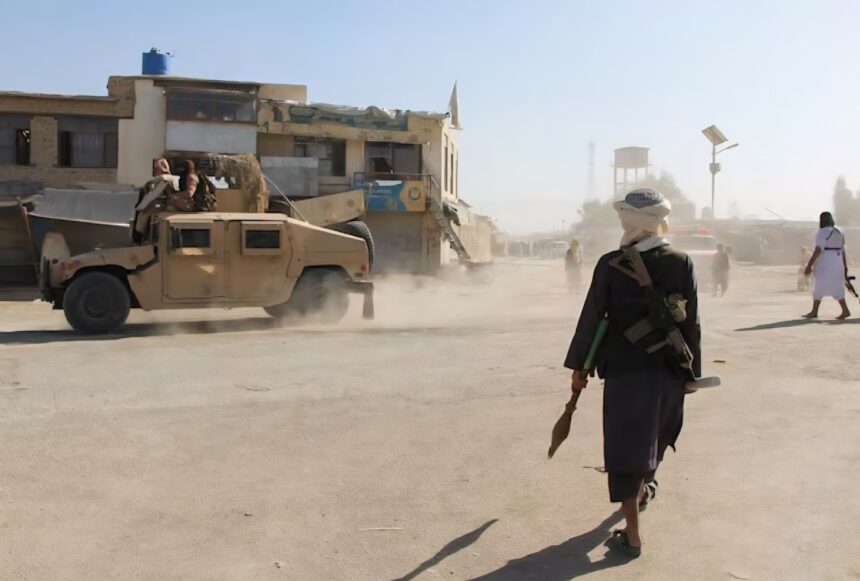
The second strategy involved direct military force. Pakistan launched repeated airstrikes, artillery bombardments, and cross-border ground operations targeting locations in Paktia, Paktika, Nangarhar, and even areas near Kabul, claiming they housed TTP infrastructure.
One particularly controversial strike in March reportedly hit a rehabilitation center inside Afghanistan, killing approximately one hundred people. Pakistan maintained that the facility constituted a legitimate terrorist target, while the incident drew widespread criticism because of the significant civilian casualties reported.
The growing confrontation between Pakistan and the Taliban has increasingly attracted international attention. China and Turkiye have both attempted to mediate between the two sides, recognizing that continued instability threatens regional security and major infrastructure investments.
Following the March airstrike, China hosted talks between Pakistani and Taliban representatives in Urumqi. Beijing had previously organized similar meetings under the China-Pakistan-Taliban trilateral framework during 2025. Türkiye, together with Saudi Arabia and Qatar, also facilitated ceasefire initiatives between Islamabad and the Taliban. Yet every diplomatic effort ultimately failed because the two sides remained fundamentally divided.
Pakistan insisted that the Taliban dismantle TTP safe havens and take concrete action against militant leaders. The Taliban, meanwhile, demanded guarantees that Pakistan would cease violating Afghanistan’s sovereignty through cross-border military operations. Neither side was prepared to formalize these commitments in a binding agreement.
Pattanaik concludes that Pakistan’s combination of diplomacy, refugee expulsions, economic pressure, and military intervention has failed to achieve its principal objective: reducing terrorist violence. Instead, attacks have continued while bilateral relations have deteriorated further.
The difficult terrain along the Afghanistan-Pakistan frontier remains home to multiple armed factions whose loyalties are rooted more in tribal affiliations than in state boundaries. These militant networks continue to exploit porous borders, weak governance, and longstanding cross-border relationships to sustain their operations.
According to the analysis, the Taliban have deliberately chosen not to sever ties with the TTP because they regard the organization as a useful counterweight against Islamic State Khorasan Province (ISIS-K), particularly after some former TTP members defected to ISIS-K. This calculation, Pattanaik argues, reflects strategic choice rather than institutional incapacity.
Data from the Center for Research and Security Studies (CRSS) in Islamabad reinforce the deteriorating security picture. By 25 November, Pakistan had recorded an overall 25 percent increase in violence, with 3,187 fatalities, compared with 2,546 deaths during the corresponding period in 2024 an increase of roughly 20 percent in overall casualties.
The analysis concludes that Pakistan’s diplomatic strategy toward the Taliban has failed to produce either peace or security. Terrorist attacks continue to undermine investor confidence, disrupt economic development, and threaten major regional connectivity projects. Meanwhile, persistent unrest in Balochistan, coupled with the TTP’s demonstrated ability to coordinate complex nationwide attacks, highlights the resilience and expanding operational capacity of militant networks.
Ultimately, Pattanaik argues, neither diplomatic engagement nor military coercion has persuaded the Taliban to alter their strategic calculus regarding the TTP. As long as militant sanctuaries remain intact and ideological affinities continue to outweigh regional security concerns, relations between Islamabad and the Taliban are likely to remain defined by confrontation, mutual distrust, and recurring cycles of violence rather than durable cooperation.