
RASC News Agency: Since the withdrawal of international forces from Afghanistan and the Taliban’s return to power in August 2021, concerns over terrorism emanating from Afghanistan’s territory have remained at the forefront of regional security debates. Neighboring countries particularly Pakistan have repeatedly warned that militant organizations continue to use Afghanistan as an operational base for planning, recruiting, training, and launching cross-border attacks. Although the Taliban authorities have consistently rejected these allegations, Russia’s latest intervention before the United Nations Security Council demonstrates that such concerns are no longer confined to a single regional actor but have increasingly evolved into a broader international security issue.
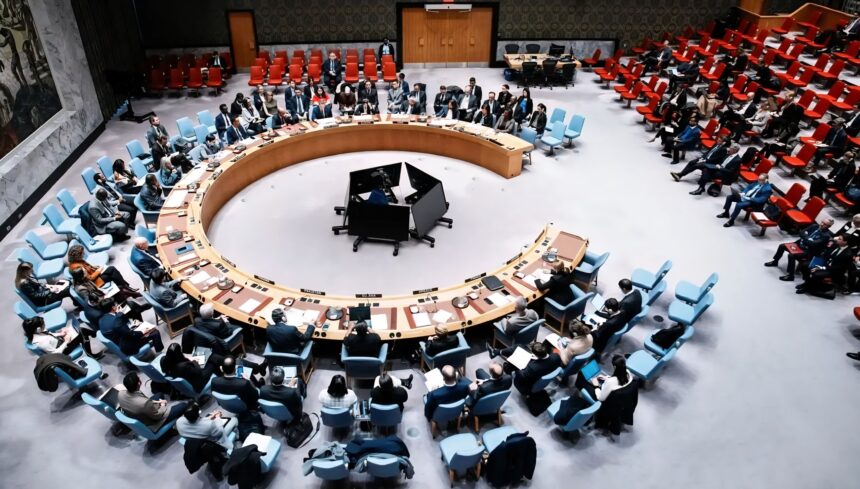
Speaking during a Security Council briefing on Afghanistan, Anna Evstigneeva, Russia’s Deputy Permanent Representative to the United Nations, directly linked the continuing tensions between Afghanistan and Pakistan to the activities of the Tehrik-i-Taliban Pakistan (TTP). She also identified the continued presence of Islamic State Khorasan Province (ISIS-K) inside Afghanistan as a persistent and deeply entrenched security threat.
The significance of these remarks extends well beyond routine diplomatic rhetoric. As a permanent member of the UN Security Council with substantial geopolitical influence across Central and South Asia, Russia’s assessment reflects growing international unease regarding the continued operation of transnational terrorist organizations from Afghanistan’s territory and the implications for regional stability.
For several years, Pakistan has maintained that cross-border terrorism originating from Afghanistan poses one of the gravest threats to its national security. Islamabad has repeatedly asserted that TTP militants enjoy operational freedom inside Taliban-controlled Afghanistan, enabling them to organize, coordinate, and execute attacks against Pakistani military and civilian targets. These concerns have become a recurring source of diplomatic friction between Pakistan and the Taliban administration, with Islamabad arguing that lasting regional peace will remain unattainable unless cross-border militant sanctuaries and logistical networks are dismantled. Despite sustained international pressure, the Taliban have neither acknowledged the existence of such infrastructure nor presented independently verifiable evidence of comprehensive action against these networks.
Russia’s statement at the United Nations adds considerable weight to Pakistan’s longstanding assertions by demonstrating that concerns over terrorist safe havens in Afghanistan are increasingly shared by multiple governments and international institutions. While political consensus regarding engagement with the Taliban remains elusive, a broader security consensus is gradually emerging: terrorist organizations continue to operate from Afghanistan’s territory, regional security remains under significant threat, and the Taliban have thus far failed to demonstrate either the capacity or the political will to comprehensively neutralize these groups.
Equally significant was Russia’s emphasis on the continued activities of ISIS-K, an organization that has repeatedly demonstrated its ability to conduct high-profile and sophisticated terrorist attacks. The group has targeted civilians, security personnel, diplomatic missions, religious gatherings, and ethnic and religious minorities, extending its threat beyond Afghanistan’s borders and raising alarm among neighboring states and the wider international community. Its sustained operational capability illustrates the fragile and volatile security environment that continues to characterize Afghanistan under Taliban rule.
The coexistence of multiple militant organizations within Afghanistan raises broader questions about the country’s long-term security trajectory. Terrorist ecosystems rarely develop in isolation; they thrive where weak governance, institutional collapse, economic hardship, porous borders, and limited state capacity converge. Such conditions facilitate recruitment, financing, weapons trafficking, logistical coordination, and cross-border mobility. Unless these structural vulnerabilities are effectively addressed, what currently appears to be a localized security problem risks evolving into an increasingly complex regional and potentially international security crisis.
Rather than serving as an effective counterterrorism partner, critics argue that the Taliban’s governance model has failed to eliminate many of the underlying conditions that enable extremist organizations to survive and adapt. Despite repeated assurances that Afghanistan’s territory will not be used to threaten neighboring countries, international skepticism has continued to grow because those assurances have not been matched by transparent, independently verifiable counterterrorism measures. The widening gap between the Taliban’s official narrative and the security assessments presented by numerous governments and international organizations has become one of the principal drivers of declining international confidence.
Russia’s intervention at the Security Council therefore represents more than a routine diplomatic statement. It reinforces an emerging international consensus that Afghanistan’s security challenges can no longer be viewed solely as an internal matter. Instability within Afghanistan increasingly transcends national borders through terrorism, refugee movements, illicit trafficking, and broader regional security disruptions. Consequently, addressing these threats requires sustained regional cooperation, credible international engagement, enhanced intelligence coordination, and effective mechanisms to dismantle transnational militant networks rather than relying solely on political declarations.
Ultimately, lasting peace and stability across South and Central Asia will depend upon whether all relevant stakeholders including the Taliban authorities are prepared to confront the realities on the ground rather than relying on competing political narratives. Meaningful counterterrorism efforts, strengthened regional partnerships, and demonstrable action against armed extremist organizations remain indispensable prerequisites for reducing instability. Until the Taliban acknowledge the scale of these security challenges and undertake transparent, verifiable measures to address them, diplomatic assurances alone are unlikely to convince either neighboring states or the broader international community.
Russia’s remarks at the United Nations therefore signal a broader shift in international thinking. They reflect an increasingly shared assessment among influential global actors that terrorist threats linked to Afghanistan remain active, continue to shape regional security dynamics, and demand sustained international attention. Whether this emerging consensus ultimately translates into coordinated diplomatic and security initiatives remains to be seen, but it underscores that Afghanistan’s terrorism challenge remains one of the most pressing and unresolved security issues confronting the region today.