
RASC News Agency: Local sources in Herat Province report that the Taliban have significantly expanded the deployment of their fighters across Shiite-populated districts of the province as preparations begin for the upcoming observance of Muharram, one of the most important periods in the Shiite religious calendar.
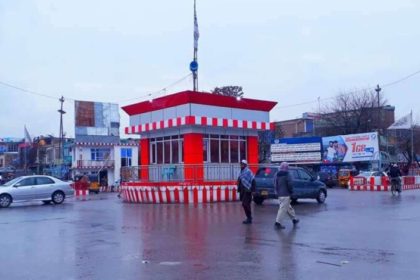
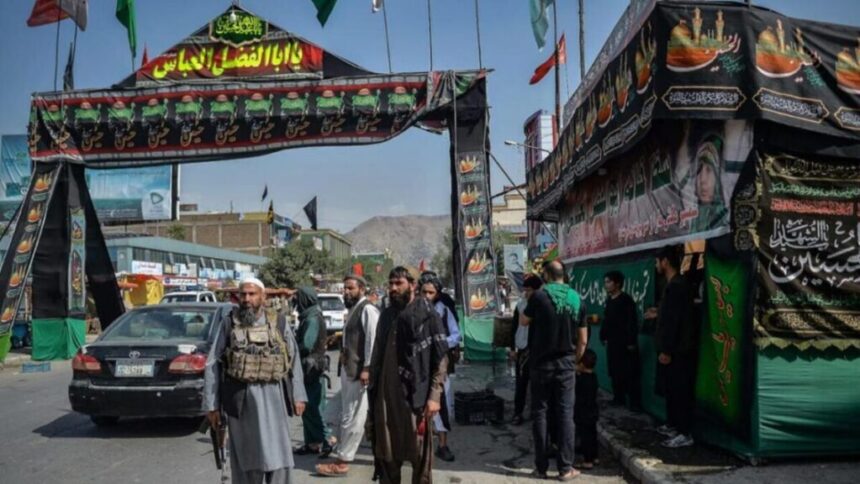
According to these sources, Taliban checkpoints and security posts have multiplied in recent days along major roads, intersections, and entry points to Shiite neighborhoods throughout Herat. Fighters affiliated with the group are reportedly monitoring activities related to preparations for Muharram mourning ceremonies and exercising heightened oversight over public religious gatherings.
Residents familiar with the situation say that Shiite communities in Herat traditionally begin organizing commemorative events and displaying religious banners, flags, and symbols in the weeks leading up to Muharram. However, since the Taliban’s return to power in August 2021, restrictions on the public observance of Shiite religious ceremonies have reportedly intensified year after year.
Local sources indicate that Taliban authorities are once again attempting to prevent or severely limit the installation of religious flags, banners, and symbolic decorations in public spaces across the city during this year’s commemorations.
At the same time, videos circulating on social media appear to show individuals identified by local residents as Taliban fighters removing Muharram-related banners and religious symbols from several locations in Herat. While the authenticity of all footage has not been independently verified, the videos have generated widespread concern among members of the local Shiite community.
Critics argue that the increased security presence and restrictions reflect a broader pattern of religious control and social regulation under Taliban rule. Human rights advocates and representatives of religious minority communities have repeatedly expressed concern over limitations imposed on public religious expression, warning that such measures undermine religious freedom and further marginalize vulnerable communities.
The developments come amid continuing concerns about the protection of religious rights in Afghanistan, where minority groups have faced growing uncertainty regarding their ability to freely practice and publicly express their religious traditions since the Taliban’s return to power. Observers note that Muharram has historically held profound cultural, religious, and communal significance for Afghanistan’s Shiite population, making any restrictions on its observance particularly sensitive.
As Muharram approaches, residents and community leaders are closely monitoring the situation, amid fears that additional restrictions could further limit public commemorations and deepen concerns over the status of religious freedoms under Taliban governance.