

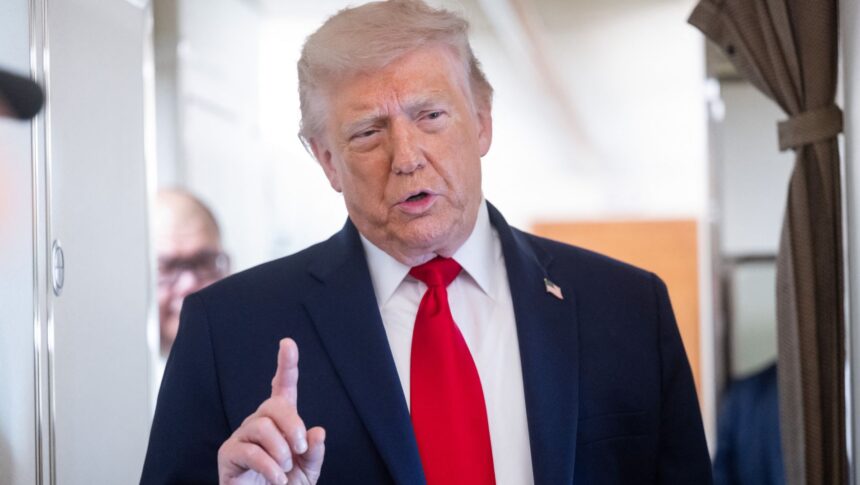
RASC News Agency: U.S. President Donald Trump urged Israeli Prime Minister Benjamin Netanyahu not to launch a military response to Iran’s recent missile attack, arguing that diplomacy should be given additional time to run its course. The details of the phone conversation were confirmed to Axios by a senior U.S. official and an Israeli source familiar with the exchange.
Trump’s effort to restrain Israel’s response underscores his administration’s determination to prevent a broader escalation between Israel and Iran that could derail ongoing negotiations between Washington and Tehran.
Prior to the call, Trump had indicated to Axios that he intended to advise Netanyahu against retaliatory action following Iran’s missile strike. Tehran had described the attack as a response to an Israeli strike on Beirut earlier the same day. A senior American official further stressed that the Trump administration had not given Israel a “green light” for its operation in Beirut.
According to the report, Trump told Netanyahu that Israel should exercise restraint because the parties were “close to something good in the form of an agreement.” Although Netanyahu initially resisted the appeal, he ultimately agreed, at least informally, to hold off on immediate military action.
The U.S. official noted that the conversation was considerably less confrontational than the tense exchange reportedly held between the two leaders the previous week. Trump, the official said, did not raise his voice during the discussion.
“We believe the president has bought some time,” the official stated. “He is firmly convinced that we are nearing an agreement with Iran. I do not believe an Israeli strike is imminent.”
The same official added: “We are at a critical juncture. Why would we jeopardise a potential agreement when we are effectively in the fourth quarter of the game? The president believes we have invested three months in this process, and now is the time to bring it to a conclusion.”
In a separate interview with the Financial Times, Trump suggested that Netanyahu would ultimately have little choice but to accept any agreement emerging from U.S.-Iran negotiations.
“He won’t have a choice,” Trump said, referring to the Israeli prime minister’s position regarding a prospective deal with Tehran.
In some of his most direct remarks concerning Netanyahu’s role in shaping regional policy, Trump asserted: “I make the decisions. I make all the decisions. He doesn’t make the decisions.”
The comments highlight the extent to which the White House is seeking to maintain control over the trajectory of Middle Eastern diplomacy at a moment of heightened regional volatility. They also point to potential tensions between Washington and Jerusalem over the appropriate response to Iran and the broader strategic direction of efforts aimed at preventing a wider conflict.
The developments come amid intensified diplomatic activity surrounding Iran’s nuclear programme and regional security concerns. While the United States appears focused on preserving the momentum of negotiations, Israel has consistently maintained that it reserves the right to act independently should it perceive an existential threat to its national security.
Whether Trump’s intervention succeeds in postponing or preventing an Israeli military response remains uncertain. However, the reported exchange illustrates the delicate balance facing U.S. policymakers as they attempt to pursue a negotiated understanding with Tehran while simultaneously managing the security concerns of one of Washington’s closest allies in the region.
As diplomatic initiatives continue, the latest episode serves as a reminder that even a single military action has the potential to reshape the course of negotiations, alter regional alliances, and significantly influence the prospects for either de-escalation or renewed confrontation across the Middle East.