

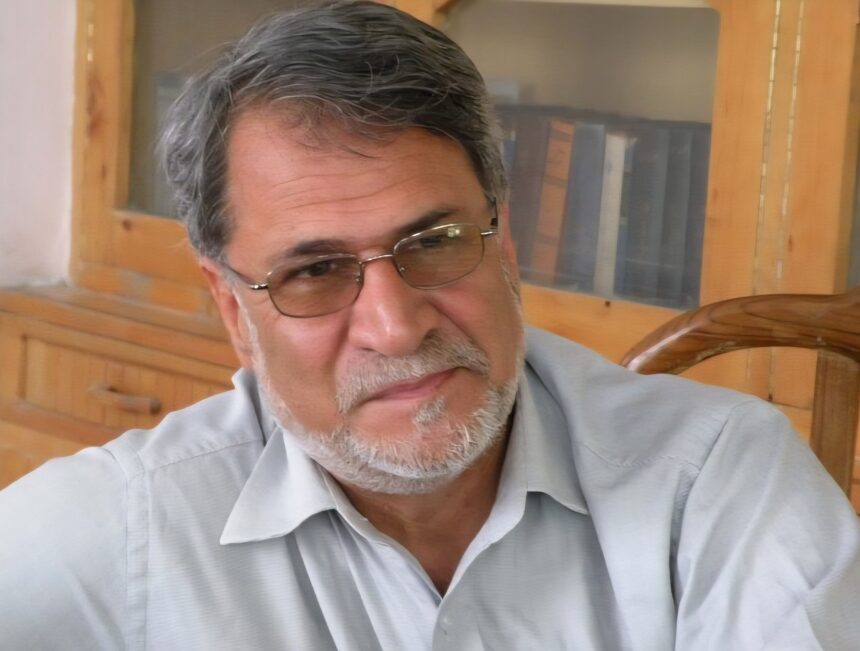
RASC News Agency: The Persian Speakers’ Cooperation Center in London recently hosted an analytical forum featuring Dr. Mohiuddin Mahdi, a prominent Afghanistani historian, senior researcher, and political analyst, to examine potential pathways for Afghanistan’s future political and administrative order. The discussion focused on the country’s enduring geopolitical challenges, identity crises, and the competing visions for a post-conflict political settlement.
According to a report published by Nabi Saqi, a political analyst specializing in Afghanistani affairs, on his Facebook page, Dr. Mahdi outlined his perspectives on the structural alternatives available for the country’s future governance while responding to questions from participants.
In assessing various political and administrative models, Dr. Mahdi described federalism as the most effective, sustainable, and least costly solution to Afghanistan’s longstanding structural crises. He argued that the idea of territorial partition or disintegration would not resolve the country’s deep-rooted political, ethnic, and historical disputes. Rather, such a scenario could trigger new cycles of conflict, intensify existing divisions, and potentially plunge the country into even more devastating violence.
According to Dr. Mahdi, a genuinely equitable federal system would serve a dual purpose. First, it would act as a safeguard against the fragmentation and eventual breakup of the state. Second, it would create institutional mechanisms capable of ensuring political participation, representation, and satisfaction among Afghanistan’s diverse ethnic and regional communities. Federalism, he argued, would empower provincial and regional administrations to formulate policies that reflect local cultural realities, social priorities, and political aspirations while remaining within a unified national framework.
The veteran historian further identified what he described as a major weakness within non-Pashtun political movements: the absence of a coherent historical and political narrative capable of articulating collective aspirations and long-term objectives.
Despite decades of political activism, resistance, and sacrifice by numerous political actors and communities, Dr. Mahdi contended that non-Pashtun groups have yet to produce a comprehensive intellectual framework that clearly defines their demands, strategic vision, and desired future political order. This lack of narrative cohesion, he suggested, has weakened their ability to effectively challenge entrenched power structures.
Turning specifically to the Tajik community, Dr. Mahdi offered a critical assessment of what he characterized as a culture of self-censorship and identity avoidance among segments of Tajik political and civil society.
He argued that while many Pashtuns openly and proudly assert their ethnic identity, and while Hazara and Turkic communities similarly express their collective identities without hesitation, a significant number of Tajik political figures remain reluctant to publicly advocate for their communal rights or openly identify themselves in ethnic terms. According to Mahdi, many fear being accused of ethnic nationalism whenever they raise questions concerning representation, equality, or collective rights.
To illustrate this phenomenon, he recalled an episode from the parliamentary era of the former republic. He recounted how a cabinet minister belonging to the Tajik community repeatedly emphasized broader national and religious identities during a formal parliamentary speech. According to Mahdi, the minister declared “Thank God we are Muslims” eighteen times and “Thank God we are all Afghans” twelve times, yet failed even once to identify himself as a Tajik or acknowledge the collective identity of the community he represented.
For Dr. Mahdi, this example reflects a broader pattern in which some members of the Tajik elite have internalized political pressures that discourage open discussion of ethnic identity and collective rights. He suggested that this reluctance has contributed to an imbalance in political discourse, particularly in a country where ethnicity continues to play a central role in the distribution of power and resources.
The discussion comes amid renewed debates over Afghanistan’s future political architecture following the Taliban’s return to power in 2021. Critics of the current system argue that the Taliban have established one of the most centralized and exclusionary political structures in modern Afghanistani history, concentrating authority in the hands of a narrow ideological leadership while excluding large segments of the country’s ethnic, political, and social spectrum from meaningful participation.
As political exclusion deepens and demands for representative governance continue to grow, proposals such as federalism have gained increasing attention among academics, opposition figures, civil society activists, and members of the Afghanistani diaspora. Supporters contend that decentralization could provide a peaceful framework for managing the country’s ethnic, linguistic, and regional diversity while reducing the risks of future conflict.
Dr. Mahdi, whose scholarly work spans Afghanistani history, regional geopolitics, and the cultural heritage of Greater Khorasan, also revealed that he has recently completed his latest major academic project. The work, titled “Khorasan-Nama,” consists of seven volumes and is expected to be published in the near future. The series is described as a comprehensive historical and analytical examination of the region’s political, cultural, and civilizational evolution and is anticipated to become a significant contribution to contemporary scholarship on Afghanistan and the broader Khorasan region.