

RASC News Agency: Amid deepening security tensions between Pakistan and the Taliban administration in Afghanistan, a senior Pakistani official has alleged that thousands of militants are being trained on Afghanistan’s territory and subsequently deployed in attacks inside Pakistan claims that have once again intensified scrutiny of the Taliban’s failure to dismantle extremist networks operating across the region.
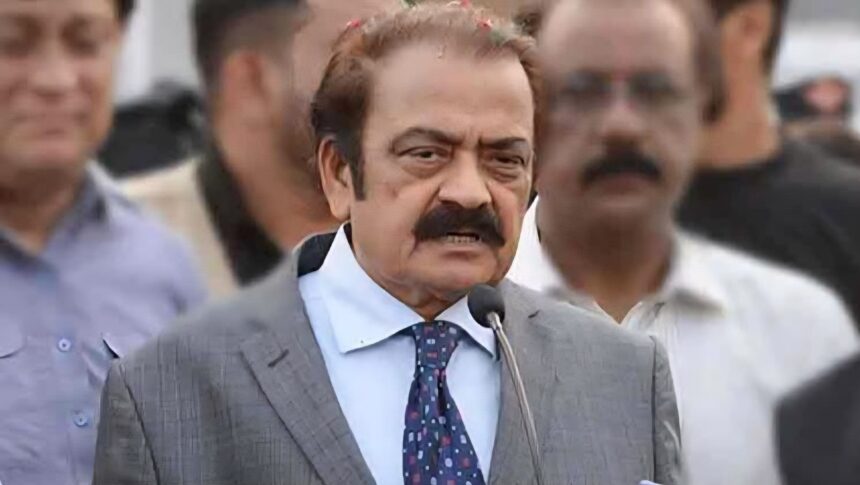
Rana Sanaullah, political adviser to Pakistan’s prime minister, told Pakistan’s Senate that between 7,000 and 8,000 “misguided individuals” are currently receiving military and paramilitary training inside Afghanistan before participating in cross-border assaults against Pakistani targets. If substantiated, the allegations would further reinforce longstanding international concerns that Taliban-controlled Afghanistan has increasingly become a permissive environment for militant organizations and transnational extremist activity.
Sanaullah further claimed that these militants are being financed by India and Israel, although he did not present publicly verifiable evidence to support the accusation. Regional analysts note that such claims, particularly when advanced without documentary proof, reflect the increasingly volatile geopolitical and security climate surrounding Afghanistan and Pakistan. Nevertheless, the accusations emerge against a broader backdrop of mounting criticism directed at the Taliban, whose repeated assurances that Afghanistan’s soil would not be used to threaten neighboring states have failed to convince regional governments or the wider international community.
The Pakistani official emphasized that Islamabad would not compromise in its campaign against militancy and declared that operations targeting what he described as “terrorist sanctuaries and training facilities inside Afghanistan” would continue. His remarks underscore growing frustration within Pakistan’s security establishment over the Taliban’s apparent inability or unwillingness to dismantle extremist infrastructures that continue to operate with relative freedom under their rule.
Since returning to power in 2021, the Taliban have faced persistent criticism for presiding over a deteriorating security landscape marked by the resurgence of militant groups, the absence of transparent and accountable security institutions, and the continued presence of radical networks across Afghanistan. Critics argue that rather than establishing an effective counterterrorism framework, the Taliban have struggled to exert meaningful control over armed factions, allowing Afghanistan to drift further into instability and international isolation.
According to Sanaullah, the remarks were delivered during a Senate session focused on the worsening security situation in the provinces of Khyber Pakhtunkhwa and Balochistan, regions that have witnessed a sharp escalation in deadly attacks in recent weeks, including assaults in districts such as Lakki Marwat and Bannu.
The Pakistani government has repeatedly accused the Taliban of permitting armed groups to use Afghanistan’s territory as a staging ground for organizing, training, and launching attacks against Pakistan allegations the Taliban continue to deny. However, the persistence of cross-border violence, coupled with the growing operational capacity of extremist organizations, has intensified doubts over the Taliban’s credibility and their actual commitment to preventing Afghanistan from once again becoming a hub for regional militancy.
Observers warn that unless decisive measures are taken to curb extremist activity, Afghanistan risks further entrenching itself as a center of regional insecurity, with consequences extending far beyond its borders. The Taliban’s continued failure to address these concerns has not only strained relations with neighboring countries but has also deepened Afghanistan’s diplomatic isolation at a time of severe humanitarian and economic crisis.