

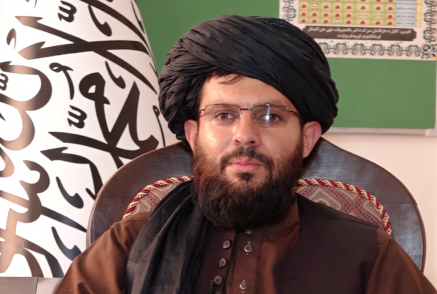
RASC News Agency: A spokesperson for the Taliban’s Ministry for the Promotion of Virtue and Prevention of Vice in Afghanistan has criticized the celebration of Valentine’s Day among the country’s youth, highlighting growing concerns over the ideological influence of the group in daily life.
According to the spokesperson, Valentine’s Day has gained popularity in Afghanistan over the past 20 years and has now “taken deep roots in society,” to the point that “young Muslim men and women celebrate it today.”
This official Taliban stance is notable because, in recent years, the group has not only rejected public celebrations like Valentine’s Day but has also imposed formal bans on related goods and symbols, including red flowers, heart-shaped balloons, and gifts. Patrols from the Ministry have reportedly been stationed near commercial areas to enforce these bans. In cities like Herat, restrictions are particularly visible around parks such as Taraqi Park and flower shops, where signs reading “Valentine’s Prohibited” have been posted, and merchants avoid selling related items out of fear of security pressures.
Reports indicate that, under the Ministry for the Promotion of Virtue, the Taliban has systematically restricted or prohibited not only Valentine’s Day but also any cultural or social occasion that falls outside the group’s strict doctrinal framework. These limitations have created an environment where personal freedoms are suppressed, preventing young people from celebrating private and emotional occasions significantly altering social life, particularly in urban areas.
The spokesperson’s comments come amid repeated international reports, including those by the UN Assistance Mission in Afghanistan (UNAMA), documenting systematic violations of human rights, freedom of expression, and cultural freedoms under Taliban rule. These reports indicate that social restrictions, especially targeting women and youth, are not temporary measures but part of a deliberate governance structure that exerts unprecedented control over citizens’ private and social lives.
Prior to the Taliban’s return to power in August 2021, occasions like Valentine’s Day were celebrated in parts of Kabul and other major cities with flowers, balloons, gifts, and gatherings of young couples and friends. Florists and cafes created vibrant spaces where emotional expression was encouraged. Under the current strict ideological control, these cultural freedoms have become memories of the past.
While the Taliban spokesperson labels Valentine’s Day as a product of “Western moral corruption” and claims it has no “religious or historical roots,” critics argue that such policies not only violate cultural rights and individual freedoms but are part of a broader effort to socially control and suppress young people and women. Over recent years, this systematic campaign has significantly pushed Afghanistan’s society backward in terms of cultural and social liberties.