

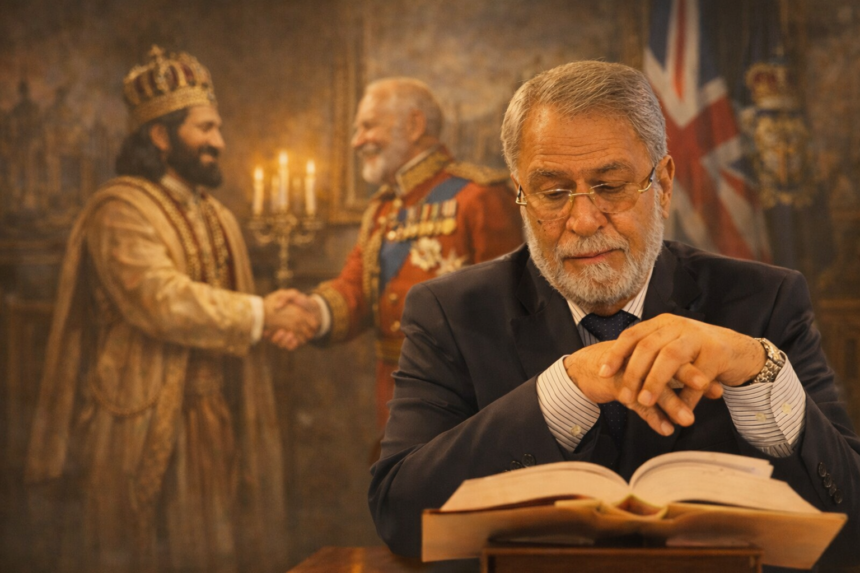
RASC News Agency: Dr. Mohiuddin Mahdi, former member of Afghanistan’s House of Representatives, has highlighted a little-examined chapter in the country’s political history in a post on his official Facebook page. This chapter reveals how the British government made deals with the Barakzai emirs deals that resulted not in stability, but in the spread of organized violence, expropriation of citizens’ lands, and chronic instability.
According to Dr. Mahdi, the guiding principle of all British treaties with the emirs and rulers of that period was simple: “Follow us in foreign relations, and we will not interfere in your domestic affairs.”
However, in practice, this “non-interference” meant leaving the fate of the people in the hands of oppressive local powers. These powers were armed and funded by Britain and, without accountability, used violence as a tool for survival.
Dr. Mahdi explains that the financial and military resources provided by Britain were not used for development or national defense. Instead, they were turned against the people. The ruling authorities systematically attacked local populations, killed civilians, displaced communities, and confiscated lands and properties, transferring them to groups referred to in contemporary documents as “Afghan (Pashtun) conveyors.” These actions forcibly altered property structures and demographic balance, embedding deep social divisions whose consequences persist to this day.
Dr. Mahdi emphasizes that “non-interference in domestic affairs” ceased to be a neutral principle; it became a tool to legitimize institutionalized violence. By delegating repression to local rulers, Britain shifted the human cost of its policies onto Afghanistan’s society while avoiding direct accountability.
In closing, Dr. Mahdi warns that when foreign policy is based on deals with unaccountable powers, and development is replaced by repression, the result is not stability but the reproduction of crisis a crisis that spans generations and weakens the country from within. He also calls for Britain and the local rulers who misused these resources to take historical responsibility and issue an official apology to the Afghanistani people and affected communities.