

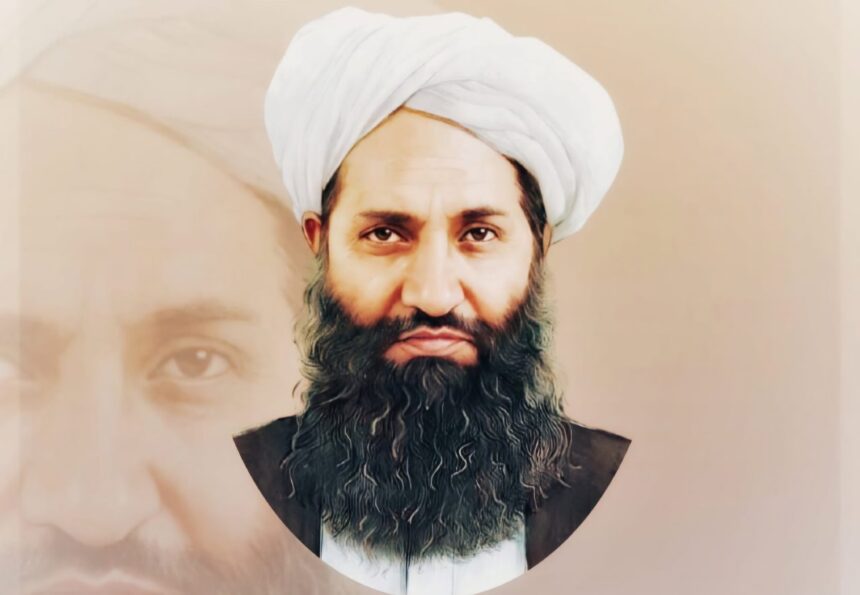
RASC News Agency: A senior Pakistani official has warned that Islamabad possesses the capacity to take decisive action against Hibatullah Akhundzada, the Taliban leader, drawing a parallel to the recent arrest of Venezuelan President Nicolás Maduro by the United States. The official emphasized that continued security threats emanating from Afghanistan could prompt Pakistan to consider targeted measures against the Taliban’s top leadership.
In a post on the social media platform X, Jan Achakzai, a high-ranking Pakistani security figure, stated that just as the United States apprehended Maduro, Pakistan has the operational capability to detain Hibatullah Akhundzada, provided that Taliban-backed suicide bombings and cross-border attacks into Pakistani territory persist.
Achakzai stressed that Pakistani security agencies are aware of the Taliban leader’s location, a detail that distinguishes Islamabad’s intelligence advantage from the uncertainties faced by the United States. He asserted that while Washington may lack precise knowledge of Hibatullah’s whereabouts, Islamabad has actionable intelligence, enhancing its capacity to respond to escalating threats.
The Pakistani official also highlighted what he described as the instrumentalization of Tehrik-i-Taliban Pakistan (TTP) by Afghanistani Taliban leadership. According to Achakzai, attempts to advance the concept of a “Greater Afghanistan” through proxy militant groups are doomed to fail when confronting a nuclear-armed state, signaling a hardening stance by Islamabad against Taliban tolerance of cross-border insurgency.
These remarks come amid rising security tensions between Pakistan and the Taliban in recent months. Islamabad has repeatedly accused the Taliban of sheltering and supporting TTP operatives, allegations that the Taliban have consistently denied. Analysts interpret Achakzai’s statement as a significant escalation in Pakistan’s strategic posture, reflecting growing frustration over Taliban inaction in curbing proxy insurgent activity and indicating potential serious ramifications for bilateral relations in the near future.
Security observers note that the warning is not merely rhetorical. It underscores a newly assertive posture by Pakistan, signaling that tolerance of Taliban-controlled Afghanistan as a safe haven for militant networks may no longer be viable. If the Taliban fail to restrain such groups, Islamabad could consider direct operational options, increasing pressure on the Taliban regime while sending a broader message about accountability for cross-border violence.