
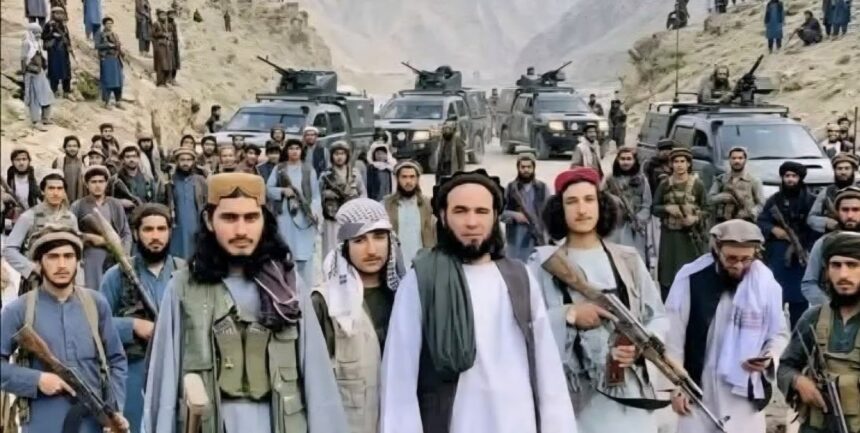
RASC News Agency: Amid growing tensions in recent months between some local commanders and the Pashtun-centric leadership of the Taliban in Kandahar, Mullah Juma Khan Fateh, a Tajik commander of the group in the Darwaz district of Badakhshan, has issued an open message addressed to Qari Fasihuddin Fitrat, the Taliban’s Chief of Army Staff, as well as Mawlawi Amanuddin Mansoor, Mawlawi Shamsuddin Shariati, Qari Din Mohammad Hanif, and several other commanders from Badakhshan.
The statement comes at a time when the Taliban whose power structure has remained firmly concentrated in a Pashtun leadership core based in the south, particularly Kandahar has, over nearly five years, systematically weakened the role of non-Pashtun local commanders and figures within its hierarchy.
Badakhshan, in northeastern Afghanistan, is one of the provinces where the majority of the population is Tajik. Since the Taliban’s return to power in August 2021, the province has repeatedly witnessed local protests, armed clashes, and tensions over issues such as mineral extraction, the deployment of non-local (Pashtun) fighters, and centralized administrative control imposed from Kabul and Kandahar.
Qari Fasihuddin Fitrat, himself a Tajik figure within the Taliban, has in recent years emerged as one of the most prominent military commanders in northern Afghanistan. However, critics describe his position as largely symbolic an ethnic “facade” used to legitimize Pashtun dominance rather than genuine power-sharing within the group.
In his message, Juma Khan Fateh alleged that over the past five years the Taliban have used religion and Sharia not as a moral framework but as a tool to consolidate Pashtun tribal dominance. He claimed that the religious convictions of Badakhshani fighters have been exploited to advance a broader political and ethnic agenda directed from Kandahar.
He further alleged that factions within the Taliban structure are deliberately attempting to pit Badakhshani forces against one another a strategy, he said, aimed at maintaining control over Badakhshan and its resources through external dominance.
Fateh also accused the group of systematic exploitation of Badakhshan’s natural wealth, including its mines, agricultural land, and resources, claiming that revenues are diverted through networks linked to the Taliban leadership while local communities remain deprived. These allegations reflect a broader narrative often voiced by critics who describe the situation as the extraction of resources from non-Pashtun regions for the benefit of southern power networks claims the Taliban consistently reject.
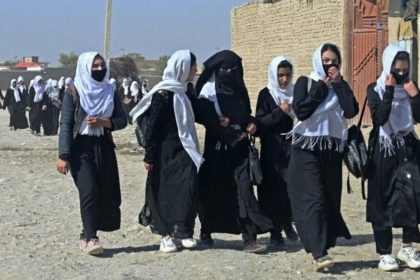
He also criticized what he described as institutionalized restrictions on education and social life in Badakhshan, stating that girls are deprived of education and boys are enrolled in schools designed to instill obedience to the Taliban’s hierarchical structure rather than independent thought.
The most pointed section of the message was a direct warning to Qari Fasihuddin Fitrat and other Badakhshani commanders. Fateh claimed they are being positioned on the front lines as expendable assets, used both militarily and for propaganda purposes, while ultimately destined to be sidelined or eliminated once their usefulness ends.
According to him, the Pashtun-dominated Taliban leadership will not tolerate any commander in Badakhshan with an independent social base, and will eventually “discredit, remove, and erase them from the political history of the region.”
He urged Badakhshani commanders and fighters not to turn their weapons against their own communities, calling instead for alignment with local populations. He stressed that the future of Badakhshan depends on the decisions made today and framed his appeal as a response to what he described as the voice of the people, their land, and their historical identity.
The message emerges amid what observers describe as increasing dissatisfaction in Badakhshan with the Taliban’s centralized governance model. Critics have repeatedly accused the group of concentrating power within a narrow Pashtun leadership circle in Kandahar while reducing the influence of local commanders in northern provinces. The Taliban, however, rejects these allegations.
As of now, no official response has been issued by Qari Fasihuddin Fitrat or other addressed commanders.