
RASC News Agency: Pakistan’s Ministry of Information has categorically rejected claims by the Taliban authorities in Afghanistan that they carried out drone strikes against alleged terrorist camps in the border regions of Khyber Pakhtunkhwa and Balochistan, describing the allegations as another attempt at disinformation designed to obscure the group’s own failure to address militant networks operating from Afghanistan’s territory.
In a statement issued through its official channels, the ministry said Taliban authorities had circulated reports through state-affiliated media outlets and official communications claiming that rudimentary drones had successfully targeted what they described as Islamic State Khorasan Province (ISKP) positions inside Pakistan’s frontier regions. Islamabad dismissed the claims outright, characterizing them as false and misleading.
According to Pakistan’s account, the reality is that numerous militant organizations including ISKP and a wide range of other extremist groups continue to find sanctuary and operational space within Afghanistan. The statement argued that the Taliban’s accusations against Pakistan were an attempt to divert attention from persistent international concerns regarding the presence of transnational militant networks on Afghanistan’s soil.
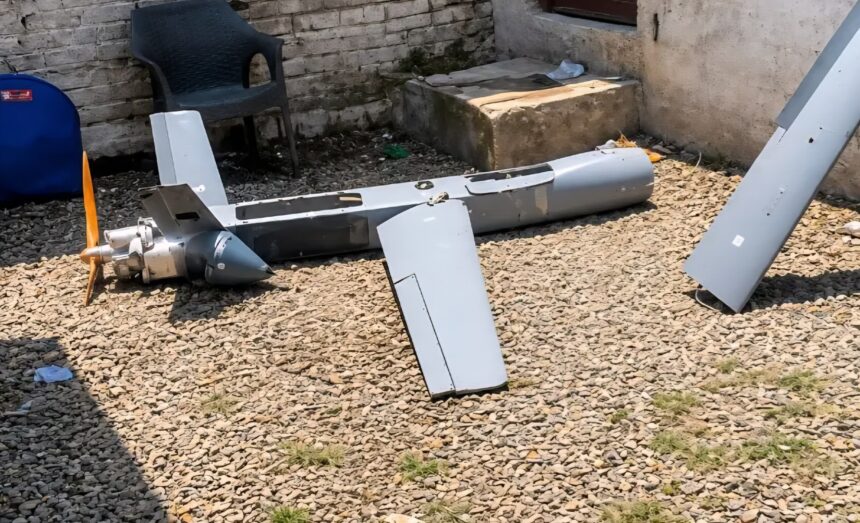
The ministry further claimed that one of the drones allegedly launched by Taliban forces crossed into Pakistani airspace near Shinko in Khyber District before being detected and intercepted by Pakistan’s air defense systems. Pakistani authorities said the drone was destroyed shortly after entering the country’s airspace and released what they described as photographic evidence of the wreckage.
In unusually strong language, the statement accused the Taliban administration of repeatedly resorting to what Islamabad described as deceptive narratives intended to conceal the broader security challenges emanating from Afghanistan. Pakistani officials argued that such claims are designed to deflect scrutiny from the continued activities of extremist organizations that threaten neighboring countries and regional stability.
The latest exchange follows Taliban assertions earlier the same day that they had conducted aerial operations against what they called terrorist sanctuaries in Pakistan’s border provinces of Khyber Pakhtunkhwa and Balochistan. Pakistani authorities rejected those claims as entirely fabricated and lacking credible evidence.
The dispute comes less than two weeks after Pakistan conducted military operations against what it described as terrorist hideouts along the Afghanistan-Pakistan frontier. According to Pakistani Information Minister Attaullah Tarar, those operations resulted in the deaths of 26 militants and were launched in response to a surge of attacks targeting Pakistani military personnel, security forces, and civilians.
For years, Islamabad has urged the Taliban authorities to dismantle militant infrastructure allegedly linked to Tehrik-e-Taliban Pakistan (TTP) and other armed groups operating from Afghan territory. Pakistani officials maintain that these concerns have not been adequately addressed, despite repeated bilateral engagements and international appeals. The Taliban, for their part, have consistently denied harboring or supporting militant organizations targeting neighboring states and have characterized Pakistan’s security challenges as an internal matter.
According to reports cited by Dawn, tensions between the two sides escalated significantly earlier this year following a series of border incidents. Pakistan subsequently launched what it called Operation Ghazab Lil-Haq, a military response aimed at countering perceived cross-border threats. Chinese mediation efforts later facilitated talks between Pakistani and Taliban representatives in Urumqi in April, helping to reduce tensions temporarily. However, recent developments suggest that those fragile gains may now be unraveling.
Pakistan’s Foreign Ministry has repeatedly stated that the future trajectory of relations with the Taliban authorities will depend largely on verifiable and irreversible counterterrorism measures. Islamabad insists that Afghanistan’s territory must not be used by militant groups to plan, finance, organize, or launch attacks against Pakistan or any other country.
These concerns have been raised consistently in international forums, including at the United Nations. Earlier this month, Pakistan’s Permanent Representative to the United Nations, Asim Iftikhar Ahmad, told the Security Council that the Taliban authorities must undertake “verifiable and irreversible” action against terrorist organizations operating inside Afghanistan. He argued that regional security and long-term stability depend upon concrete measures rather than rhetorical assurances, adding that the international community has yet to witness the level of action required to address these concerns effectively.
The latest diplomatic confrontation underscores the deepening mistrust between Islamabad and the Taliban authorities at a time when regional powers are increasingly focused on the security implications of militant activity in and around Afghanistan. As concerns over terrorism, border security, and regional stability continue to intensify, the dispute highlights the widening gap between Taliban assurances and the demands of neighboring states for demonstrable counterterrorism action.