
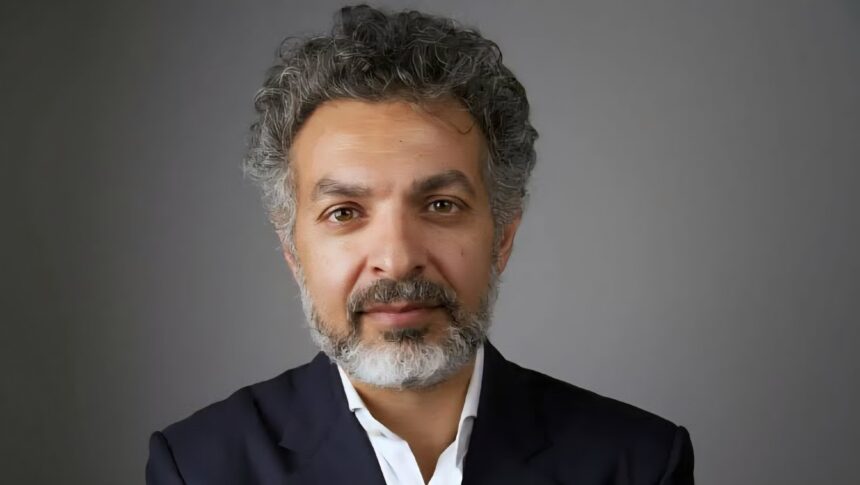
RASC News Agency: Saad Mohseni, the founder and chairman of Moby Group, has asserted that the circumstances facing women in Afghanistan’s major urban centres differ substantially from those that prevailed during the Taliban’s first period of rule in the 1990s. According to Mohseni, women in some Afghanistani cities are able to move freely in public spaces without covering their faces and, in certain instances, are permitted to drive vehicles.
Mohseni further claimed that numerous senior Taliban figures continue to educate their own daughters despite the movement’s nationwide restrictions on girls’ education. However, he did not clarify where these girls are receiving their schooling at a time when secondary education for girls above the sixth grade remains prohibited throughout Afghanistan and universities continue to be closed to female students under Taliban directives.
His remarks come against the backdrop of mounting evidence from international institutions indicating that Afghanistan remains the epicentre of one of the most severe women’s rights crises in the contemporary world. Assessments published by United Nations agencies have consistently concluded that none of the major restrictions imposed on women and girls since the Taliban’s return to power in August 2021 have been meaningfully reversed.
Reports issued by international human rights organisations, UN monitoring mechanisms, and independent observers have documented an expanding framework of decrees that have progressively excluded women from public life. These measures have restricted access to education, curtailed employment opportunities, limited freedom of movement, reduced political participation, and imposed increasingly stringent controls over women’s social and personal autonomy.
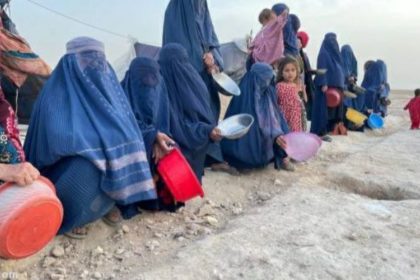
Simultaneously, local sources in Herat Province have reported the detention of several women by Taliban officials from the Ministry for the Promotion of Virtue and Prevention of Vice on allegations of failing to comply with prescribed dress regulations. Such incidents have repeatedly underscored the stark contrast between claims suggesting a degree of normalcy and the lived experiences of countless Afghanistani women navigating an increasingly restrictive social environment.
Mohseni, who during the former republic was widely regarded as a prominent advocate of media pluralism and women’s participation in public life, has in recent years faced growing criticism over his public commentary concerning Taliban rule. A number of Afghanistani journalists, women’s rights defenders, and civil society activists contend that his statements risk contributing to the normalisation of an institutional framework that has systematically curtailed the rights and freedoms of women and girls.
Critics argue that portraying conditions for women as relatively ordinary or substantially improved overlooks the broader structural realities confronting the female population. Millions of girls remain excluded from secondary and higher education, women continue to encounter formidable barriers to employment, and extensive restrictions on civic participation persist across multiple sectors of society. Under such circumstances, they maintain that presenting isolated examples of individual freedoms may inadvertently obscure the depth and scope of the wider crisis.
Others, however, contend that maintaining media operations within Afghanistan’s increasingly constrained environment necessitates pragmatic engagement and carefully calibrated public messaging. Supporters of this view argue that preserving even limited spaces for journalistic activity inside the country requires navigating complex political realities and avoiding approaches that could lead to the complete elimination of independent media platforms.
Nevertheless, empirical findings published by United Nations bodies indicate that Afghanistan remains the only country in the world where girls are systematically barred from attending secondary school and pursuing university education solely on the basis of gender. International experts have repeatedly warned that these restrictions carry profound long-term implications not only for individual rights but also for the country’s social cohesion, economic recovery, and developmental prospects.
Furthermore, limitations imposed on women’s employment, humanitarian engagement, and participation in public life have been criticised by successive UN Special Rapporteurs and human rights organisations as manifestations of institutionalised and systematic discrimination. Several international legal experts have characterised the cumulative effect of these policies as constituting an unprecedented form of gender-based exclusion in the modern era.
The consequences extend far beyond the immediate deprivation of educational and professional opportunities. The exclusion of women from key sectors of society has weakened Afghanistan’s already fragile healthcare and education systems, diminished household resilience in the face of economic hardship, and deprived communities of the expertise and contributions of half the population. Humanitarian agencies have repeatedly cautioned that restrictions targeting female aid workers have also undermined the delivery of essential assistance to vulnerable women and children.
In this context, statements by influential media personalities regarding the status of women in Afghanistan transcend the realm of personal opinion. Such remarks possess the capacity to shape international perceptions, influence policy discussions, and affect the manner in which governments, multilateral institutions, and humanitarian actors engage with the Afghanistani crisis.
For many advocates of women’s rights, the central issue is not whether limited examples of women driving or appearing in public without face coverings can be identified in certain urban localities. Rather, the defining question is whether Afghanistani women and girls, as a matter of law and practice, enjoy equal access to education, employment, mobility, and participation in public affairs. By this measure, critics contend that the prevailing reality remains one of profound exclusion.
As international debate over engagement with the Taliban continues, the representation of women’s conditions in Afghanistan assumes increasing significance. Human rights advocates caution against the gradual normalisation of policies that have systematically reduced women’s visibility and agency in public life. They argue that sustainable peace, international legitimacy, and genuine national recovery cannot be achieved while millions of Afghanistani women and girls remain deprived of rights widely recognised as universal and inalienable.
Ultimately, the situation of women in Afghanistan should be assessed not through isolated anecdotes or exceptional cases but through the broader legal, social, and institutional framework governing their lives. By that standard, many international observers maintain that Afghanistan continues to confront a profound and unresolved human rights emergency one whose consequences will reverberate across generations unless meaningful change occurs.