
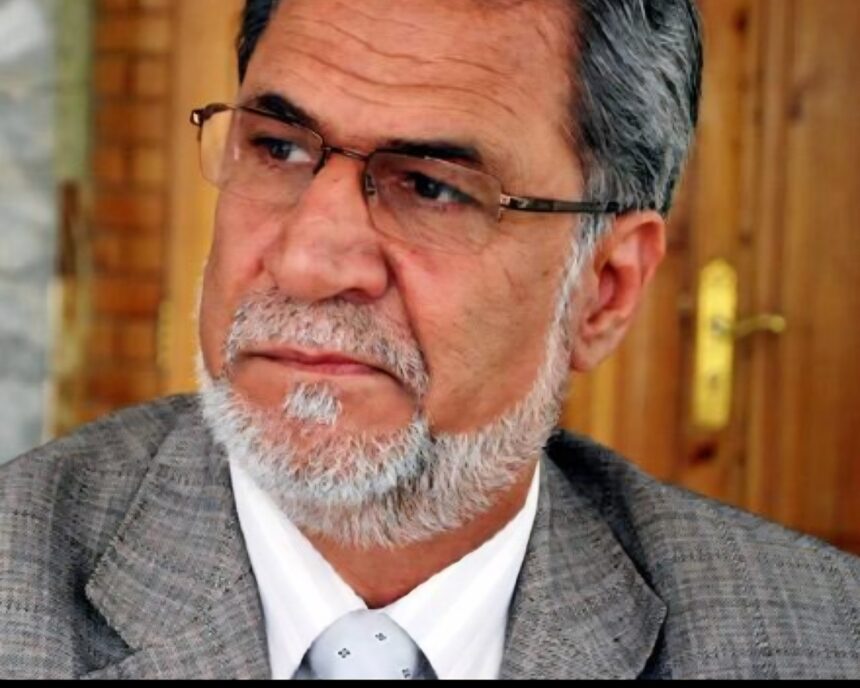
RASC News Agency: Muhiuddin Mahdi, a prominent Afghanistani political analyst and commentator, has stated that identity-based and regional discourses such as “Turkestanism,” “Hazarastanism,” and “Khorasanism” reflect deep-rooted dissatisfaction among segments of Afghanistani society with the country’s historical and political structure. According to him, despite their differing social and ethnic foundations, these movements fundamentally represent “cries for liberation from a structure they regard as a prison called Afghanistan.”
In his recent remarks, Mahdi argued that ruling political forces in Afghanistan have historically feared any identity-driven or rights-based movement. However, he emphasized that “Khorasanism” has generated greater sensitivity and anxiety among the Taliban than other currents because the concept carries not only ethnic and geographic dimensions, but also broader historical, civilizational, and political implications.
The remarks come amid intensifying debates over national identity, centralized governance, ethnic representation, and the structure of the state following the return of the Taliban to power in 2021. Critics of the Taliban increasingly describe the current political order as excessively centralized, exclusionary, and dominated by a single ideological and ethnic narrative. They argue that the marginalization of non-Pashtun ethnic groups and the exclusion of broader political participation have contributed to the rise of alternative identity discourses and regionalist narratives.
In recent years, a number of political activists, intellectuals, and cultural figures from different ethnic communities particularly through social media platforms and exile-based media outlets have increasingly invoked historical concepts such as “Khorasan,” “South Turkestan,” and “Hazarastan” as symbols of cultural memory, political identity, and resistance to centralized power structures. These narratives have consistently triggered strong reactions from both the Taliban and ultracentralist nationalist circles, which often portray such discourses as threats to territorial unity and state cohesion.
Analysts specializing in Afghanistani affairs note that the growth of these movements does not necessarily indicate the emergence of organized separatist projects. Rather, they argue, the phenomenon reflects a broader crisis of political legitimacy, deepening ethnic fractures, and growing frustration with the monopolization of power in Afghanistan. According to these observers, continued political exclusion, restrictions on civic participation, and the absence of an inclusive governance framework are likely to further strengthen identity-based political currents in the years ahead.
Mahdi’s comments also underscore the increasingly symbolic power of the term “Khorasan” in contemporary political discourse. For many advocates, the concept represents more than a historical geographical designation; it has evolved into a broader critique of the modern Afghanistani state and its concentration of authority. Supporters of such discourse often frame it as a call for pluralism, decentralization, and recognition of Afghanistan’s ethnic and cultural diversity, while opponents accuse it of undermining national unity.
At the same time, international organizations including the United Nations and multiple human rights institutions have repeatedly warned that the continued absence of political inclusion and the persistence of discriminatory policies in Afghanistan risk exacerbating social fragmentation and long-term instability. Observers caution that without meaningful reforms and broader participation in governance, identity-driven tensions could increasingly shape the country’s future political landscape.