
RASC News Agency: As global attention remains focused on escalating tensions involving Iran, Pakistan, and other regional actors, a new analytical report by Foreign Policy warns that Afghanistan is once again slipping into a cycle of insecurity and violence prompting growing anxiety among its citizens over an uncertain future.
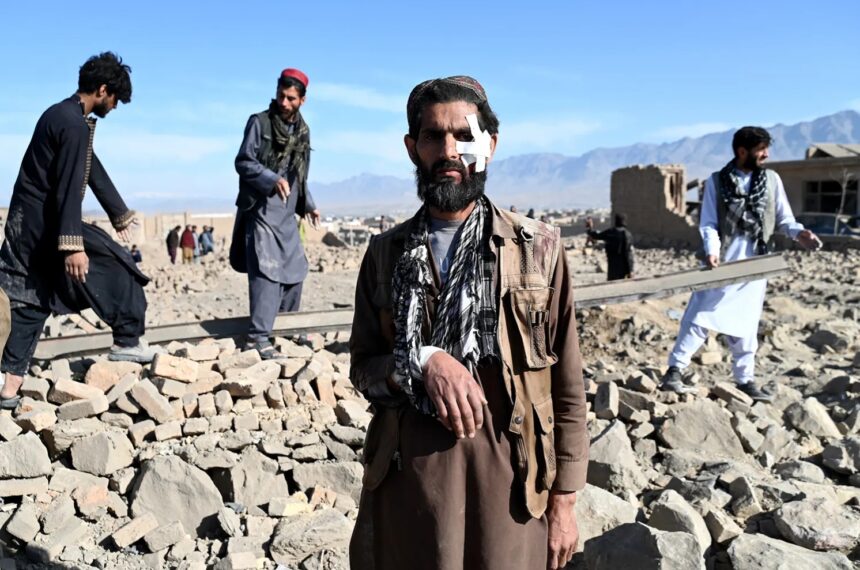
Haroon, a 45-year-old former teacher in Kabul who spoke under a pseudonym due to security concerns, described the night of the February 26 airstrikes. He recalled how the explosions were initially mistaken for an earthquake, until the persistence of the Attacks made their military nature unmistakable.
According to the report, since the outbreak of clashes between the Taliban and Pakistan, Islamabad’s airstrikes have continued almost daily targeting locations such as Bagram Air Base, weapons depots in Kandahar, and even civilian areas across more than ten provinces.
The United Nations has documented at least 76 civilian deaths and 213 injuries as of March 17. Meanwhile, Taliban forces have launched retaliatory attacks inside Pakistan developments that Pakistan’s defense minister has described as an “open war.”
The report emphasizes that the conflict is not merely between two governing authorities. Non-state armed groups particularly Tehrik-i-Taliban Pakistan (TTP) play a central role in intensifying tensions.
Estimated to have between 30,000 and 35,000 fighters, the TTP operates in border regions and is regarded as a primary security threat by Pakistan. According to UN assessments, the group benefits from operational and logistical space within Afghanistan an issue that lies at the heart of disputes between the Taliban and Islamabad.
Analysts point to the complex historical relationship between Pakistan and the Taliban. While Islamabad supported the group for decades, the Taliban’s return to power in 2021 has not yielded the expected strategic benefits. Instead, security threats especially from the TTP have intensified.
Security analyst Ahmad Shuja Jamal is quoted as saying:
“Political alignments cannot override deep ideological differences.”
The continuation of conflict has disrupted key trade routes and, alongside the broader regional crisis involving Iran, placed additional strain on fragile economies. Rising prices and worsening food insecurity have deepened public discontent.
Maryam, a 60-year-old resident of Kabul, expressed frustration:
“We are not satisfied with the Taliban, but we are also outraged by attacks on innocent people.”
She added that, for the first time since the 1990s, her family has converted their basement into a shelter.
The report warns that prolonged instability could turn Afghanistan into a battleground for multiple extremist groups. According to the UN Security Council, Al-Qaeda remains present in Afghanistan, with some senior figures reportedly based in Kabul.
At the same time, the regional branch of ISIS—ISIS-Khorasan is likely to exploit the situation, as weakened security structures create opportunities for expansion.
Despite Pakistan’s air superiority, analysts suggest it has yet to achieve its strategic objectives. Conversely, the Taliban face serious limitations in sustaining a prolonged conventional war.
However, historical patterns in Afghanistan indicate that protracted conflicts often favor the actor with greater endurance, raising concerns about a drawn-out and destabilizing confrontation.
The Foreign Policy report portrays a deeply layered crisis where regional wars, geopolitical rivalries, militant activity, and weak governance structures converge to shape the lives of millions of Afghanistanis.
In such conditions, the primary concern for ordinary citizens is not geopolitical strategy, but the looming return to a relentless cycle of insecurity, poverty, and instability.