
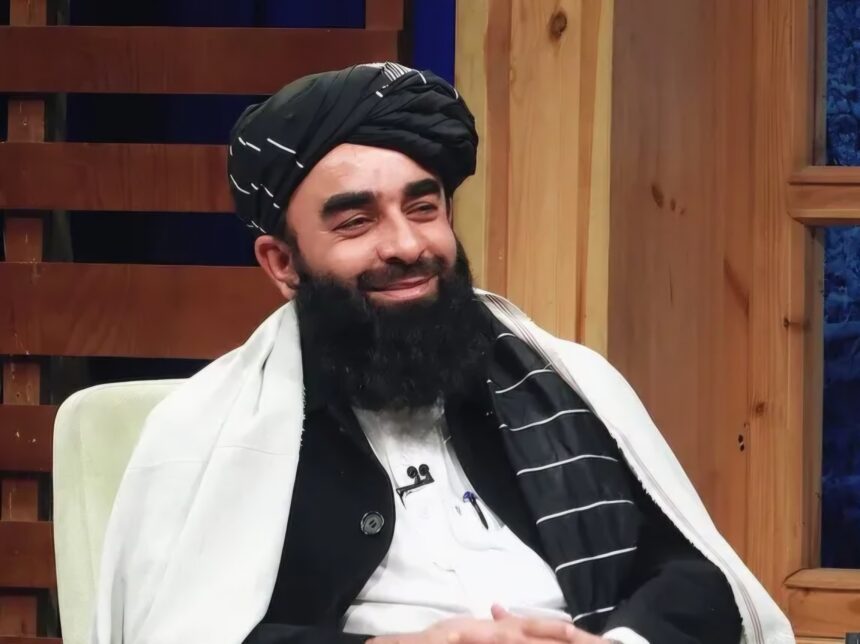
RASC News Agency: While Zabihullah Mujahid, the Taliban’s chief spokesperson, continues to project an image of a unified, calm, and “Islamic” Afghanistan, realities on the ground documented by the United Nations, the World Bank, UNICEF, and international human rights organizations tell a very different story.
According to Eurasia Review, the Taliban’s narrative is not built on empirical evidence, but on the deliberate erasure of suffering, poverty, insecurity, and systematic repression.
Using the language of unity, security, and Sharia, the Taliban reduce the complex, lived realities of Afghanistanis to a single ideological script.
Yet large segments of society especially women, non-Pashtun communities, journalists, and critics are effectively erased from this narrative. Analysts argue that these exclusions are not accidental; they form the core architecture of Taliban repression.
A recent report by the UN sanctions monitoring team directly challenges the Taliban’s claim that no terrorist groups operate in Afghanistan. The report confirms the presence of more than 20 regional and international terrorist organizations on Afghanistan’s soil.
Deadly attacks in Pakistan, the report notes, are directly linked to networks operating from Afghanistan, fundamentally undermining the Taliban’s claims of providing security.
The Taliban selectively cite World Bank data on GDP growth and lower inflation. But those same reports highlight:
• Falling per capita income
• A fragile banking sector
• Heavy dependence on imports and foreign aid
As Eurasia Review notes, this “growth” is driven largely by emergency consumption and humanitarian assistance, not by sustainable production, job creation, or long-term investment. It is the economy of survival, not development.
The forced return of Afghanistani migrants from neighboring countries hailed by the Taliban as proof of stability has instead intensified pressure on public services, labor markets, and social networks.
UN agencies and Reuters report that food insecurity, malnutrition, and unemployment are all rising. These returns are not voluntary; they result from deportations, threats, and closed borders a form of “exile under a new name.”
Nowhere is the gap between propaganda and reality more visible than in governance.
The Taliban boast about paying government salaries, yet at the same time:
• Women and girls half the population are systematically excluded from education, employment, and public life.
• Human Rights Watch reports rising arbitrary arrests, media repression, and restrictions on free expression.
• The United Nations describes an expanding internal surveillance system and a suffocating media climate.
UNICEF warns that the continued ban on girls’ secondary education has deprived millions of children of an independent future, with devastating long-term consequences for health and human development.
This policy, analysts argue, does not ensure stability it sacrifices Afghanistan’s future to preserve a closed ideology.
As Eurasia Review concludes, the Taliban seek unity not through participation, but through centralized power, silenced dissent, and enforced quiet. Authority is concentrated in a narrow circle, while internal rifts are concealed behind walls of fear.
But silence is not consent. It is often the result of coercion, exhaustion, or survival.
The gap between the Taliban’s official narrative and the lived reality of Afghanistanis grows wider every day.
A system built on exclusion, repression, and control is sustained not by legitimacy, but by force. And the more it relies on silencing its people, the more clearly its structural weakness is exposed.